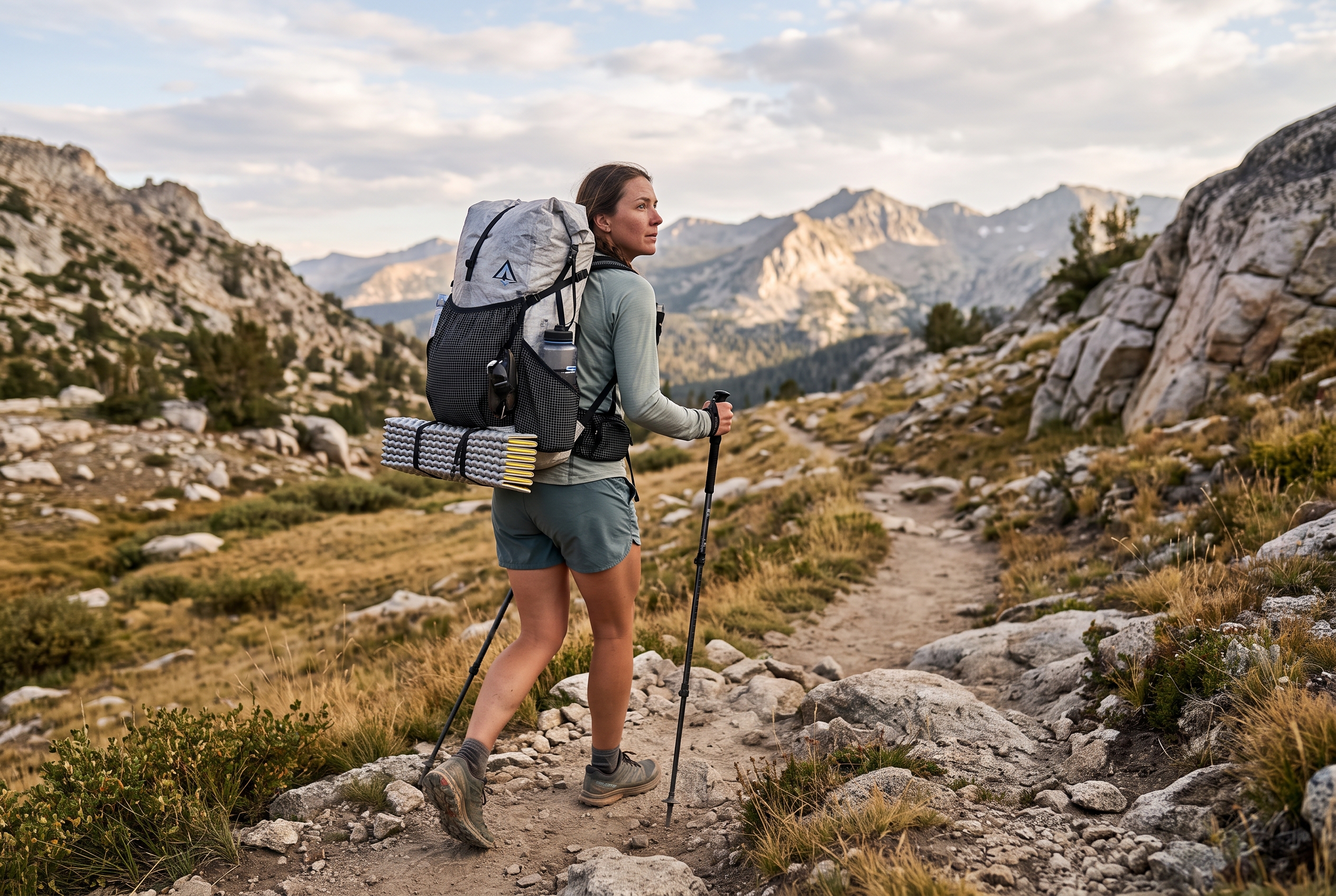
Stepping onto a long-distance trail requires a delicate balance between survival and comfort. When every ounce rests on your shoulders over hundreds of miles, every piece of gear in your pack must prove its worth.
Trimming your pack weight isn’t about sacrificing safety; it is about moving efficiently and protecting your body from chronic fatigue and injury. By upgrading to streamlined equipment, you can cover longer daily distances with less physical strain while enjoying the journey infinitely more.
Modern Ultralight Backpacks
Your backpack is the framework for your entire wilderness setup. Traditional trekking packs often weigh over five pounds before you even put a single item inside them. Modern frame-less or lightweight framed packs use durable, waterproof fabrics like Dyneema Composite Fabric (DCF) or Robic nylon to dramatically reduce weight.
Investing in high-performance lightweight backpacking gear allows you to carry your load comfortably without unnecessary heavy padding or excess steel supports. Look for designs with accessible exterior stretch pockets so you can grab snacks and water without stopping to unbuckle your main compartment.
Ultralight Shelters and Tarps
A reliable shelter protects you from harsh winds, sudden downpours, and buzzing insects. Traditional double-wall tents can be excessively heavy for solo thru-hikers aiming for speed and efficiency.
Trekking Pole Tents
Trekking pole tents eliminate heavy aluminum tent poles by using your walking poles as the main structural support. These non-freestanding shelters offer generous interior room while keeping total pack weight under two pounds.
Minimalist Tarps and Bivvies
For experienced hikers looking to shave off maximum weight, a simple tarp paired with a mesh bivvy offers maximum ventilation and adaptability. This modular setup keeps weather off your sleep system while allowing you to feel fully immersed in nature.
High-Loft Down Sleep Systems
Getting a restorative night of sleep is critical when hiking back-to-back high-mileage days. Swapping heavy synthetic sleeping bags for high-fill-power down quilts is one of the fastest ways to lighten your load.
Down insulation provides an incredible warmth-to-weight ratio and compresses into a tiny bundle inside your dry bag. Utilizing tailored long-distance trail tips like choosing an open-backed quilt instead of a full sleeping bag prevents wasted insulation beneath your body where it normally gets crushed.
Compact Sleeping Pads
A cold ground will rob your body heat far faster than air. High-tech inflatable sleeping pads combine high thermal resistance (R-value) with ultra-packable materials, giving you plush comfort above rocky trail surfaces.
For ultimate reliability, many thru-hikers carry a closed-cell foam pad. While slightly bulkier, foam pads are indestructible, puncture-proof, and can double as a quick camp seat during daytime break stops.
Compact Water Filtration Systems
Carrying excessive gallons of water adds massive weight to your back. The smartest strategy is to carry minimal water and filter frequently from fresh trail sources along your route.
Squeeze Filters
Hollow-fiber membrane squeeze filters screw directly onto standard plastic water bottles. They are lightweight, fast, and eliminate the need for heavy pump-style purifiers or foul-tasting chemical tablets.
Chemical Purification Backup
Always pack a few chlorine dioxide tablets into your emergency pouch. They weigh virtually nothing and serve as a reliable backup system if your primary filter freezes or becomes clogged with sediment.
Integrated Titanium Stove Kits
Cooking a warm dinner at the end of a exhausting twenty-mile day provides a massive mental boost. Swap bulky steel mess kits for ultralight titanium pots that heat water in minutes.
Pairing a micro canister stove with a 550ml titanium pot gives you everything needed to rehydrate freeze-dried meals. Titanium handles extreme heat without warping, allowing you to build a complete kitchen setup that weighs under six ounces.
Efficient LED Headlamps
Navigating trails in the early morning darkness or setting up camp past sunset requires reliable illumination. Modern rechargeable headlamps deliver high lumen output without needing heavy AA or AAA batteries.
Look for models with red-light modes to preserve your night vision and avoid attracting insects around camp. A micro-USB or USB-C rechargeable headlamp can easily be topped up off your portable power bank during rest days.
Satellite Communication Devices
Safety should never be compromised to save a few grams. Compact satellite messengers allow you to check in with family, receive real-time weather alerts, and trigger an SOS signal in remote areas without cell service.
Carrying essential hiking essentials guarantees peace of mind when traversing treacherous mountain passes or isolated wilderness valleys. Modern satellite mini-trackers weigh under four ounces and feature long battery lives optimized for multi-day treks.
Minimalist First Aid and Repair Kits
Commercial pre-packaged first aid kits often contain extra packaging and items you will never use on the trail. Customizing a micro kit in a small zippable pouch saves significant space and weight.
Custom Footcare and Meds
Focus heavily on blister prevention, anti-inflammatory medications, anti-chafe balm, and sterile bandage strips. Pre-cut strips of leukotape applied at the first sign of a hot spot will save your feet over long distances.
Multipurpose Gear Repair
Wrapped around a trekking pole or lighter, a small roll of tenacious tape and duct tape can patch a torn tent wall, repair a popped sleeping pad, or fix a ripped down jacket in seconds.
Ergonomic Carbon Fiber Trekking Poles
Trekking poles transfer physical impact away from your knees and ankles, saving your joints over thousands of feet of elevation loss. Carbon fiber poles absorb trail vibrations better than traditional aluminum options while saving crucial weight.
Using durable carbon poles improves your walking rhythm, aids balance on slippery river crossings, and serves double-duty as the main support structure for your ultralight tarp shelter.
Embracing an ultralight mindset requires thoughtful planning, testing your gear beforehand, and stripping away unnecessary luxuries. When your pack feels light, your steps become lighter, allowing you to connect deeper with the trail ahead.