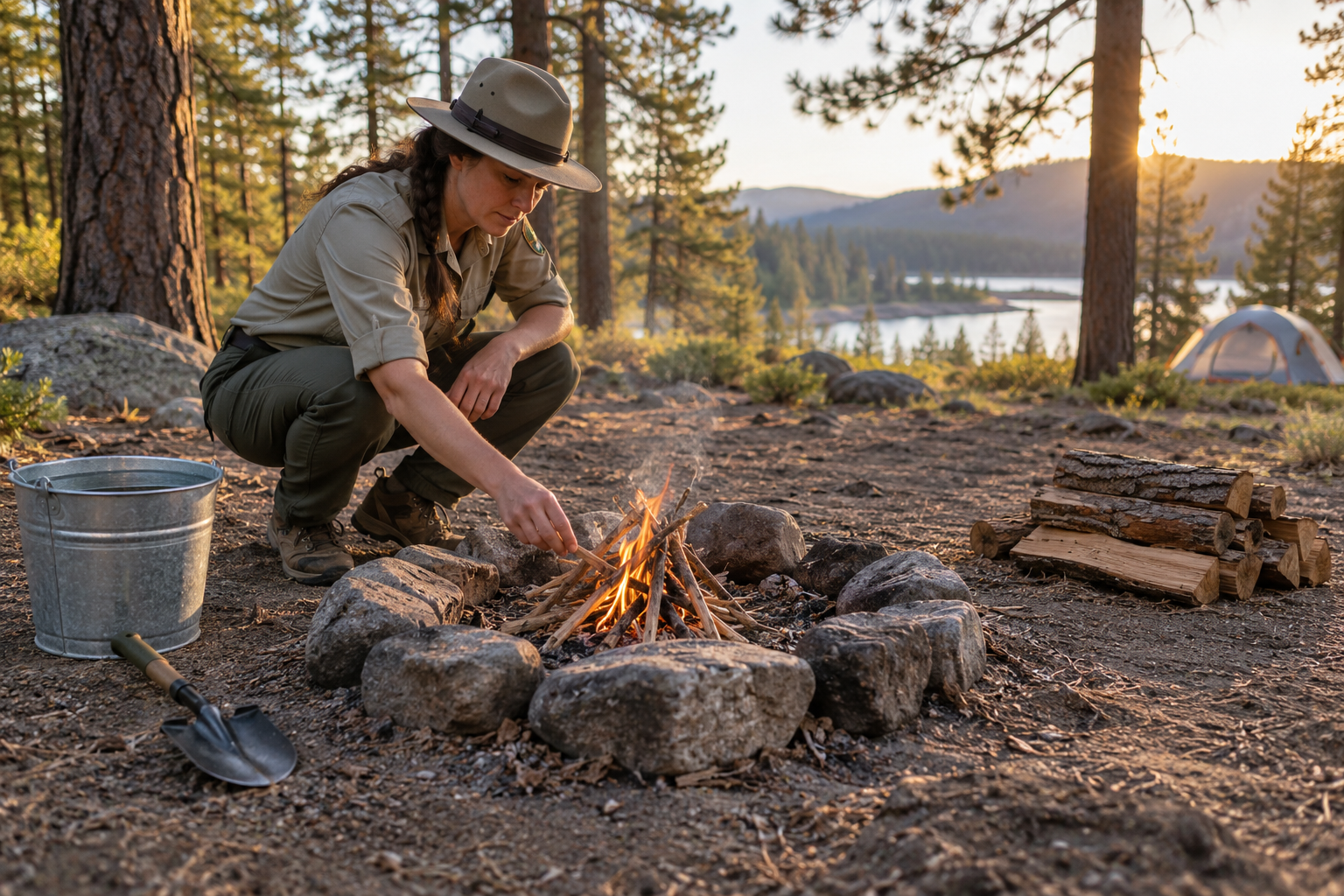
A campfire can provide warmth, light, a place to cook, and a welcome sense of comfort after a long day outdoors. However, an improperly built fire can quickly damage the landscape, destroy equipment, or develop into a dangerous wildfire.
Learning how to build a campfire is therefore about more than arranging wood and striking a match. It requires careful site selection, suitable materials, constant supervision, and a thorough extinguishing process.
Check Local Fire Rules Before You Begin
Before collecting firewood, confirm that campfires are permitted at your location. Parks, forests, and backcountry areas may introduce temporary fire restrictions during dry, windy, or unusually hot conditions.
A fire ban must always be respected, even when the ground appears damp. Vegetation below the surface can remain dry enough to ignite, while wind can carry embers far beyond the campsite.
Ask a ranger, check information posted at the trailhead, or review the rules provided with your camping permit. Responsible campfire preparation begins with understanding the regulations that protect both visitors and the surrounding ecosystem.
If open flames are prohibited, use an approved camping stove in a designated area. Never assume that a small fire is harmless simply because it can be controlled under normal conditions.
Choose a Safe Campfire Location
Whenever possible, use an existing fire ring. Established rings concentrate heat and impact in one location, preventing unnecessary damage to additional areas of soil and vegetation.
Select a site at least 15 feet away from tents, shrubs, low branches, dry grass, logs, and other combustible objects. Increase that distance when conditions are windy or exceptionally dry.
Look upward as well as around you. A clearing may appear safe at ground level while dead branches hang directly overhead. Heat and rising sparks can ignite these branches without warning.
Good camping safety practices also require checking the direction of the wind. Smoke and sparks should travel away from tents, cooking areas, vehicles, and neighboring campsites.
Avoid building a fire on peat, deep organic soil, exposed tree roots, or thick layers of forest litter. These materials can smolder underground long after the visible flames have disappeared.
Prepare or Inspect the Fire Ring
An established metal or stone fire ring should be inspected before use. Remove trash, foil, melted plastic, broken glass, and other debris left by previous visitors.
Do not place river rocks, wet stones, or porous rocks around a fire. Moisture trapped inside certain stones can expand when heated and cause them to crack or burst.
If fires are permitted but no ring is available, choose an area of mineral soil, gravel, or bare sand. Clear loose leaves, needles, cones, and dry vegetation from a wide circle around the fire site.
Keep the Ring Compact
A campfire does not need to be large to be effective. A compact ring helps contain the fuel, reduces the number of airborne embers, and makes the fire easier to extinguish.
Keep the fire small enough for its intended purpose. A cooking fire may need only a modest bed of coals, while a warming fire should still remain below knee height.
Creating an oversized ring encourages an unnecessarily large fire. It also leaves a larger scar on the landscape and requires considerably more water to extinguish.
Prepare an Emergency Zone
Clear the area immediately surrounding the ring down to nonflammable soil. Move firewood, backpacks, chairs, footwear, and cooking supplies far enough away that a falling ember cannot reach them.
Place a full bucket of water beside the fire before lighting it. A shovel or sturdy digging tool should also remain nearby. These items are essential wilderness fire safety equipment, not optional accessories.
Gather Tinder, Kindling, and Fuel Wood
An efficient campfire depends on using fuel in gradually increasing sizes. Trying to ignite large logs immediately usually creates excess smoke and wastes matches.
Gather all necessary materials before starting. Leaving an active flame unattended while searching for more wood is unsafe, even if you expect to be gone for only a minute.
Tinder
Tinder is the smallest and most easily ignited material. Dry grass, fine bark shavings, small wood curls, and commercially prepared fire starters can work well.
Tinder must be completely dry. Damp tinder may produce smoke but often fails to generate enough sustained heat to ignite the next layer.
Carry a reliable fire starter from home, particularly in wet environments. Cotton-based tinder stored in a waterproof container can provide an important backup when natural materials are damp.
Never strip bark from living trees. Doing so can injure the tree and violates Leave No Trace principles in many protected areas.
Kindling
Kindling consists of thin twigs and small sticks that catch fire from the tinder. Begin with pieces approximately the thickness of a matchstick, then add pieces comparable to a pencil and a finger.
Dead twigs that snap cleanly are generally dry enough to burn. Flexible sticks or branches with green material inside will smoke heavily and resist ignition.
Understanding this progression is one of the most useful basic wilderness skills because it allows you to produce a stable flame without relying on excessive lighter fluid or paper.
Fuel Wood
Fuel wood maintains the fire after the kindling is burning steadily. Use pieces ranging from wrist thickness to modest split logs, depending on the size of the permitted fire.
Purchase firewood locally when possible. Transporting wood between regions can spread invasive insects and tree diseases.
In locations where gathering is allowed, collect only dead and fallen wood. Avoid cutting live branches, damaging standing trees, or removing habitat-sized logs from the forest floor.
Gather only what you expect to use. Leaving piles of unused wood changes the appearance of the campsite and can create hazards for future visitors.
Build the Campfire Structure
Several fire structures can work effectively, but each must allow oxygen to move between the fuel pieces. Wood packed too tightly will smolder instead of burning cleanly.
Place a loose bundle of tinder in the center of the fire ring. Arrange the smallest kindling around it while leaving enough space for airflow.
Teepee Structure
For a teepee fire, lean small kindling pieces together over the tinder to form a cone. Leave an opening on the windward side so the flame receives oxygen.
Once the small kindling catches, gradually add thicker pieces while preserving the cone shape. The design creates strong upward heat and is particularly effective for starting a fire.
A teepee can burn quickly, so additional wood must be added carefully. Never reach across active flames to adjust the structure.
Log Cabin Structure
A log cabin fire uses two parallel pieces of wood as its base. Add another pair across them, continuing in alternating layers to create a square structure around the tinder and kindling.
This arrangement offers good airflow and produces a stable bed of coals. It is useful when you want consistent heat for camp cooking.
Do not build the structure too high before ignition. A tall stack can collapse unpredictably and scatter burning pieces outside the ring.
Lean-To Structure
A lean-to arrangement can help protect the flame in mild wind. Place a larger piece of wood on the ground, position tinder beside it, and lean kindling against the fuel piece.
The supporting wood provides temporary shelter while the tinder catches. Even so, a campfire should not be started in strong or gusty winds.
Light the Fire Safely
Light the tinder from the side facing the wind so the flame moves inward through the structure. Use a long match or extended lighter to keep your hand away from the fuel.
Light one or two points rather than repeatedly applying flame around the pile. Once the tinder catches, allow the fire time to spread naturally through the smallest kindling.
Add wood gradually. Placing heavy fuel on weak flames can crush the structure, reduce airflow, and extinguish the fire.
Never use gasoline, alcohol, aerosol products, or other volatile liquids. These substances can create sudden flare-ups, travel along the ground, or ignite their containers.
Following a controlled campfire building technique produces a cleaner and more reliable fire without dangerous accelerants.
Maintain Control at All Times
A burning campfire must always have a responsible adult nearby. Never leave it unattended while sleeping, hiking, collecting water, or visiting another campsite.
Keep children and animals outside a clearly defined safety zone. Teach children that the fire ring remains hot even when flames are low or no longer visible.
Add only one or two pieces of fuel at a time. Flames should remain well inside the ring without leaning toward nearby vegetation.
Avoid burning food packaging, plastic, cans, glass, batteries, or chemically treated wood. These materials may release harmful fumes, leave sharp debris, or produce unpredictable sparks.
Monitor changing weather throughout the evening. If the wind becomes stronger, extinguish the fire immediately rather than waiting for conditions to improve.
Cook Without Creating Additional Hazards
Wait until the fire has produced a stable bed of hot coals before cooking. Large flames provide uneven heat and can scorch food while leaving the center undercooked.
Use a secure cooking grate where available. Position pots so they cannot easily tip and cause burns or scatter hot coals.
Wear close-fitting clothing around the fire. Loose sleeves, scarves, and synthetic fabrics can catch fire or melt rapidly when exposed to heat.
Store unused fuel well outside the fire ring. Keeping an entire bundle of wood beside the flames can allow one stray ember to create a second fire.
Strong outdoor fire management means treating cooking, warmth, and cleanup as parts of the same safety routine.
Extinguish the Campfire Completely
Begin extinguishing the fire well before you intend to leave or sleep. Large logs and deep coal beds may require more time and water than expected.
Allow remaining wood to burn down when practical. Then pour water slowly over every part of the fire, including glowing coals and the inner edges of the ring.
The water may create steam, so keep your face and hands away from the rising vapor. Continue adding water until the hissing sound stops.
Stir the Ashes and Coals
Use a shovel or sturdy stick to stir the wet ashes. Turn over partially burned wood and expose hidden embers that may still be holding heat.
Add more water and stir again. Scrape hot material away from the sides of the ring, where embers can remain concealed beneath ash.
Do not simply cover the fire with soil or sand. This can insulate hot coals rather than cool them, allowing the fire to remain active beneath the surface.
Use the Touch Test Carefully
When the fire appears extinguished, hold the back of your hand several inches above the ashes without touching them. If you feel heat, continue adding water and stirring.
Only approach more closely after the temperature has dropped. The ashes, coals, stones, and surrounding soil should all feel cool before you leave.
The principle is simple: if the fire is too hot to touch safely, it is too hot to abandon.
Complete campfire extinguishing procedures may take several rounds of soaking and stirring. Never rush this final stage, because a single surviving ember can reignite hours later.
What to Do If the Fire Escapes
If flames or embers move outside the fire ring, act immediately. Use water to soak the affected area while another person alerts nearby campers or park staff.
Do not attempt to fight a rapidly spreading fire alone. Move everyone to a safe location and contact emergency services or the responsible land-management agency as soon as possible.
Pay attention to smoke moving through grass, roots, or forest litter. A ground fire may spread beneath the surface without producing large visible flames.
Your safety comes first. Equipment can be replaced, but trying to recover belongings from an advancing fire can place you in severe danger.
Leave the Campsite in Good Condition
After the ashes are completely cold, remove all personal items and trash. Never leave food scraps, foil, bottle caps, or burned packaging in the ring.
In developed campgrounds, leave the established fire ring in place for future visitors. In backcountry areas where temporary fires are permitted, follow local instructions for restoring the site.
A well-managed fire should provide warmth and utility without leaving unnecessary damage. Practicing responsible low-impact camping habits helps preserve natural areas and keeps them safer for everyone.
Knowing how to build a campfire is a valuable outdoor ability, but knowing when not to light one is equally important. When conditions are dry, windy, restricted, or uncertain, choose a stove or another flame-free alternative.
The best campfire is controlled from the first spark to the final cold ash. Careful preparation, constant supervision, and complete extinguishment are the habits that turn a simple fire into a safe and dependable wilderness tool.