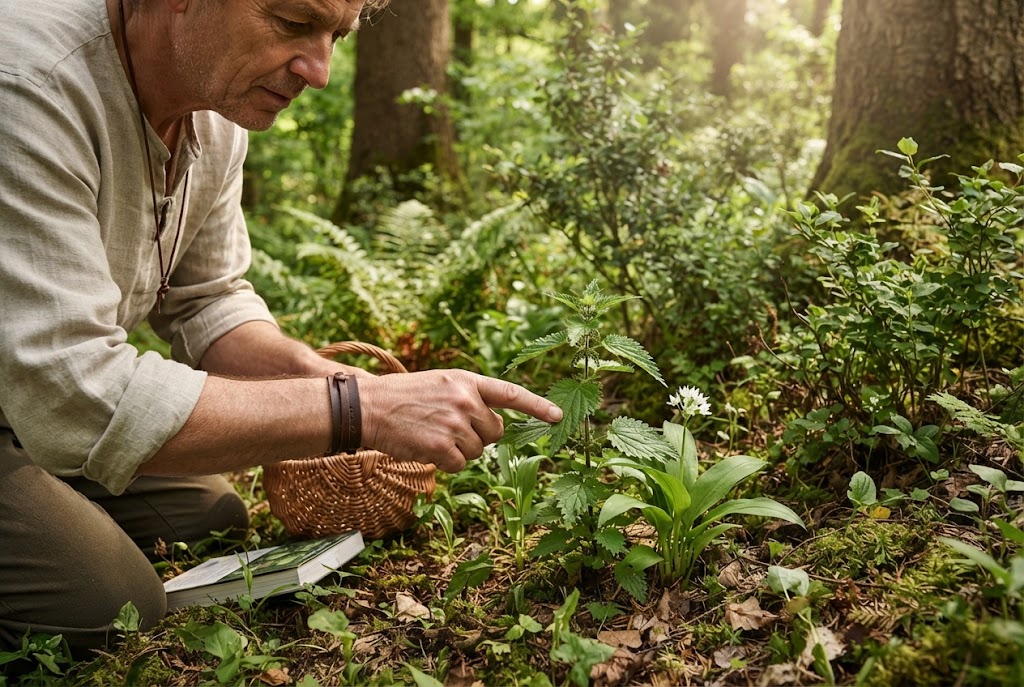
Foraging wild edible plants can be a rewarding way to connect with nature while discovering foods that grow naturally around you. However, collecting wild food requires patience, knowledge, and careful judgment.
Unlike shopping for produce, nature does not come with labels. A plant that looks harmless may be poisonous, contaminated, or easily confused with a dangerous relative.
This beginner-friendly guide to foraging wild edible plants focuses on the most important skill of all: staying safe. With responsible identification practices and a cautious approach, you can explore wild edible plants without turning an outdoor adventure into a health emergency.
Understanding the Basics of Foraging Wild Edible Plants
Foraging means searching for naturally occurring plants, fungi, fruits, herbs, and other foods that can potentially be collected and consumed.
Although foraging is sometimes associated with wilderness survival, it should not be treated as a shortcut to finding emergency food.
The safest approach is to learn gradually. Start by studying a small number of easily recognizable species rather than attempting to identify everything you encounter.
Why Plant Identification Matters
Accurate identification is the foundation of responsible foraging.
Many edible plants have poisonous look-alikes. Two species may share similar leaves, flowers, colors, or growth patterns while having completely different effects when eaten.
Never identify a plant based on a single characteristic.
Instead, examine multiple features, including leaf arrangement, stem structure, flower shape, fruit, growth habit, habitat, and season. When appropriate, consider smell as an additional observation rather than a primary identification method.
If you cannot confidently identify a plant, leave it where it grows.
Build Your Knowledge Before You Start
A good edible plants guide should teach more than which plants can be eaten. It should also explain which species are dangerous, how plants change throughout their life cycle, and which characteristics distinguish similar species.
Start With a Small List
Beginners are better served by learning five to ten species thoroughly than memorizing dozens of names.
Choose plants that are relatively distinctive in your region and study them in different seasons. Learn what the plant looks like when young, mature, flowering, and fruiting.
Take time to understand where each species normally grows.
A plant’s habitat can provide useful supporting information, but habitat should never be used by itself to confirm identification.
Learn the Dangerous Look-Alikes
For every edible plant you learn, investigate whether it has toxic relatives or commonly confused species.
This habit changes the question from:
“Does this look edible?”
to:
“What evidence proves that this is the correct species, and what dangerous plants could I be confusing it with?”
That is a much safer mindset.
Never Rely on One Identification Method
Modern technology can make plant identification easier, but it should not replace careful observation.
Plant-identification apps can produce incorrect results, particularly when photographs are unclear or several species have similar appearances.
Use technology as a learning aid rather than the final authority.
Compare Several Characteristics
Before collecting anything, examine the entire plant when possible.
Look at:
- Leaf shape and arrangement
- Stem characteristics
- Flowers and their structure
- Fruit or seed appearance
- Overall growth pattern
- Habitat
- Season
- Distinctive markings or features
When an identification depends on one small visual detail, treat it as uncertain.
A reliable identification should make sense as a complete picture.
Avoid Contaminated or Polluted Areas
Even a correctly identified edible plant may be unsafe to consume if it has absorbed contaminants from its surroundings.
Avoid harvesting near heavily trafficked roads, industrial areas, waste sites, chemically treated lawns, drainage channels, or locations where pollution may be present.
You should also consider whether an area is regularly treated with pesticides, herbicides, or other chemicals.
Know Where You Are Allowed to Forage
Responsible foraging includes respecting property boundaries and local regulations.
Never assume that wild plants are free for anyone to collect. Public parks, protected habitats, private land, and conservation areas may have different rules.
Check the applicable regulations before harvesting.
Harvest Conservatively
Foraging should not damage the ecosystem you are exploring.
Take only what you need and avoid removing entire populations of plants. When collecting leaves, fruits, or other renewable parts, leave enough behind for the plant and surrounding wildlife.
This is particularly important for slow-growing species or plants with limited populations.
A sustainable forager thinks beyond today’s meal.
Protect the Habitat
Avoid trampling surrounding vegetation while searching for food.
Stay on established paths when appropriate, minimize soil disturbance, and avoid damaging plants simply to obtain a sample.
Remember that wild plants are part of an ecosystem. Birds, insects, mammals, and other organisms may depend on the same resources.
Practice Safe Preparation
Correct identification is only one part of safe foraging.
Some edible plants contain compounds that require proper preparation. Depending on the species, preparation may involve washing, peeling, cooking, soaking, or removing specific parts.
Never assume that because a plant is technically edible, every part can be eaten raw.
Start With Small Amounts
When trying a correctly identified edible species for the first time, moderation is sensible.
Individual reactions can vary, and unfamiliar foods may cause digestive discomfort or allergic reactions.
Do not experiment with unidentified plants, unusual preparation methods, or large quantities.
If you experience concerning symptoms after eating a wild plant, seek appropriate medical assistance promptly and provide information about what was consumed if possible.
Create a Practical Foraging Kit
A simple kit can make outdoor exploration safer and more organized.
Consider carrying a notebook, pencil, clean collection containers, water, basic first-aid supplies, appropriate clothing, and reliable navigation equipment.
A foraging safety checklist can also help you remember essential precautions before heading outdoors.
Avoid collecting plants in containers that could cause confusion between different species. Keeping specimens separated can make later identification easier.
Keep Identification Records
Taking photographs and recording observations can accelerate your learning.
Document the plant’s habitat, date, appearance, and identifying characteristics. Comparing these observations later can help reinforce your knowledge.
A wilderness preparedness guide can also be useful for developing broader outdoor safety habits alongside your foraging skills.
Understand Weather and Outdoor Hazards
Foraging is an outdoor activity, so plant knowledge is only part of the safety equation.
Weather can change quickly. Heat, storms, cold temperatures, slippery ground, insects, wildlife, and difficult terrain can create risks unrelated to what you are collecting.
Plan your outing according to your experience level and the environment.
Tell Someone About Your Plans
For remote excursions, let someone know where you intend to go and when you expect to return.
Carry a charged phone when practical, but do not assume you will always have reception.
Basic navigation skills remain valuable because technology can fail or become unavailable.
A wilderness survival essentials guide can help reinforce these foundational outdoor habits.
Learn From Experienced Foragers
Books and online resources can provide useful background knowledge, but hands-on learning with an experienced and trustworthy forager can add another layer of understanding.
An experienced mentor can teach you how to observe plants in their natural habitat and recognize subtle differences that photographs may not capture.
However, never surrender your own responsibility for identification.
If someone else says a plant is safe but you remain uncertain, do not eat it.
Build Confidence Slowly
Confidence should come from repeated accurate identification, not from taking unnecessary risks.
Begin with common species that have distinctive characteristics. Practice identifying them without harvesting them.
Once you can consistently recognize a species at different growth stages and distinguish it from dangerous look-alikes, you can consider moving forward carefully.
A beginner foraging guide can complement this gradual learning process.
Common Beginner Mistakes to Avoid
One of the biggest mistakes is assuming that a plant is safe because an animal eats it.
Wild animals have different metabolisms and tolerances, so their behavior is not proof that a plant is suitable for humans.
Another mistake is believing that cooking automatically makes an unidentified plant safe. Heat does not magically eliminate every toxic compound.
Beginners should also avoid relying on sayings, folk tests, or internet claims that promise simple ways to detect poisonous plants.
Instead, focus on verified identification and species-specific knowledge.
A safe wild food practices resource can reinforce the principle that identification should always come before consumption.
Make Safety the Core of Your Foraging Philosophy
Successful foraging is not about collecting the greatest amount of food.
It is about developing the ability to observe nature carefully, identify plants accurately, harvest responsibly, and understand your own limitations.
The most valuable rule is simple: when in doubt, leave it out.
With patient study, careful observation, and respect for the environment, foraging wild plants can become a rewarding outdoor skill. Treat every unfamiliar plant as a mystery to investigate rather than an opportunity to taste.
Over time, your knowledge will grow—and your ability to recognize what should remain untouched will become just as important as knowing what belongs in your collection.