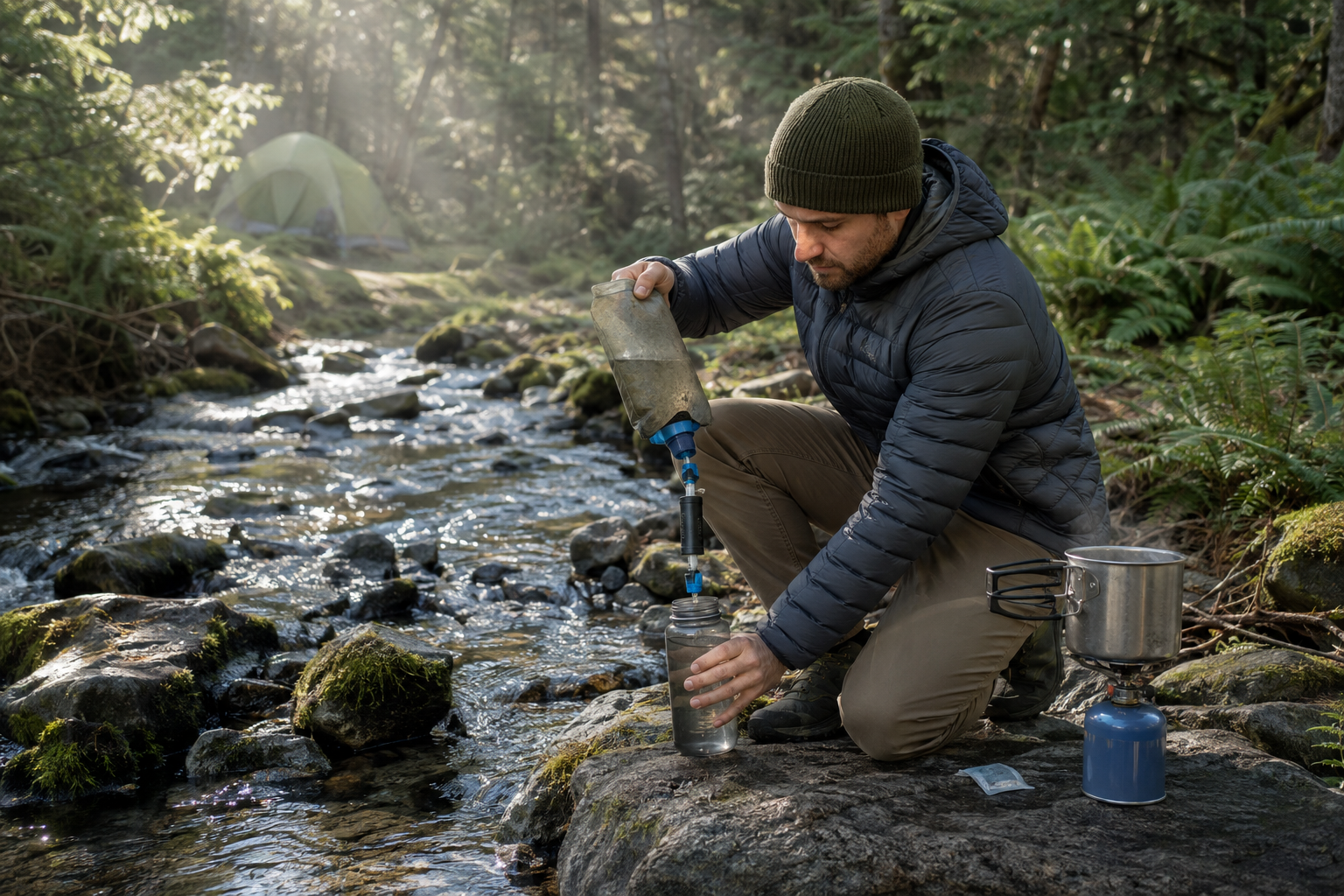
Safe drinking water is one of the most important requirements on any wilderness trip. A clear mountain stream may look refreshing, but appearance alone cannot reveal bacteria, viruses, protozoa, or other contaminants.
Drinking untreated water can cause vomiting, diarrhea, stomach cramps, and dehydration. These problems are especially dangerous in remote areas where medical assistance may be several hours away.
Learning how to treat water properly helps you travel more confidently and reduces the amount of water you must carry. This guide explains boiling, chemical treatment, and filtration so you can select the right method for different outdoor conditions.
Why Natural Water Sources May Be Unsafe
Water in remote landscapes is not automatically clean. Wildlife, livestock, human waste, damaged sanitation systems, and runoff can contaminate rivers, springs, and lakes.
Common biological threats include bacteria, protozoa, and viruses. Protozoa can be particularly troublesome because some species are protected by durable outer shells that help them survive in water.
Mud, algae, leaves, and sediment can also affect water quality. Although these materials are not always directly harmful, they can reduce the effectiveness of certain purification methods.
An essential principle of outdoor survival preparation is to treat every uncertain natural water source as potentially contaminated. Never rely solely on clarity, temperature, location, or taste.
Choose the Best Available Water Source
Good water treatment begins before you use a filter, stove, or purification tablet. Selecting a cleaner source makes every subsequent step easier and more effective.
Whenever possible, collect water from a flowing source rather than stagnant pools. A clear spring emerging directly from the ground is generally preferable to water collected downstream from a campsite or grazing area.
Move upstream from trails, livestock, bridges, and busy campsites when it is safe to do so. Avoid water with an oily surface, unusual color, strong odor, chemical foam, or visible animal remains.
Remember that boiling, tablets, and most portable filters cannot reliably remove every industrial chemical, fuel residue, heavy metal, or toxic algal compound. If chemical pollution is suspected, find another source.
Reliable wilderness water safety depends on both careful source selection and appropriate treatment. Purification should never become an excuse to collect water from an obviously hazardous location.
Remove Sediment Before Purifying Water
Cloudy water should be prefiltered before the main treatment process. Sediment can clog filter cartridges, interfere with ultraviolet devices, and protect microorganisms from some chemical disinfectants.
Allow very muddy water to sit in a container until heavier particles settle. Carefully pour the clearer upper layer into another clean container without disturbing the sediment at the bottom.
You can then pass the water through a clean cloth, bandana, coffee filter, or other fine fabric. This step improves clarity, but it does not make the water safe to drink.
Prefiltering is simply preparation for boiling, chemical disinfection, or proper filtration. Anyone learning about purifying water camping should understand the difference between removing visible dirt and eliminating microscopic hazards.
Method One: Purifying Water by Boiling
Boiling is one of the most dependable ways to neutralize disease-causing organisms in wilderness water. It does not require a specialized filter, although you will need a heat-resistant container, fuel, and a reliable flame.
How to Boil Water Safely
Start with the clearest available water and prefilter it if necessary. Place it in a clean metal pot, set the pot over a stable stove or controlled fire, and bring the entire volume to a vigorous rolling boil.
At lower elevations, maintain the rolling boil for at least one minute. At elevations above approximately 2,000 meters, extend the boiling time to three minutes because water boils at a lower temperature at high altitude.
Remove the pot carefully and allow the water to cool naturally. Keep it covered while cooling to prevent ash, insects, dirty hands, or other contaminants from entering.
Do not add untreated water to the pot after boiling. Even a small amount can reintroduce microorganisms and compromise the entire supply.
Advantages of Boiling
Boiling is effective against bacteria, viruses, and protozoa. It is a practical backup when a filter breaks or chemical products are unavailable.
This method is also easy to verify. Once the water reaches a sustained rolling boil for the appropriate amount of time, you do not have to estimate a chemical dose or inspect a cartridge.
For many camping water treatment methods, boiling remains the most straightforward option at an established campsite where fuel and cooking equipment are already available.
Limitations of Boiling
Boiling consumes fuel and requires time for heating and cooling. This can be inconvenient during long-distance hikes or in areas where fires are prohibited.
It does not remove sediment, salts, heavy metals, or most chemical pollutants. Boiled water may also taste flat because heating drives out dissolved gases.
You can improve the taste by pouring cooled, treated water between two clean containers. Never aerate it with a bottle or vessel that previously held untreated water unless that container has been cleaned.
Method Two: Using Chemical Water-Treatment Tablets
Chemical tablets are lightweight, compact, and convenient. Common products use chlorine dioxide, iodine, or other approved disinfecting ingredients to neutralize microorganisms.
They are especially useful as an emergency backup because several doses can fit inside a small first-aid or survival kit.
How to Use Purification Tablets Correctly
Always follow the manufacturer’s directions printed on the packaging. Chemical concentration, water volume, temperature, and required contact time vary between products.
Begin by filling a clean container with prefiltered water. Add the correct number of tablets or measured drops, close the lid, and shake the container.
Loosen the lid slightly and allow treated water to flow over the threads and around the cap. This helps disinfect areas that may have touched untreated water. Tighten the lid again and wait for the full required treatment period before drinking.
Cold or cloudy water may require a longer contact time. Never reduce the waiting period simply because the water looks clean.
Advantages of Chemical Treatment
Tablets weigh very little and do not require pumping or fuel. They can treat several liters while you walk, set up camp, or prepare food.
Chlorine-dioxide products can be effective against a broad range of microorganisms when used with the correct dose and contact time. However, some organisms may require several hours of treatment.
Carrying tablets alongside a portable hiking water filter creates useful redundancy. If the primary filter becomes damaged, frozen, lost, or clogged, the tablets can provide an alternative.
Limitations and Safety Considerations
Chemical products may leave an aftertaste, and they do not physically remove dirt. Prefiltering cloudy water remains important.
Effectiveness differs among active ingredients. Some chemical treatments work quickly against bacteria and viruses but require much longer to address certain protozoa. Iodine is generally not considered dependable against Cryptosporidium.
Pregnant travelers, people with thyroid conditions, and individuals with specific medical concerns should seek appropriate professional guidance before using iodine-based treatments. Chemical products must also be stored safely and used only as directed.
Do not guess the dosage, combine different disinfectants, or swallow concentrated chemicals. More chemical is not necessarily safer and may make the water unpleasant or harmful to consume.
Method Three: Filtering Water in the Wilderness
Portable filters force water through microscopic pores that trap organisms and suspended particles. Depending on the design, water may be pumped, squeezed, drawn through a hose, or treated by gravity.
A quality filter can improve both clarity and taste while allowing hikers to process water relatively quickly.
Understand Filter Pore Size and Protection
Not every product offers the same level of protection. Many backpacking filters are designed to remove protozoa and bacteria but may not reliably remove viruses, which are much smaller.
A purifier is different from a basic filter. Some purifiers use extremely fine membranes, chemical stages, ultraviolet light, or a combination of technologies to address viruses as well as larger microorganisms.
Before relying on any hiking water filter, check which organisms it is designed to remove. Do not assume that an expensive or fast-flowing device protects against every possible hazard.
How to Filter Water Properly
Collect water from the cleanest part of the source. Keep the intake hose or collection bag away from bottom sediment, and use a prefilter when the water is cloudy.
Follow the device instructions for pumping, squeezing, or hanging the system. Avoid forcing water through a clogged filter because excessive pressure may damage internal components.
Keep the clean outlet away from untreated water, dirty hands, and contaminated surfaces. Mark dirty-water and clean-water containers clearly so they are never accidentally exchanged.
After use, clean or backflush the unit according to its instructions. Proper maintenance preserves the flow rate and reduces the chance of internal contamination.
Protect Filters from Freezing
Many hollow-fiber filters can be damaged when trapped water freezes and expands inside the membrane. The damage may be invisible, leaving the filter apparently functional even though its protective structure has failed.
In freezing conditions, drain the filter after use and keep it close to your body during the day. Store it inside an insulated bag or sleeping system at night, provided you can prevent leakage.
If you believe a wet filter has frozen, treat it as unreliable unless the manufacturer provides a verified integrity-testing procedure. Use boiling or chemical disinfection instead.
Filter protection is a vital part of cold-weather camping safety, particularly when overnight temperatures may fall below freezing.
When to Combine Filtration and Chemical Treatment
Using two methods provides broader protection in uncertain environments. This approach is particularly valuable near populated areas, during international travel, after flooding, or anywhere human waste may contaminate water.
First, filter the water to remove sediment, protozoa, and bacteria supported by the device’s specifications. Then apply an appropriate chemical disinfectant to address viruses that may pass through a standard backpacking filter.
Filtering before chemical treatment can also improve disinfection because the water contains fewer suspended particles. Still, the full chemical contact time must be observed.
Boiling filtered water is another strong combination. The filter improves clarity and taste, while boiling neutralizes microorganisms that might remain.
Prevent Cross-Contamination After Treatment
Clean water can become unsafe again within seconds if it touches a contaminated cap, hose, bottle, utensil, or hand.
Use separate containers for untreated and treated water. If possible, choose different colors or apply clear labels that remain visible in low light.
Never dip a drinking bottle directly into a questionable source and then rely only on treating the water inside. The mouth, threads, and outer surface may still carry untreated droplets.
Wash or disinfect hands before handling clean components. Store the clean outlet of a filter in a protected bag and keep it separated from intake hoses and dirty collection bags.
These small habits are fundamental backcountry survival skills because treatment is only successful when the water remains protected until consumption.
Build a Reliable Water-Treatment Kit
A practical wilderness kit should include a primary treatment system and an independent backup. For example, carry a lightweight filter for everyday use and individually packaged chemical tablets for emergencies.
Add a metal container that can be placed over heat. Even if you normally use a filter, a boiling vessel gives you another option during equipment failure.
Your kit should also contain at least two water containers, a clean cloth for prefiltering, spare seals if required, and the maintenance accessories supplied with the filter.
Before leaving home, test the equipment with clean tap water. Learn how to assemble, backflush, and store it. Confirm that tablets are not expired and that their instructions remain readable.
Calculate how much water your group may require between sources. Hot weather, high elevation, heavy packs, and strenuous terrain can increase consumption dramatically.
Common Water-Purification Mistakes
One frequent mistake is choosing a method based only on convenience. A standard filter may work well in many backcountry settings, but it may not provide adequate virus protection in areas affected by human sanitation problems.
Another mistake is rushing chemical treatment. Drinking before the required contact time has passed can expose you to organisms that have not yet been neutralized.
Poor equipment hygiene is equally dangerous. Touching a filter’s clean outlet with contaminated hands or mixing clean and dirty bottle caps can undo careful treatment.
Some campers also assume that fast-moving water is automatically safe. Current speed may reduce visible stagnation, but it does not guarantee the absence of microscopic pathogens upstream.
Finally, never wait until you are severely thirsty before searching for water. Plan source locations in advance and maintain an emergency reserve whenever terrain and carrying capacity allow.
Final Water-Safety Checklist
Before drinking, confirm that you collected water from the safest available source and removed excessive sediment.
Make sure the chosen treatment method addresses the likely hazards. Verify that the water boiled for the appropriate duration, the chemical completed its full contact time, or the filter was assembled and maintained correctly.
Check that the treated water has not touched dirty equipment. Store it securely, keep it shaded when possible, and consume it within a reasonable period.
Effective water treatment does not depend on a single gadget. It combines good judgment, correct technique, clean handling, and a backup plan. By mastering these principles, hikers and campers can remain hydrated while reducing one of the most serious health risks encountered in the wilderness.