
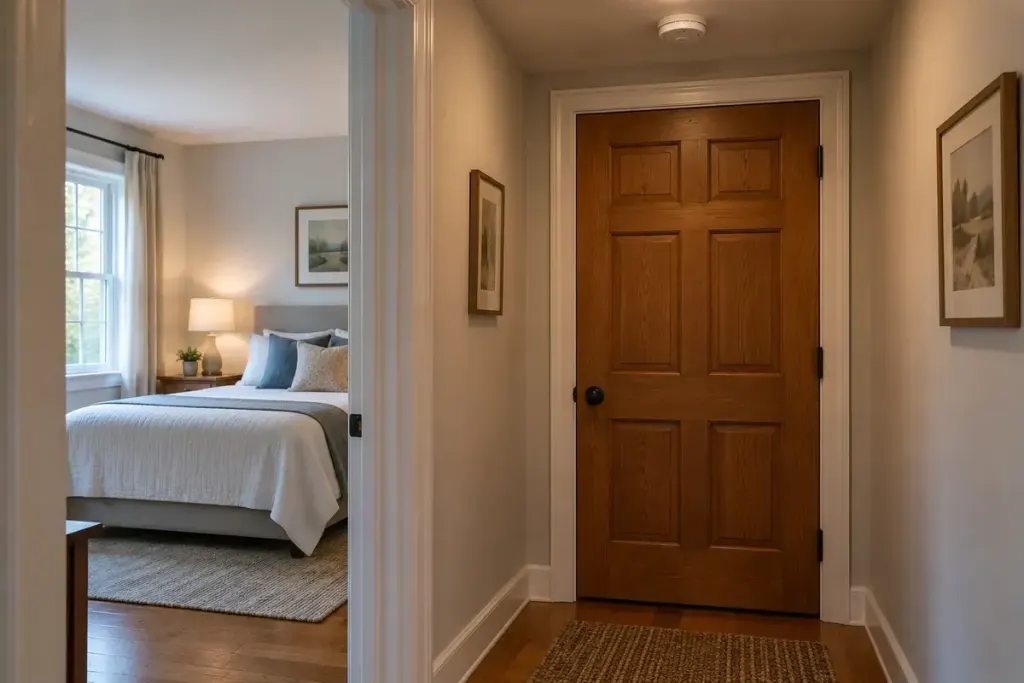
A bedroom door can look like an ordinary privacy feature. During a home fire, its position also affects the route available to heat and smoke. Closing it before sleeping is a small habit with a physical purpose.
The Fire Safety Research Institute’s full-scale closed-door demonstration compared conditions in bedrooms with open and closed doors during the same house fire. The closed rooms maintained substantially more tenable conditions during the experiment. That is evidence for closing doors, not a guarantee that a particular room will remain safe for a fixed number of minutes.
Make the habit part of the night-time plan
Walk through an ordinary bedtime routine with everyone in the household. Identify which doors are routinely left open and why. A person may need communication, care or mobility support; solve those needs alongside the fire plan rather than assuming a closed door is the whole answer.
Suitable, working smoke alarms remain essential. Check the local fire service’s guidance on coverage and accessible alerts, including how a sleeping person will be warned with doors shut. Do not disable an alarm or improvise a warning arrangement to make the new routine easier.
A practical rehearsal can be entirely calm: everyone names their way out and the agreed outdoor meeting place. Keep routes clear and ensure the household understands the plan. No smoke, flame or surprise alarm is needed to discuss it.
During an alarm, act on the escape plan
If you can safely leave, get out and stay out. Close doors behind you when safe, without delaying escape to tour the house. Never go back inside to close a forgotten door or collect belongings.
If smoke or fire prevents escape, keep the door closed, contact the local emergency service and follow its instructions while making your location known. A closed door is part of protection while help is sought; it is not a reason to wait silently or assume the alarm is somebody else’s problem.
Review the plan whenever a bedroom moves or a household member’s support needs change. The useful bedtime check is brief: clear route, understood warning, closed door and a plan everyone can use.