
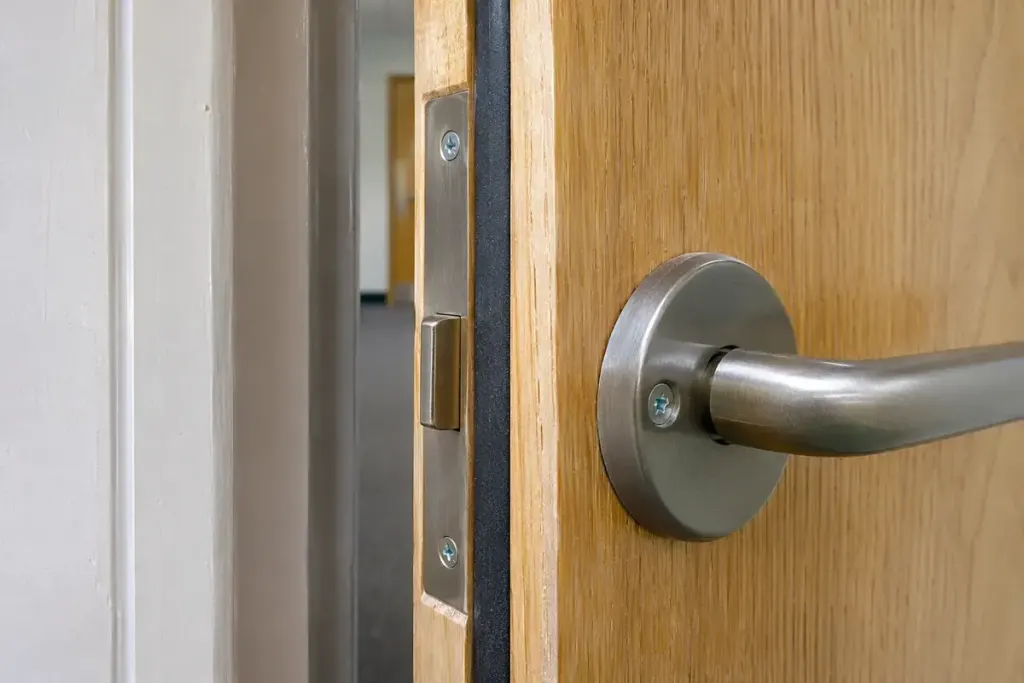
A narrow strip around a fire door can look less important than the heavy door leaf or metal closer. It belongs to the assembly for a reason. An intumescent seal is designed to expand when exposed to heat, helping protect gaps as part of the tested door arrangement. Lorient’s explanation of its intumescent seals describes this heat-activated role.
A cold-smoke seal has a different immediate job: restricting smoke leakage before heat activates an intumescent material. Products can combine functions, but similar-looking strips should not be assumed to be interchangeable.
The London Fire Brigade’s fire-door guidance identifies intumescent strips and cold-smoke seals as components of modern fire doors and stresses that seals and other fittings matter alongside the door itself.
Report a detail rather than inventing a repair
If a strip appears loose, missing or damaged, tell the building’s responsible person or maintenance team. Note the location, the side of the opening and what you can observe without pulling material away. A photograph taken safely can help distinguish a local defect from a vague report that “the door looks wrong”.
For example, “the strip on the latch edge has a visible break near the handle” gives the assessor a place to start. It does not claim that the entire door has passed or failed a fire-resistance test.
Leave the specification to the assembly
Do not replace a seal with ordinary draught tape because the width looks similar. Door construction, frame, gaps, hardware and the specified sealing system need to work together. A qualified professional should identify the appropriate component and assess any damage.
Likewise, do not peel out a strip to make a sticking door easier to close or trim a door edge without proper advice. A change that improves everyday movement can also alter the fire-door arrangement.
Keep doors operating as intended and follow the building’s reporting and fire-safety arrangements. A visual look at the strip is a useful observation, not certification of the door. The practical aim is to notice a defect early and get the complete assembly assessed by someone competent, rather than turn an unfamiliar fitting into a small DIY experiment.