
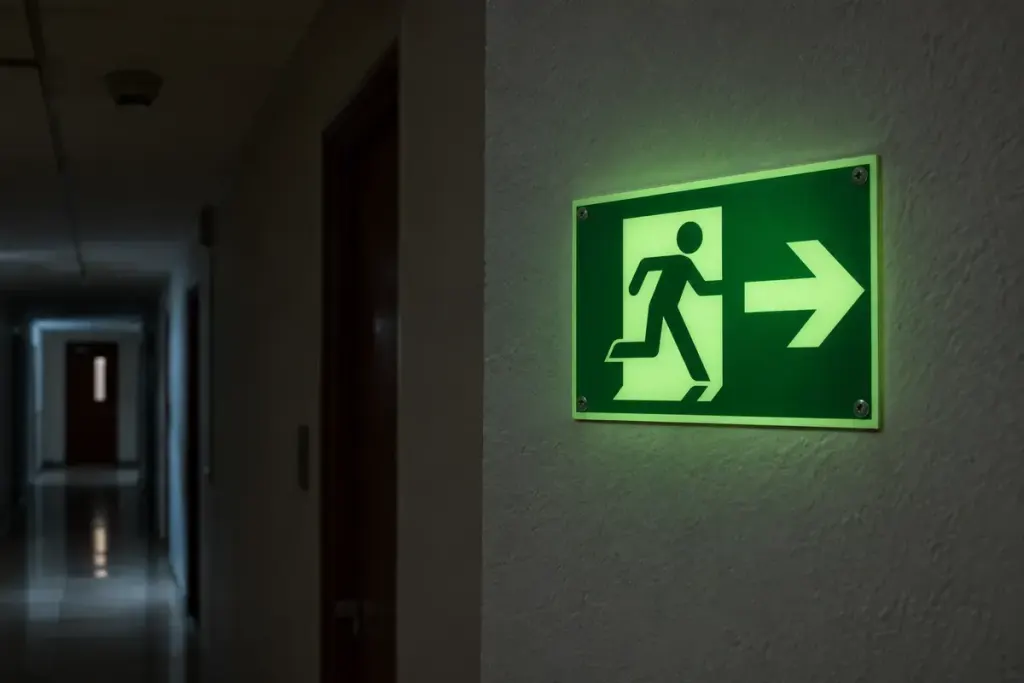
A glow-in-the-dark exit sign may have no electrical cable, yet it still depends on light. The material absorbs energy while illuminated and releases some of it afterwards. “No direct power connection” is not the same as “works in any dark corner.”
The installation instructions for Current Lighting’s DPLAF50 sign illustrate the point: that product is intended for locations with an external illumination source and specified operating conditions. Those instructions belong to that model. They should not be converted into a universal charging time or light level for every photoluminescent sign.
A change elsewhere can affect the sign
Consider an office that replaces continuously lit corridor lighting with a motion-controlled arrangement. The exit sign has not moved, but the light reaching it may now be different. A new cupboard, decorative panel or darker lamp setting can raise a similar question. The sign’s installation needs to be reviewed as part of the changed environment.
A practical record can include the sign’s make and model, the light source used to charge it, the approved location and the maintenance instructions. This is more useful than a phone photograph taken immediately after someone shines a torch at it.
Visibility is a system question
Exit identification, route lighting and the physical escape route perform related jobs. A glowing symbol does not illuminate every stair tread or show whether a corridor is obstructed. Ask the responsible fire-safety professional to assess the whole arrangement against local requirements, including any emergency-lighting provision.
- Keep the sign unobstructed and follow its cleaning instructions.
- Record changes to nearby lighting, furniture or partitions.
- Use the manufacturer’s inspection method rather than inventing a quick brightness test.
- Report damage or doubtful visibility through the building’s maintenance process.
For a building user, the useful habit is simply to notice the route during normal occupancy. For the person responsible for the building, the task is more specific: verify that the installed sign receives the conditions it was approved to use and remains part of a workable escape plan.