
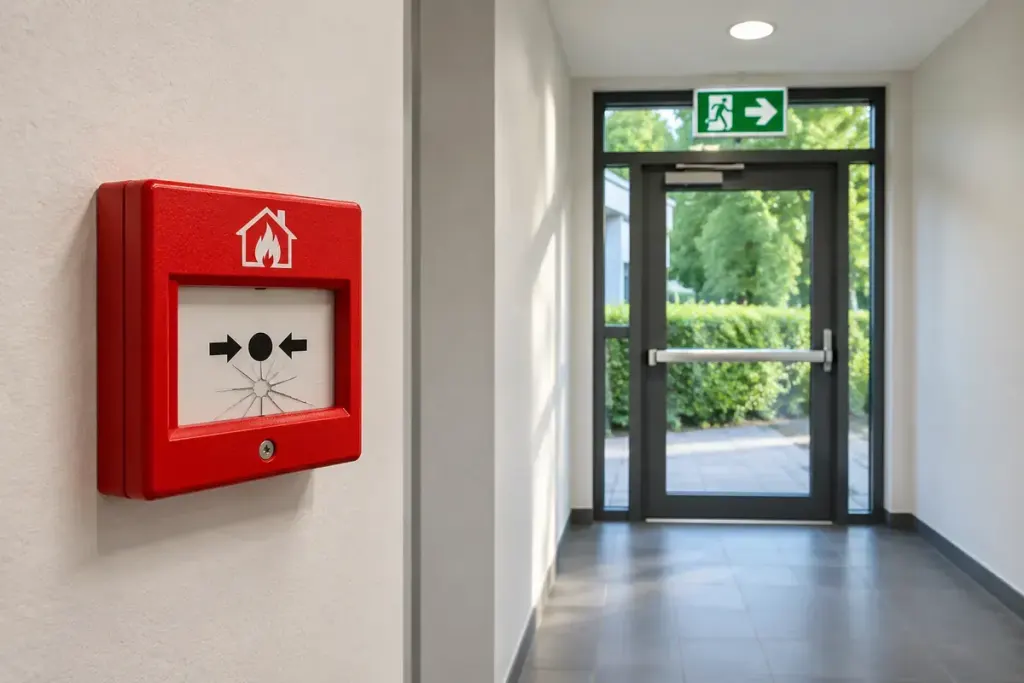
A red call point on the wall gives people a way to raise the building’s fire alarm. It does not, by its appearance alone, tell you whether anyone has contacted the fire service. That distinction belongs in an emergency plan before an alarm sounds.
Buildings use different arrangements. Some have monitored systems that send a signal elsewhere; others do not. As a concrete example, Sandwell Council’s fire-safety information tells residents that the alarms covered by its guidance do not automatically contact the fire service. That statement is about those buildings, not every alarm system. It shows why assumptions are a poor substitute for the site’s actual procedure.
Separate three jobs in the plan
Raising an alarm, responding to the alarm and contacting emergency services are connected but distinct tasks. A workplace induction should explain the approved alarm-raising method, the building’s response procedure and who makes the emergency call. It should also explain the fallback when that person is absent.
A practical briefing can use a simple question: “If I discover smoke here, what do I do first, and how will the fire service be contacted?” An answer such as “the panel sorts everything out” needs clarification from the person responsible for fire safety. Monitoring arrangements and fire-service responses can differ between premises and areas.
There is no need to test a call point yourself to answer that question. Testing, resetting and investigating faults belong to authorised people following the system’s procedures. Keep call points and escape routes visible and unobstructed, and report damage through the building’s reporting route.
When there is an actual fire
Follow the applicable emergency instructions, raise the alarm if it is safe to do so and contact emergency services from a safe place. Do not delay seeking help while trying to determine whether an automatic message has already been sent. Give the location and what you know rather than guessing about the cause.
The useful preparation is a clear division of responsibility with a workable backup—not confidence that every red box on a wall does the same thing.