
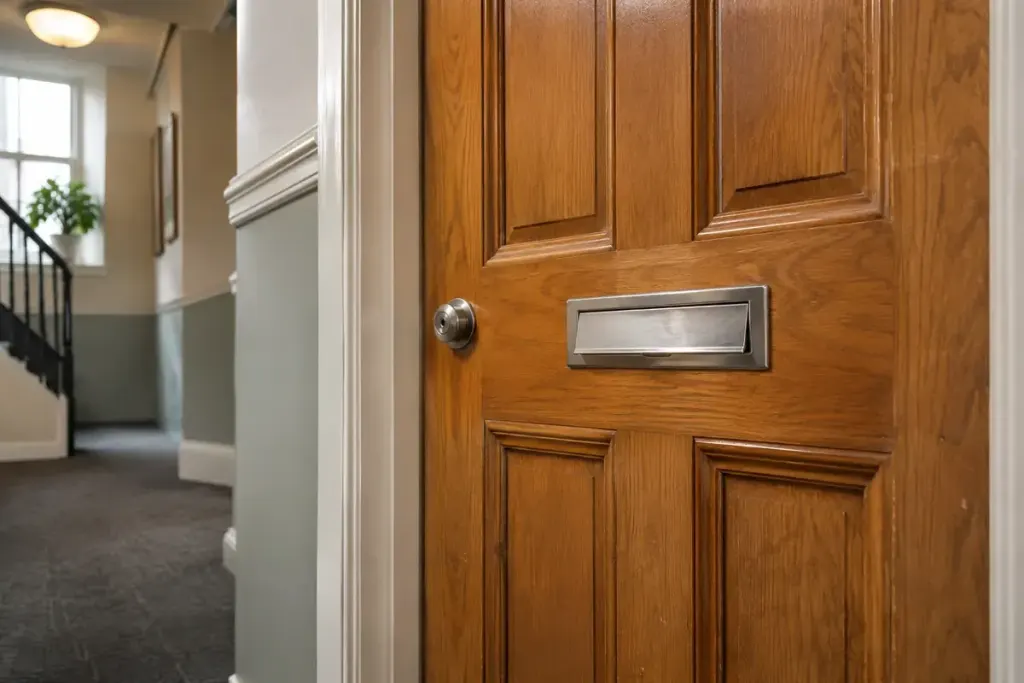
A new letter plate looks like a small improvement: cleaner metal, a quieter flap or less draught. On a fire door, however, the opening and the component fitted into it can be part of the door assembly’s fire performance.
London Fire Brigade’s fire-door guidance says that apertures for features such as letterboxes should be present during testing and that associated components need to be fire-safe. This makes the question more specific than whether the replacement covers the hole neatly.
Identify the door before choosing the fitting
If the door is part of a flat entrance or another protected route, ask the responsible building manager about its specification and maintenance process. Keep any available certification, manufacturer information and previous alteration records together.
A similar appearance is not evidence of compatibility. Nor does a product’s fire-related label establish that it is suitable for every door, thickness or opening. The relevant evidence concerns the component, the door construction and the way they are installed together.
Do not enlarge the cut-out, drill additional holes or pack gaps with an improvised material while waiting for advice. An attractive finish can hide a change that needs a competent assessment.
Make the maintenance request concrete
Describe the problem: a broken flap, loose fixing, missing component or unwanted draught. Photograph the accessible fitting without dismantling it. Include the door location so the person responsible can connect the request with the correct records.
Ask who will confirm compatibility and who will carry out the work. After an authorised repair, retain the product and installation details with the building’s maintenance record. Avoid describing the work simply as “letterbox replaced” if the exact part can be recorded.
This is not a do-it-yourself installation guide or a substitute for local requirements. It is a way to recognise that a small opening belongs to a larger safety system. The sensible first purchase may be professional advice, rather than the most convenient fitting on a shop shelf.