
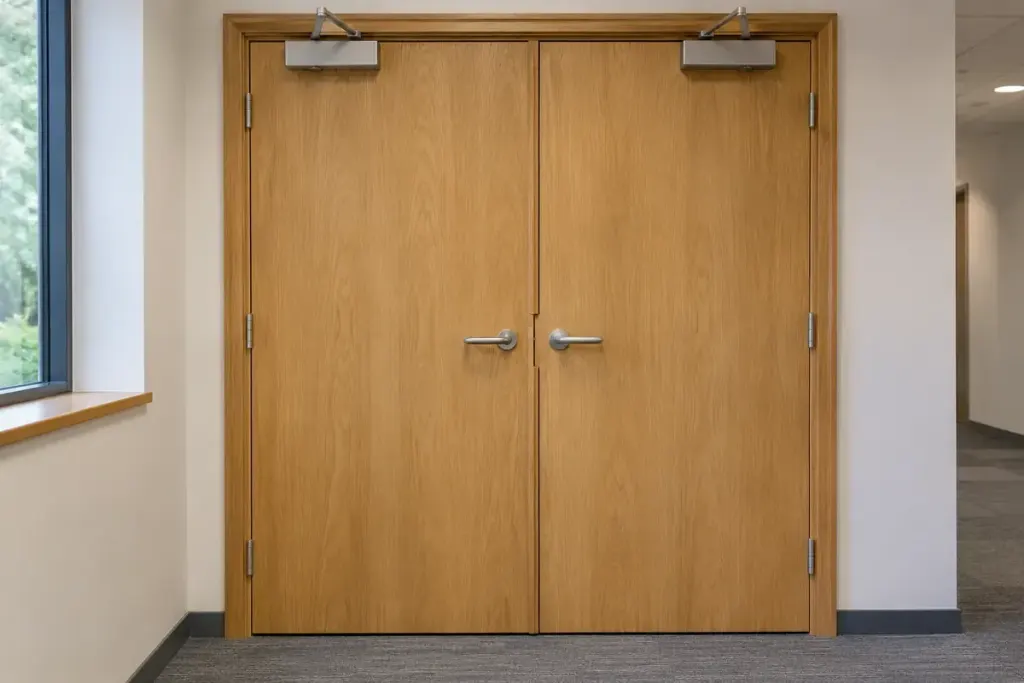
Two door leaves can each swing shut yet fail to close properly as a pair. Where their meeting edges overlap, the order matters: the leaf that should sit underneath must reach its place before the other finishes closing.
A door coordinator, sometimes called a selector, controls that sequence. It is a different function from simply pulling a door toward its frame.
Why the meeting edge changes the job
Briton’s double-door coordinator description identifies its purpose as controlling the closing sequence of rebated double doors. Allegion’s technical note on coordinators explains that suitable arrangements make the leaves close in the required order regardless of which is opened first.
Compatibility depends on the complete doorset and its hardware. A coordinator is not a universal accessory that can be added anywhere to create a compliant fire door, and an occupant should not adjust its mechanism by trial and error.
Report the behaviour, not a guessed repair
If you notice a pair binding at the middle, stopping short or leaving one leaf resting against the other, tell the responsible building manager. Useful details include the door’s location, what you observed during normal use, and whether anything was physically obstructing closure.
For example: “After both leaves were opened, the right leaf reached the centre first and the left one stayed partly open.” That gives a maintainer something concrete to investigate. “The closer is weak” assumes a cause before the whole assembly has been checked.
- Do not wedge a leaf open to avoid the collision.
- Do not remove arms, catches or seals to make the pair easier to use.
- Keep ordinary access clear and follow the building’s reporting procedure.
- Leave inspection, adjustment and replacement to a competent person working to the doorset requirements.
A maintenance visit should consider the leaves together, including the frame, hinges, closing devices, latching and meeting edges. A door that closes correctly only when somebody carefully chooses the order may not behave that way when people leave in a hurry. The aim is dependable closure in normal service, rather than a successful demonstration performed once by hand.