
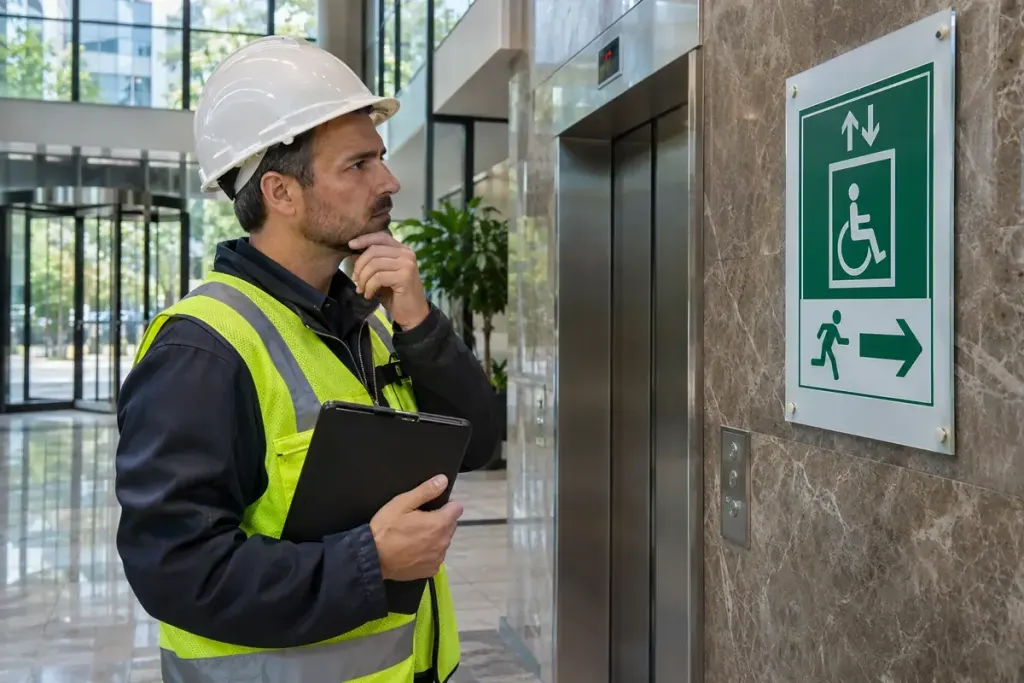
Two buildings may each have a specially protected lift, yet use it for different purposes during a fire. One arrangement may support occupant evacuation; another is designed primarily to help firefighters reach the incident.
The distinction is about a complete system and operating role, not merely the size of the lift car. A passenger lift does not become suitable for fire evacuation because it has room for a wheelchair or remains powered during an alarm.
Read the intended role
An evacuation lift forms part of an assessed strategy for moving occupants. A firefighting lift supports fire-service operations. The UK government’s guidance for places of assembly states that using firefighting lifts for evacuation should be coordinated with the fire and rescue service within pre-planned procedures.
That conditional arrangement is different from a visitor independently deciding that any lift marked for firefighters is available for escape. Control, protection, power supplies and management arrangements affect the role the equipment can perform.
Check the wording in your building information
For a venue manager, a useful review is to compare the fire strategy, lift documentation, signs and staff instructions. Do they describe the same intended use? If a document simply says “special lift”, ask the responsible fire-safety professional to clarify the actual provision before publishing visitor guidance.
For example, a booking team should not advertise an evacuation lift merely because a floor plan shows a firefighting shaft. The evidence needed is the building’s approved arrangement for occupant evacuation, with the relevant management procedures.
Occupants should follow the site’s instructions and emergency personnel, not test a lift during an alarm. If you need an accessible escape arrangement, discuss it before the visit. Understanding the two roles helps you ask a precise question and prevents a technical label from being mistaken for permission to use equipment.