
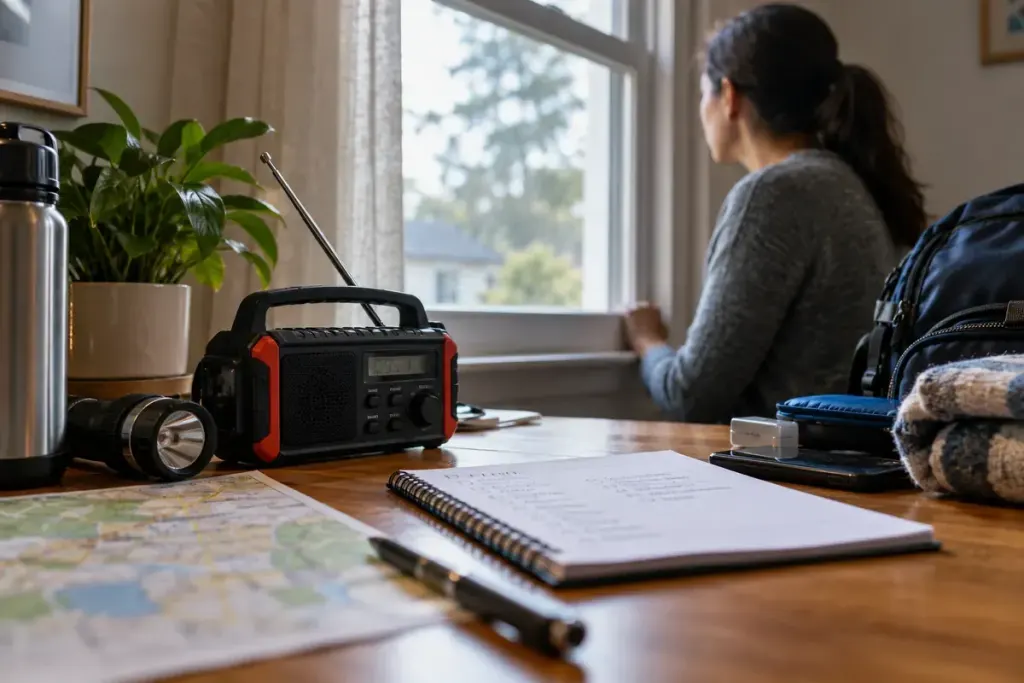
“Shelter in place” and “evacuate” are not interchangeable ways of saying that something dangerous is happening. One directs you toward appropriate protection where you are; the other directs you to leave an affected place. The right action depends on the hazard, your location and the instructions of the responsible emergency authorities.
Ready.gov’s shelter guidance show why a single universal shelter rule fails. Protection from high winds and escape from rising floodwater require different decisions. Do not treat a general sheltering article as an instruction to stay in a burning building or ignore an evacuation order.
Prepare two short household plans
For evacuation, identify how everyone would leave, where you could meet and what help would be needed for mobility, medication, transport or pets. Keep essential items accessible, but do not delay an urgent escape to collect possessions. Confirm locally recommended routes and alternatives before an emergency; an ordinary navigation app may not account for a closure or hazard.
For sheltering, identify the official guidance relevant to local hazards. The appropriate room, ventilation instructions and supplies can differ. Avoid inventing one household rule such as “always go downstairs” or “always open the windows”. Write down where to obtain authoritative instructions and how you will receive them if a usual device loses power.
During an alert, read the location, hazard, requested action and update time. A message for a neighbouring zone may not apply to your address. Share the complete instruction with household members rather than forwarding only a dramatic headline or an old screenshot.
Practise the communication part while conditions are calm: who checks the alert, who helps someone who needs assistance and how you confirm everyone is accounted for. If directions change, follow the current official instruction. Returning to an evacuated area or ending sheltering should follow the relevant authorities’ guidance, not the fact that the street suddenly looks quieter.