
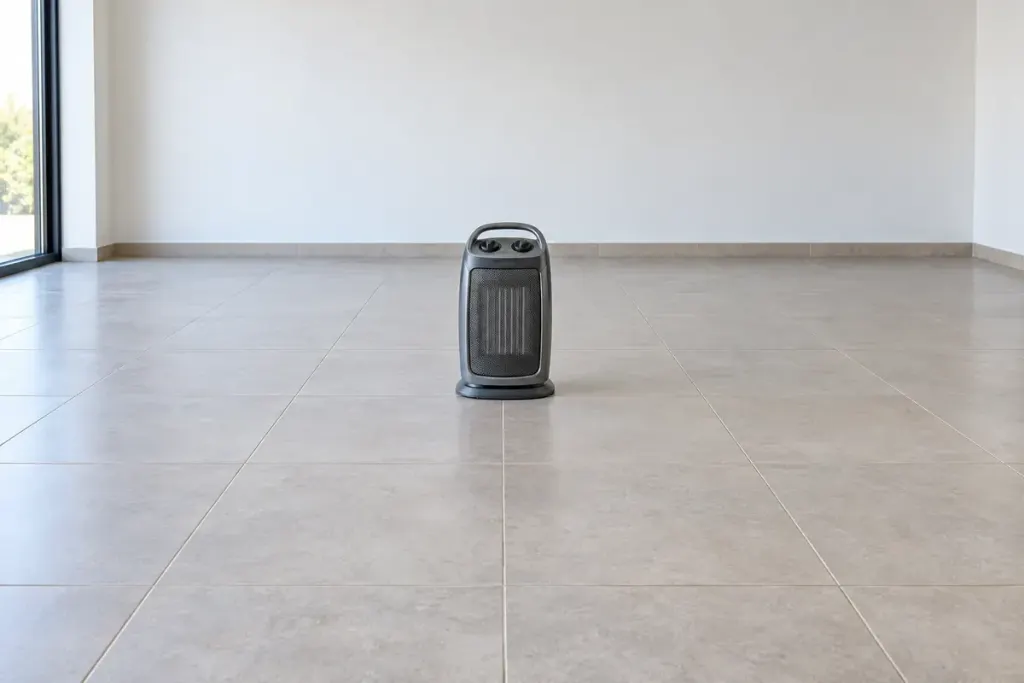
A portable heater can fit into a narrow gap beside a chair. That does not make the gap a suitable operating space. Curtains move, laundry gets dropped, and a chair that was clear of the heater can shift when someone sits down.
The U.S. Consumer Product Safety Commission’s heater guidance calls for at least three feet of clearance from combustible materials. It also advises plugging portable electric heaters directly into a wall outlet rather than an extension cord or power strip, and turning them off when sleeping or leaving them unattended. Follow the heater manufacturer’s instructions as well.
Check the room as it is actually used
Begin with the heater off. Look around its intended position from floor level upward: a sofa throw may hang lower than expected, and the edge of a curtain may reach farther when a window opens. Consider where children, pets, or someone carrying a washing basket will walk.
A useful household habit is to treat the required clear area as unavailable storage. Do not let a “temporary” pile of cardboard or clothes become part of the heater’s surroundings. If the room cannot accommodate the clearance specified for the appliance, choose another heating arrangement rather than squeezing the appliance into place.
Check the cord and plug before use. Stop using equipment with damage or signs of overheating and have the problem assessed; moving a hot plug to another convenient socket is not a repair. Keep the heater on the stable surface required by its instructions.
Finally, connect switching it off to something you already do: leaving the room, preparing for bed, or closing the workday. A clear space and a reliable off routine solve different problems. Both need to remain in place after the first careful setup.