
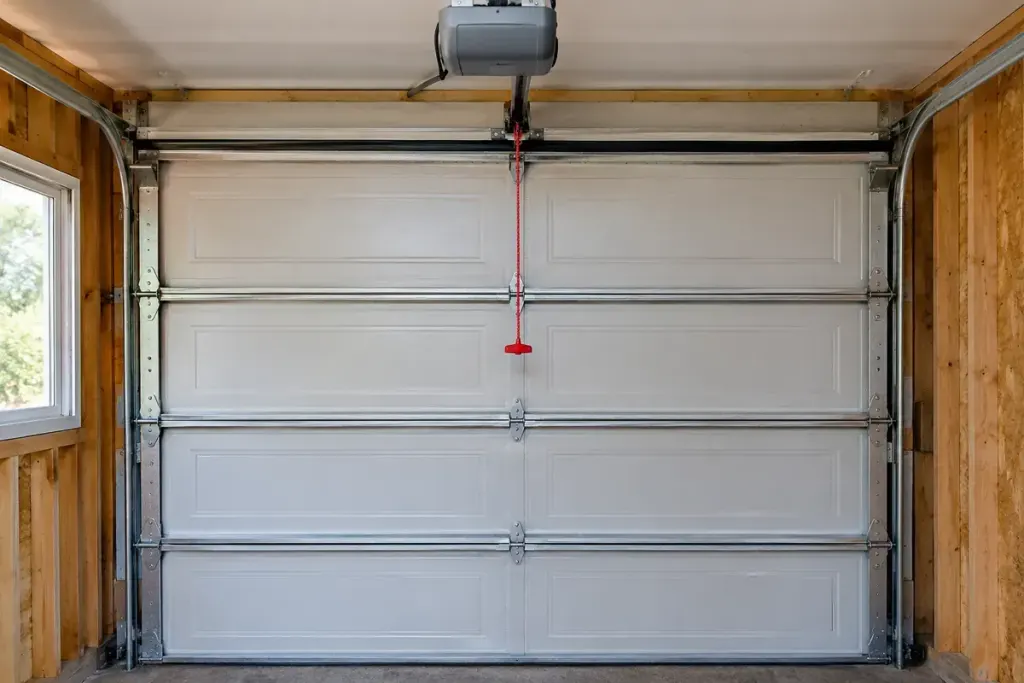
A power cut is an inconvenient time to discover that the garage door is your only route to the car. Preparation starts with the opener’s model and instructions, while the door and lighting are working normally.
A powered opener and the door’s balancing springs have different jobs. Releasing the opener does not make a heavy or defective door safe to move. Chamberlain’s manual-operation guidance warns that weak or broken springs can allow a door to fall rapidly, and says to use the emergency release with the door fully closed where possible.
Find the access problem before the outage
Check whether you can enter the garage through another door. If there is no alternative entrance, ask an installer how your specific system provides emergency access from outside. Do not assume an interior release cord will help when you cannot reach it.
Keep the correct manual somewhere accessible without mains power. Include the professional service contact in the household’s ordinary maintenance information. If a battery backup is fitted, follow its testing and replacement instructions rather than assuming it will always be ready.
Know the stop signs
Follow the opener manufacturer’s procedure, keep people and pets clear, and never use the release cord as a lifting handle. If the door feels unusually heavy, will not stay where the instructions say it should, or drops unexpectedly, stop and contact a garage-door professional.
Leave spring, cable and balancing work to trained technicians. Trying to compensate for a mechanical fault during a blackout can turn an access problem into an injury.
Once power returns, the reconnection procedure also depends on the opener. Use the manual and verify the normal operation as instructed. A useful household rehearsal is therefore about locating instructions and understanding limits; it should not involve improvising repairs or deliberately testing a door you suspect is damaged.