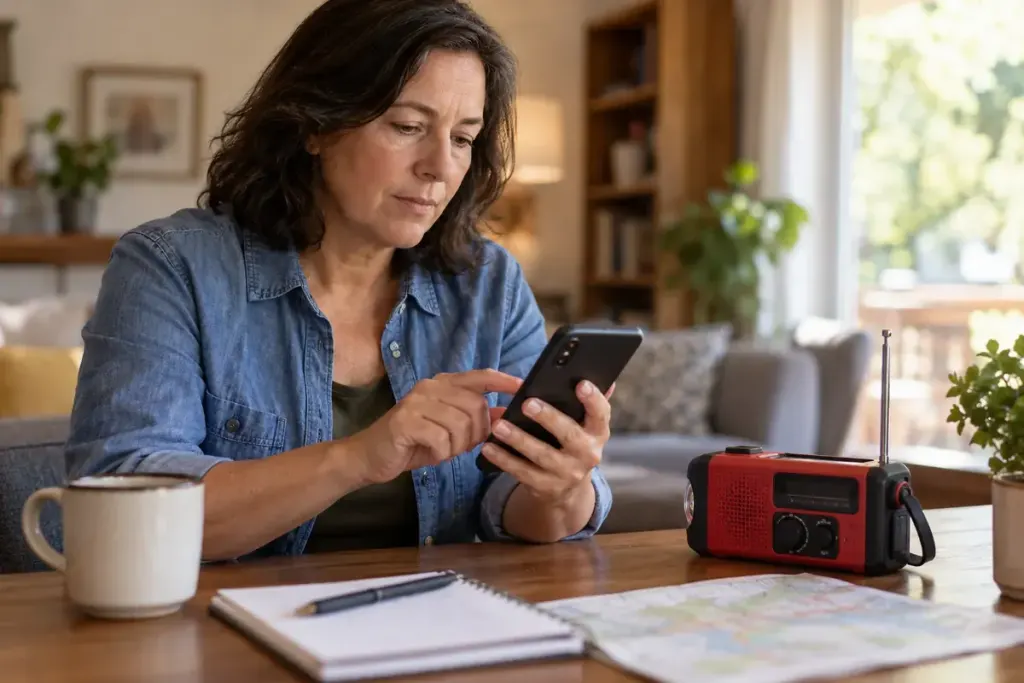
An emergency alert setting is easy to overlook until a neighbour’s phone sounds and yours stays quiet. Differences in devices, networks, location and available alert categories can all matter. A calm afternoon is a better time to inspect the setup than an unfolding incident.
In the United States, FEMA’s Wireless Emergency Alerts fact sheet describes messages delivered through participating wireless services. Other countries operate different systems. Start with your local authority and your device manufacturer’s current instructions.
Check the route a warning would take
- Find the emergency-alert controls supported by the phone and network.
- Review which categories can be changed and which are mandatory locally.
- Check whether the municipality offers a separate opt-in service for local incidents.
- Make sure any registered address or contact number is still correct.
Do not use a real emergency number to test a setting. Where authorities announce an official test, read its scope: a test may cover one service or region rather than every possible warning channel.
Agree what happens after the sound
Read the message’s location, time and instructions before forwarding it. A screenshot may circulate after the warning has changed, and an alert relevant to one district may not apply in the same way elsewhere.
Discuss how household members will receive information if a phone is flat, out of coverage or unavailable. Include people who may need accessible formats or help interpreting an instruction. Keep a suitable charging option ready and know the official channels to consult.
Phone alerts support preparedness; they do not replace working smoke alarms or immediate action when you directly encounter danger. The useful result of this review is a clear understanding of which warnings your household can receive and how you will respond, rather than a promise that one device will always warn you first.