
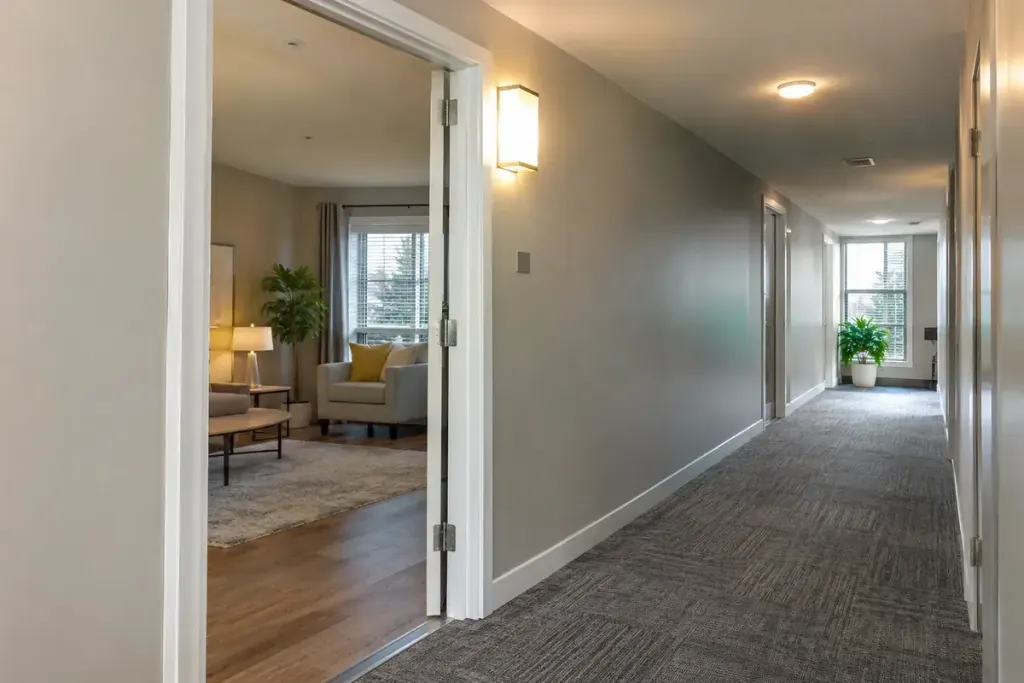
The entrance you use every day may look different to a crew arriving with equipment. A narrow turn, locked gate or row of stored boxes can interrupt access long before anyone reaches the person needing help. Reviewing that route belongs in routine building preparation.
This is a planning task for a calm day, not an instruction to delay an emergency call. During an incident, contact the local emergency service promptly and follow the call handler’s directions. Do not attempt to carry an injured person simply because a route looks awkward.
Walk the route with the building manager
Identify the entrance responders would normally use, the floor and room description, and any controlled doors between them. Ask who can provide access outside staffed hours. A gate code remembered by one employee is not a resilient access arrangement; any emergency-access information must be handled securely.
Look at changes of direction and shared corridors as well as straight doorways. Report obstructions through the building’s normal process and keep escape routes clear. Actual stretcher movement and any lifting equipment need assessment by trained responders, so avoid inventing a standard clearance from a household tape-measure check.
North West Ambulance Service’s arrival guidance includes clearing entrances, securing pets and making doors accessible. Those simple tasks can help when someone is available to do them safely without leaving essential care unattended.
Keep the information usable
Write a short location description that a visitor could understand: building name, entrance, floor and any easily confused adjoining address. Review it when doors, reception hours or access arrangements change. For a larger site, agree who meets the crew and who stays with the person needing assistance.
Do not wedge fire doors open or compromise security as a permanent shortcut. The aim is an agreed route and accurate information, with emergency decisions left to the people directing the response.