
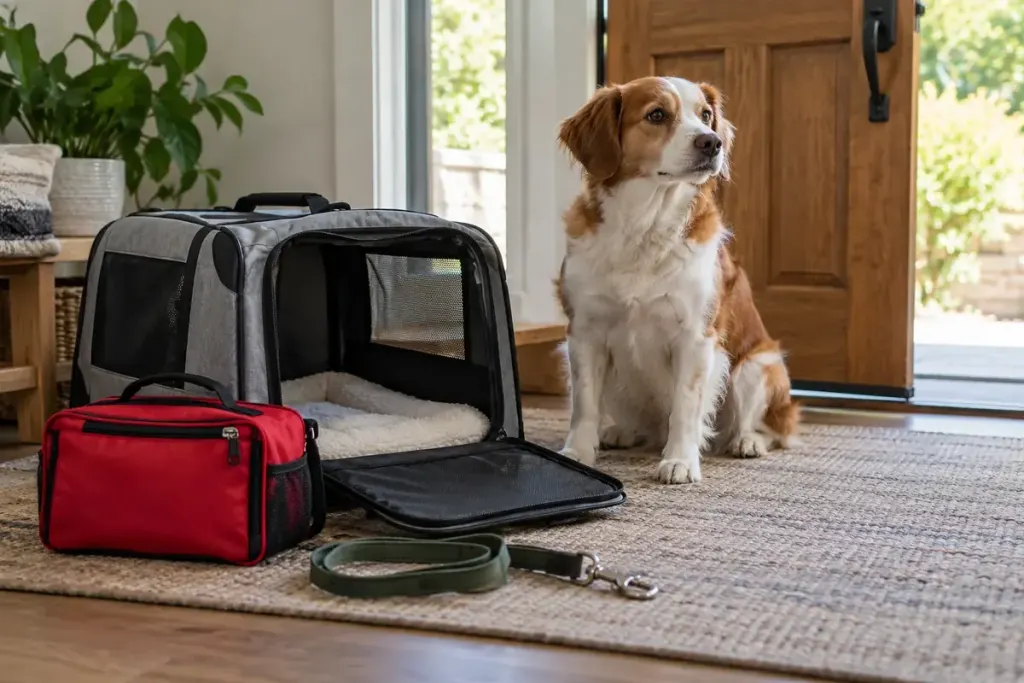
The carrier is in the cupboard, but the cupboard is behind a stack of boxes. Your cat has only seen the carrier before a veterinary appointment. That is useful information to discover on a quiet afternoon, rather than during an evacuation.
The American Red Cross pet preparedness guidance includes secure carriers or restraints, supplies and an evacuation plan. A carrier belongs in that plan as something a person can actually retrieve and use, not merely an item marked as owned.
A rehearsal without an alarm or smoke
Choose a calm time. Locate the carrier, check that its door and fastenings work, and make sure it is suitable for the animal. Practise familiarisation gently, using advice from your vet if the animal becomes distressed. Do not frighten the pet to make the exercise feel realistic.
Walk through your normal exit with an empty carrier first. A bulky carrier can reveal a narrow gap that an unladen person overlooks. Move stored belongings away from the escape route; do not create a permanent obstacle by leaving the carrier in the doorway.
Then discuss the practical division of tasks: who can handle each animal, where a lead is kept and where the household will meet. Include a fallback for a family member who is away. A plan requiring one particular person to be home has a predictable weakness.
The limit every household member needs to know
A rehearsal must never teach someone to delay escaping a fire or go back inside for an animal. The Red Cross’s pet fire safety advice puts human safety first. Once outside, tell firefighters about an animal believed to remain inside and its likely location.
For a wider evacuation, identify a destination that accepts your pet and confirm its requirements. Keep relevant records and necessary supplies accessible. Finish the rehearsal by correcting one obstacle you found: a missing fastening, an inaccessible lead or an unclear responsibility. That small correction makes the written plan more usable.