
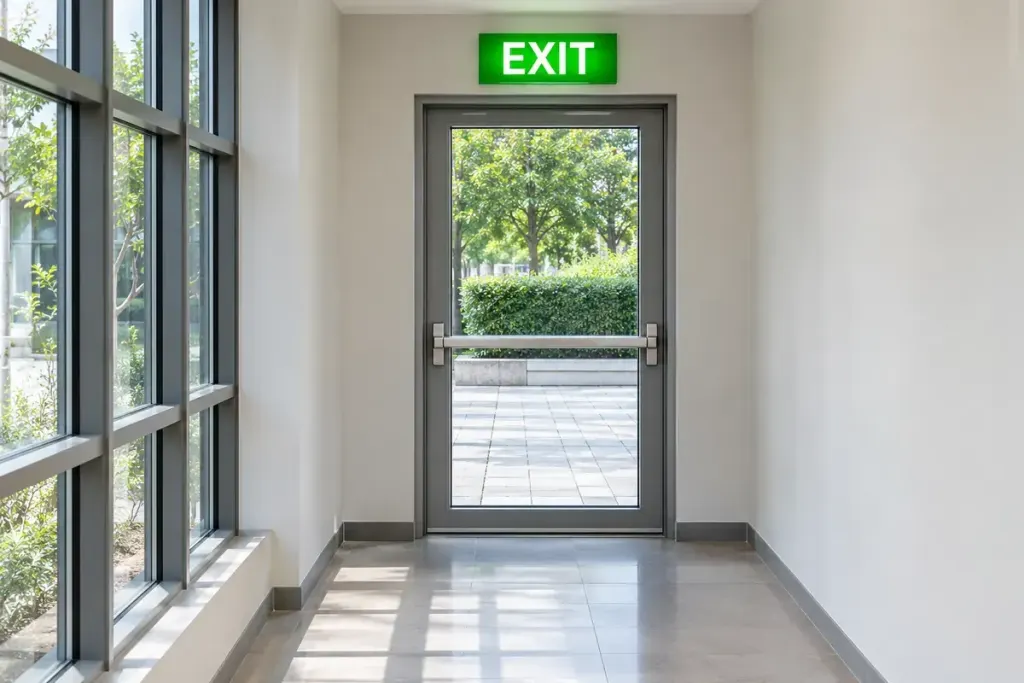
An exit sign above a doorway is reassuring only if the route beyond it works. A corridor may turn, pass through another protected doorway and continue outside before reaching a safe place. Learning that sequence while the building is calm is easier than trying to work it out during an alarm.
Use the building’s evacuation instructions and any assistance plan that applies to you. A sign is part of that system; it does not replace the instructions or establish that every visitor can use the same route unaided.
Walk the route as an ordinary building user
At a new workplace or venue, ask where the designated routes lead and where people gather afterwards. Notice the next directional sign from each turn. Identify an alternative route in the building’s plan rather than assuming the entrance you arrived through is the only way out.
In the United States, OSHA’s exit-route guidance addresses visibility, lighting, clear routes and signs where the direction is not apparent. Local requirements elsewhere may differ, but the practical observation remains useful: can a person follow the intended route without guessing?
Do not test alarmed doors, override access controls or enter restricted areas as part of a personal walkthrough. Ask the responsible person to explain anything you cannot check through normal permitted access.
Describe a fault precisely
“The exit is confusing” is less actionable than “From the meeting-room door, the arrow is hidden by the temporary display.” Record the location, what blocks the view or route, and when you noticed it. A photograph may help if workplace rules permit one and it contains no private information.
Report stored boxes, furniture, unclear directions or a damaged sign through the building’s safety procedure. Do not relocate fire equipment or improvise your own signs. The building manager needs to correct the system coherently.
During an emergency, follow the alarm instructions and emergency personnel. A planned route that has become unsafe because of smoke or another hazard is not a route to insist on using simply because you rehearsed it. The value of preparation is knowing the building’s arrangements and alternatives before decisions become urgent—not treating a remembered arrow as permission to ignore conditions.