
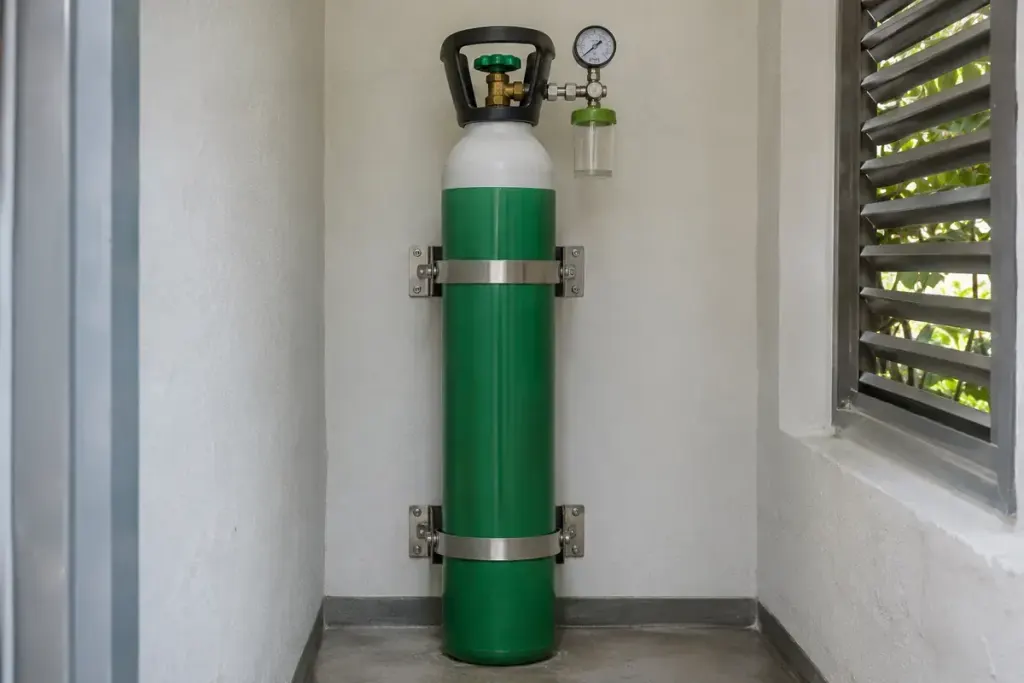
Oxygen is easy to underestimate because it does not look like fuel. Yet a leak can make nearby materials ignite more readily and burn more intensely. A room can become more dangerous without acquiring a warning smell.
The UK’s Health and Safety Executive guidance on oxygen explains that enrichment can result from leaking equipment, poor connections and inadequate ventilation. Clothing and hair are particularly concerning because an oxygen-rich environment can make an ordinary ignition source much more hazardous.
Do not improvise with oxygen equipment
Use equipment intended for oxygen service and follow its operating instructions. Oxygen is not a substitute for compressed air when cleaning dust from clothes or a workbench. Maintenance, connections and leak concerns belong with trained people who understand the system.
For a practical workplace conversation, identify where oxygen is used, who is responsible for the equipment, which activities introduce ignition sources, and how a suspected leak is reported. Put that information where a new worker can find it, rather than relying on a verbal warning given months earlier.
Home oxygen needs a household plan too
If oxygen has been prescribed, follow the supplier’s and clinical team’s specific instructions about ventilation, storage, distances and ignition sources. Keep smoking and flames away from oxygen use. Do not change a prescribed flow rate or disconnect medically necessary treatment simply to apply generic advice from an article.
Visitors and carers need to understand the restrictions before lighting a cigarette or using equipment nearby. Explain them plainly; an “oxygen in use” sign is more useful when the household also knows what it requires.
If there is fire, leave the danger area and contact emergency services. A suspected equipment leak without fire should be handled through the supplier’s emergency procedure, without experimenting with repairs. The key distinction is that oxygen can intensify combustion even though it is not the material being burned.