
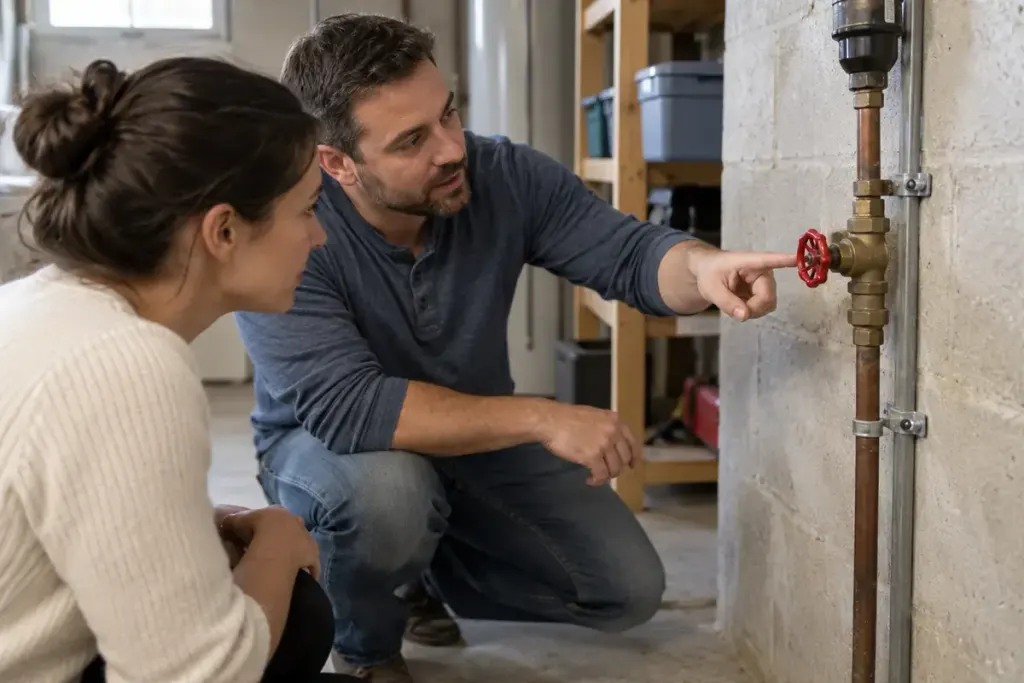
A leaking pipe is a poor moment to discover that the cupboard containing the water valve is packed with boxes. Finding the right control beforehand gives the household a practical action to take without guessing at unfamiliar pipes.
Thames Water’s inside-stop-valve guidance illustrates common locations and explains that flats or shared supplies can have different arrangements. Use your own water supplier’s advice and the building’s instructions to identify the correct valve for your property.
Identify it, then make it reachable
Ask a qualified plumber, landlord or building manager if you are unsure. Do not identify a valve by its colour alone or assume that every control near the water meter belongs to your home. A communal control may affect neighbours, and utility-owned equipment can have separate access rules.
Once identified, keep the approach clear and add a simple label if appropriate. Photograph the location for household reference, avoiding public sharing of security-sensitive access details. Record any key or access arrangement that an authorised occupant would need.
Plan for a valve that will not move
Check operation only according to the relevant instructions and at a suitable time. Never force a seized or damaged valve. Arrange maintenance before a leak turns a known problem into an urgent one.
Write down the building’s emergency maintenance contact and the water supplier’s official contact route. Make sure another adult knows where that information is kept. A note in one person’s locked phone may be inaccessible when that person is away.
Water near electrical equipment changes the situation: do not enter standing water or reach through a wet area to operate equipment. Keep clear and seek appropriate emergency assistance. This preparation is about safely locating and understanding an ordinary household control, not attempting repairs or operating unfamiliar utility systems during a dangerous incident.