
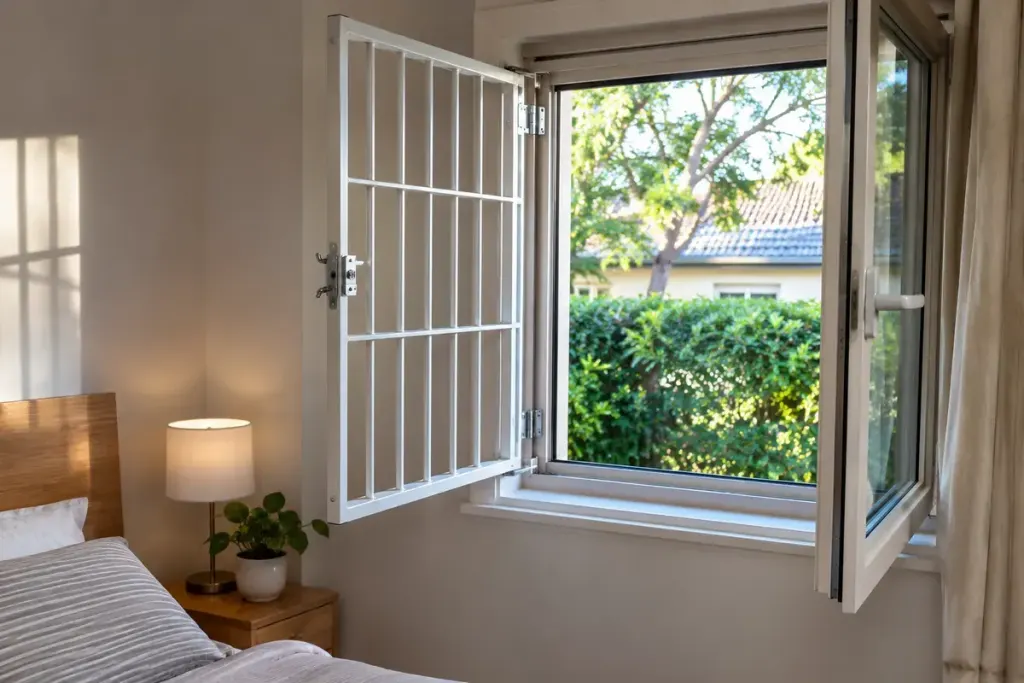
A bedroom window may look like a second exit while a fixed grille makes it unusable. Security bars can protect against entry, but an escape route must also work from the inside. The time to discover a missing release or a seized hinge is during a calm inspection, not when smoke is entering the room.
The US Fire Administration’s escape-planning guidance calls for emergency release devices on security bars so they can be opened quickly from inside. It also highlights stuck windows and furniture blocking exits as obstacles to resolve beforehand.
Test the whole route, safely
Check the window and the grille as separate parts. Does the window open? Does the release operate? Does the grille move far enough to leave the required opening? Can the person who sleeps in the room reach and use the mechanism? Do this from a safe position; do not practise climbing out of an upper-storey window.
A release that depends on finding a loose key or fetching a tool deserves professional attention. Ask the installer or local fire service about a suitable arrangement and the applicable building requirements. Do not improvise alterations that compromise the opening or leave a sharp, unstable frame.
Consider the route beyond the window too. A clear opening does not make an unsafe drop a practical escape. Upper floors, restricted mobility and young children need a household-specific plan. Seek local fire-safety advice where the available routes are unclear.
Make the mechanism familiar
After a compliant arrangement is installed, show household members how it works and include it in routine checks. A newly positioned bed, thick curtain or stored box can undo an otherwise sensible setup. Visitors sleeping in the room should know the escape plan as well.
If there is a fire, follow the safest available exit route, get outside and contact emergency services. Do not re-enter for possessions. This check is about removing a preventable barrier before an emergency, so that the window shown on your plan is an exit people can actually use.