
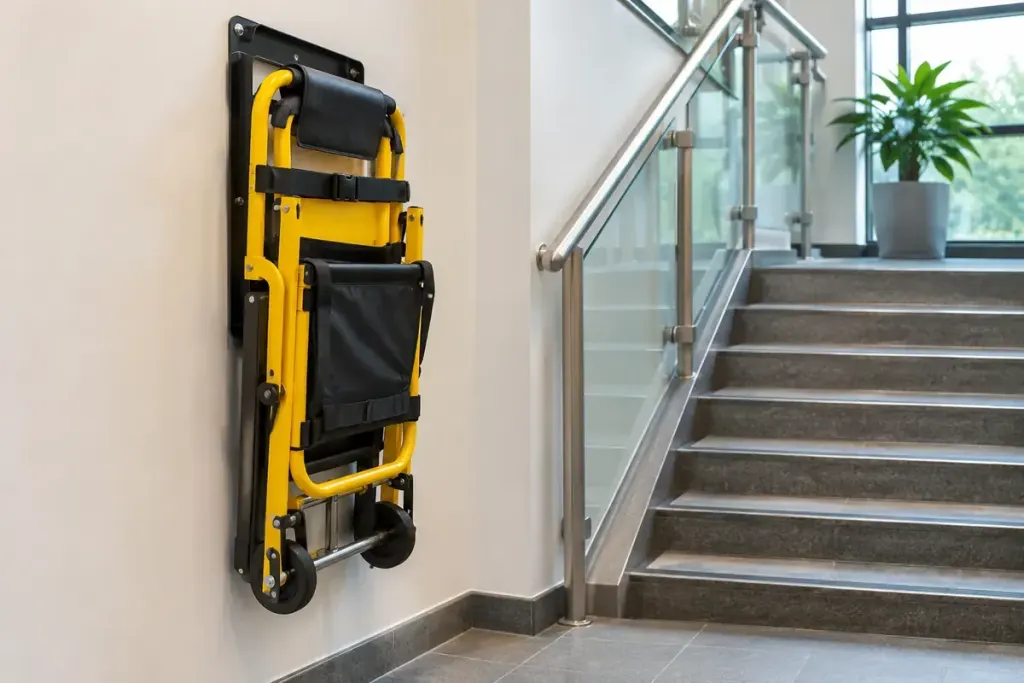
A folded evacuation chair on a stair landing can look reassuring. Its presence, however, does not tell a visitor who can operate it, whether it suits their needs, or how it fits the building’s escape plan. Those questions need answers during planning, while there is time to discuss them calmly.
The UK government’s guidance on means of escape for disabled people treats evacuation equipment as part of a wider assessment. The person, the route, the equipment and the available assistance all have to work together.
Begin with the person who may need assistance
Do not assume that every wheelchair user can transfer into the same chair or remain comfortably supported in it. Discuss the individual’s needs and preferences through the building’s evacuation-planning process. Include how assistance will be requested and what happens when the usual helper is absent.
A useful planning conversation asks who has assessed suitability, which alternative arrangements are available, and how those arrangements will be communicated to staff and visitors. Avoid making the person repeat private medical details to everyone on a rota.
Identify trained operators and a workable route
Different chair designs have different operating requirements. Training must relate to the equipment actually installed, including the number of operators required. The University of Glasgow’s assisted-evacuation guidance emphasises that untrained people should not attempt to use evacuation chairs.
Ask how training is refreshed, how operators are available across opening hours, and who checks the chair’s condition. A certificate from years ago is not a substitute for an organisation knowing who can act today.
The route also needs professional assessment. Chair storage, access to the equipment, stair geometry and the eventual exit are practical details that a wall-mounted unit cannot resolve by itself.
Practise through the agreed process
Planned exercises should follow competent guidance and respect the participant’s consent and suitability. An improvised stair demonstration is not an appropriate way to discover limitations.
Record responsibilities clearly and review them when staffing, layout or an individual’s needs change. In a real emergency, follow the building’s established procedure and emergency-service directions. The aim of preparation is a reliable arrangement people understand, not simply an item of equipment everyone hopes someone else can use.