If a pan catches fire, a familiar kitchen action can become the wrong action. Carrying it to the sink or pouring water into burning oil can spread the danger. The first priority is getting people safe, not saving the meal or proving you can manage the flames.
If you are unsure, the fire is spreading, or you do not have a clear escape route, leave, close the door behind you if safe, and call the local emergency service from outside. Do not re-enter.
Know the limited small-pan response
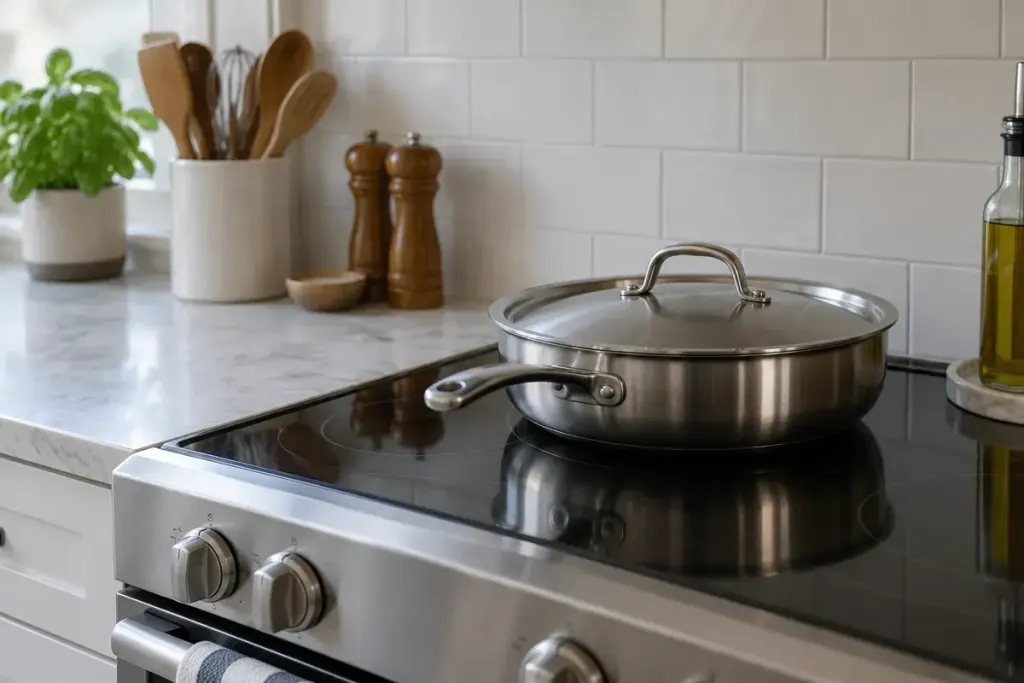
The NFPA cooking safety sheet describes sliding a lid over a small grease fire and switching off the burner, leaving the pan covered until completely cool. Only consider this when it is safe to do so without approaching through flames or smoke. Do not move the burning pan, use water, or lift the lid to check whether the fire has stopped.
For an oven fire, keep the door closed and turn off the heat if safe. If there is any doubt about control, evacuate. Equipment and local guidance vary; specialist training is the place to learn extinguisher use, not an emergency in a crowded kitchen.
Prepare while everything is cold
Look at the cooking space before your next meal. Can a suitable lid be reached without leaning over the hob? Are towels, packaging and wooden utensils clear of the burners? Can everyone leave without squeezing past the person cooking?
Make one practical household agreement: if someone calls for everyone to leave, no one returns for a phone, bag or pet. Discuss the outside meeting place separately from cooking so that the plan does not depend on a single person remembering every instruction under stress.
Stay with frying food and avoid cooking when too tired or impaired to supervise it. A timer can remind you of food in the oven, but it cannot watch hot oil. Keep children away from the cooking area and turn handles so they are less likely to be knocked.
The most useful kitchen preparation may be removing an obstacle, relocating a towel or finding the correct lid today. These are small decisions you can make calmly, before the room fills with smoke.