
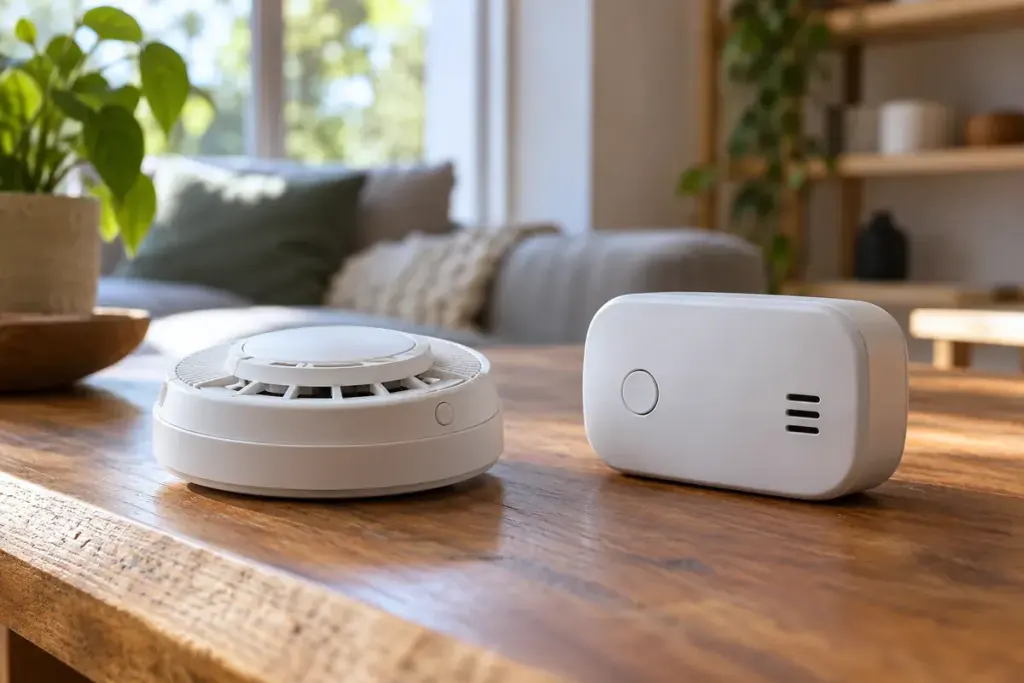
Two white alarms can look almost identical while watching for different hazards. Before counting the devices in a home, identify what each one is designed to detect. A smoke alarm should not be assumed to provide carbon monoxide detection.
The US Consumer Product Safety Commission describes separate smoke and CO alarms as well as combination models. Check the product label and official manual. A combination device should explicitly identify both functions; its shape or display is not enough to establish this.
Match the model to its instructions
Find the model number safely, using existing paperwork or assistance if the installed device cannot be reached without risk. Download the matching manual from the manufacturer. A similar-looking product may use different signals, power arrangements or replacement instructions.
Use local fire-service and building guidance to check coverage and placement. Do not simply put a CO alarm where a smoke alarm happened to be. The correct arrangement depends on the product, property and applicable requirements.
Know the response before interpreting a sound
CO has no colour or smell, so waiting for a sensory warning is unsafe. The CPSC’s CO emergency guidance says to move outside to fresh air and call emergency services when the alarm sounds. Do not search for the source or re-enter until responders say it is safe.
A maintenance chirp may be different from an emergency signal, but the distinction must come from the manual, not a guess made while an alarm continues. If you are uncertain whether there is an emergency, prioritise getting people to safety and seeking help.
During a calm household review, give everyone a chance to hear the manufacturer’s demonstration or approved test and understand the response. Consider people who may not hear, recognise or act on an audible signal without assistance; ask the fire service about suitable warning arrangements.
Alarms do not replace safe use and maintenance of fuel-burning equipment. The point of this review is to identify a gap that a visual count can miss: five devices labelled for smoke are not five devices detecting every household hazard. Record the function alongside the model so future replacements preserve the intended protection.