
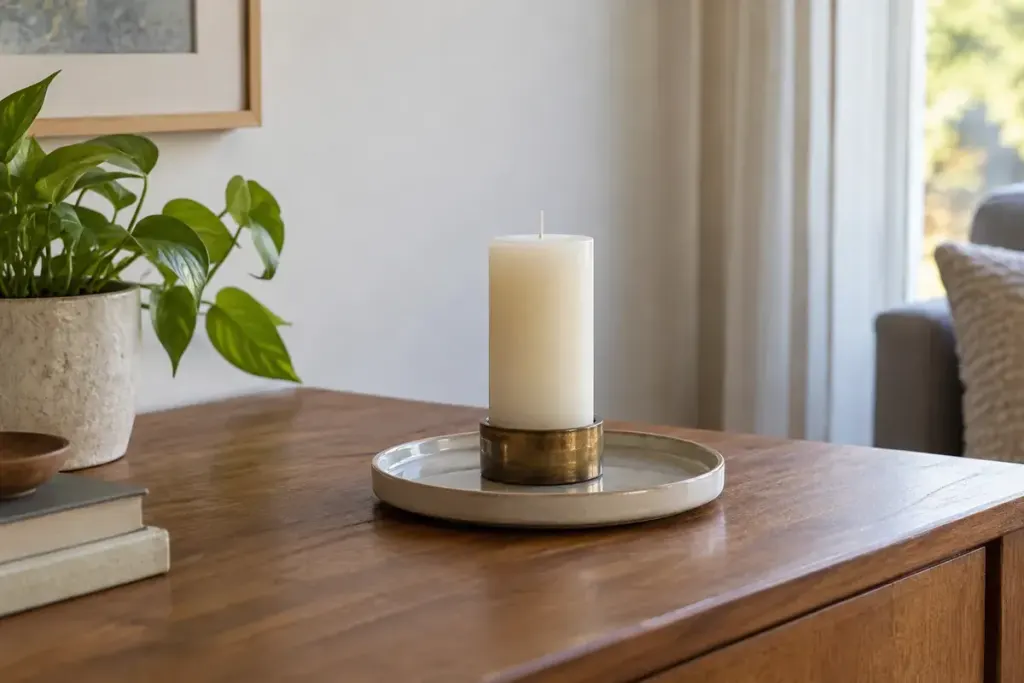
The table is clear when a candle is lit. Later, a shopping bag lands beside it and a curtain moves in the draught. Candle placement is a condition that must remain safe, not a check that expires once the flame looks attractive.
The US Fire Administration’s candle guidance recommends stable holders, separation from things that burn, and extinguishing candles when leaving the room or going to bed. It specifies at least 12 inches of clearance from combustible items and recommends flameless alternatives.
Look at the route around the candle
A suitable holder still needs a sturdy, uncluttered surface. Consider sleeves passing over the table, a pet’s route, a child’s reach and the place where someone normally drops papers. A space that is empty now may not remain empty during a gathering.
Keep hair and loose clothing away while lighting or extinguishing the candle. Follow the product’s instructions about use and when to stop burning it; the last bit of wax is not a target to achieve at any cost.
Before a meal, make the arrangement practical for serving dishes. If people must reach across a flame to pass food, change the arrangement or use a flameless light.
Give leaving the room a clear decision
Extinguish the candle rather than assuming someone else will watch it. Do not use candles where people may fall asleep, and use a torch or suitable battery-powered lighting during a power cut.
A flameless candle may meet the decorative purpose without an open flame. Choose and use it according to its own instructions, including safe battery handling where relevant.
For a household routine, keep the extinguishing step attached to a familiar action such as clearing the table, while still extinguishing immediately whenever you leave. A reminder supports attention; it does not replace supervision. The useful question is whether the arrangement will remain controlled for every minute the candle is lit.