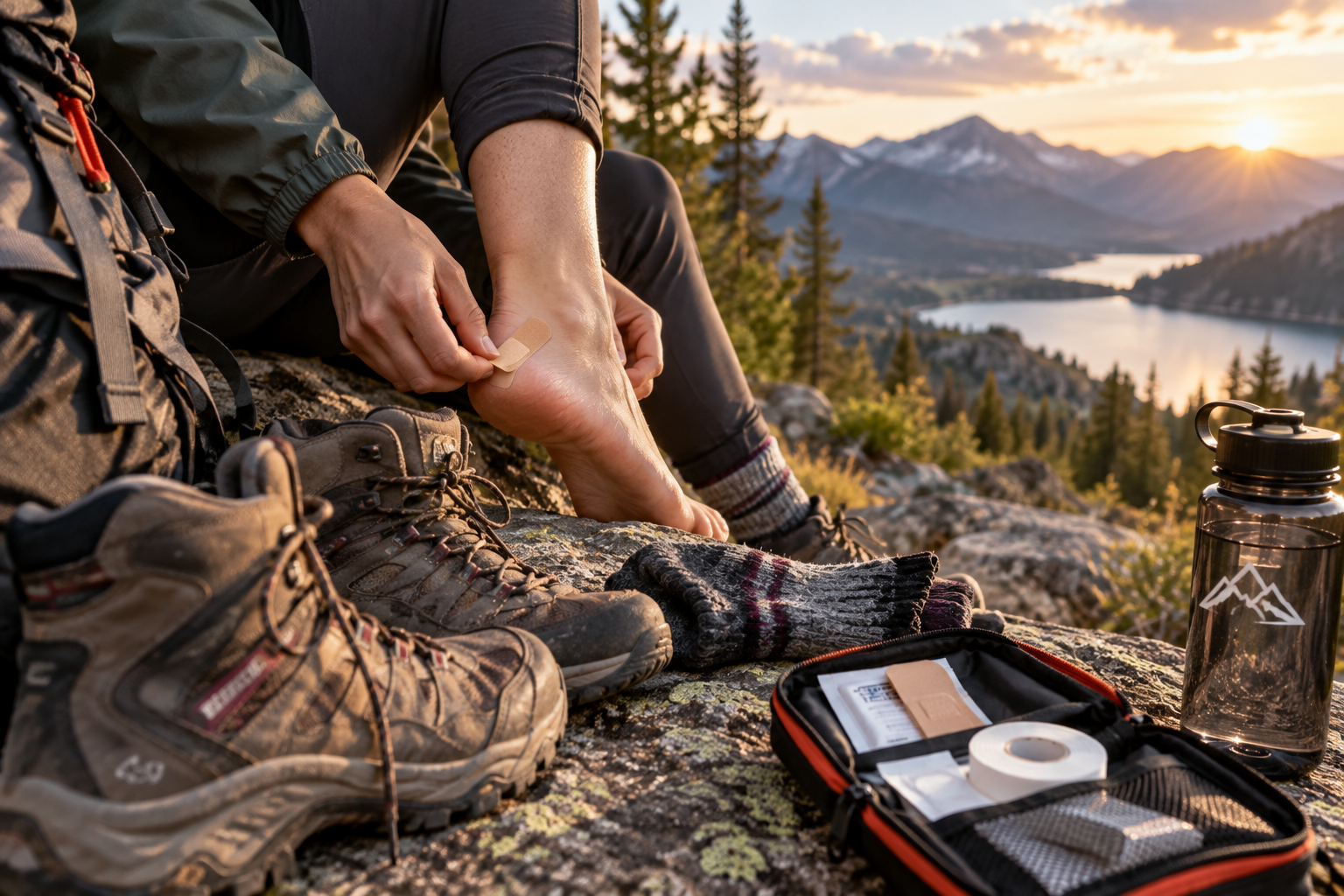
The trail starts perfectly.
Your boots feel comfortable, your socks are dry, and there is no obvious reason to think about your feet. A few miles later, however, one spot on your heel begins to feel unusually warm.
You ignore it.
Another mile passes, and that harmless warmth becomes irritation. By the time you finally stop, a blister has formed and every step reminds you that a tiny patch of skin can make an otherwise excellent hike miserable.
Learning how to prevent blisters while hiking is largely about recognizing what happens before the blister appears. Friction, moisture, footwear movement, pressure, and trail conditions usually provide warning signs long before walking becomes painful.
A Blister Usually Starts Before You Can See It
Blisters often feel sudden because the visible damage appears later than the process that caused it.
Repeated friction affects the layers of skin as your foot moves inside a shoe or boot. Eventually, fluid can collect between those layers and create the familiar raised pocket.
Before that happens, hikers often notice a hot spot.
The skin may feel warm, irritated, slightly tender, or unusually noticeable in one specific area.
That sensation is valuable information.
Stopping when you first notice a hot spot is much easier than treating a fully developed blister several miles from the trailhead.
Friction Is the Main Problem
A hiking boot does not need to be obviously uncomfortable to create friction.
Small repeated movements are enough.
Your heel may lift slightly with every step. A sock can wrinkle under the foot. Your toes may slide forward during a descent.
One movement seems insignificant.
Repeat it thousands of times and the effect changes.
This is why a shoe that feels completely comfortable while standing in a store can behave differently after several hours of walking over uneven terrain.
Comfortable Shoes Can Still Fit Poorly for Hiking
Comfort during the first five minutes does not tell you everything about footwear fit.
A hiking shoe needs enough room for the foot while also controlling unnecessary movement.
If the heel moves excessively, repeated rubbing can create hot spots around the back of the foot.
If the toe box is too tight, toes may rub against each other or the sides of the shoe.
If the shoe is too large, the entire foot may slide more than necessary.
Good fit is therefore not simply about avoiding tight footwear.
It is about creating a stable fit without uncomfortable pressure.
Your Feet Can Change During a Long Hike
The way footwear fits at the trailhead may not be exactly how it fits several hours later.
Feet can swell during prolonged activity.
Heat, distance, terrain, and individual physiology can all influence how much this occurs.
A shoe that initially feels snug but acceptable may become restrictive later in the hike.
This is one reason hikers often benefit from evaluating footwear with enough room for realistic trail conditions rather than choosing a fit based solely on how compact it feels indoors.
Downhill Hiking Pushes Your Feet Forward
Long descents create a different footwear problem from climbing.
Gravity repeatedly pushes the foot toward the front of the shoe.
If the fit or lacing does not control that movement, toes can strike the front while the heel and other areas experience additional friction.
You may notice this only after the descent begins.
That is why a pair of boots can feel excellent on flat ground but become uncomfortable on steep terrain.
When testing hiking footwear, consider the kind of terrain you actually expect to walk.
Socks Are Part of the Footwear System
Hikers sometimes spend heavily on boots and then treat socks as an afterthought.
But socks sit directly between skin and footwear.
Their fit, material, thickness, and moisture management can affect friction and comfort.
A sock that bunches or forms wrinkles creates uneven pressure points.
One that becomes saturated may behave differently against the skin than when it was dry.
Choose hiking socks that fit securely without creating folds inside the shoe.
The correct thickness also depends partly on the amount of space available inside your footwear.
Cotton Can Become Uncomfortable When Wet
Cotton absorbs moisture readily and can remain wet for a significant period.
During a hike, moisture can come from sweat, rain, puddles, stream crossings, or wet vegetation.
Once socks become saturated, the environment around the foot changes.
Many hikers prefer wool blends or synthetic hiking socks because they are designed to manage moisture more effectively during activity.
No material makes blisters impossible.
But keeping the foot environment more stable can reduce one of the conditions that contributes to friction problems.
Moisture Changes How Skin Handles Friction
Sweat does more than make feet uncomfortable.
Prolonged moisture can soften the outer skin, changing how it responds to repeated rubbing.
This is one reason blister problems can become more noticeable during hot hikes or when footwear gets wet.
At the same time, extremely dry conditions can also create friction in some situations.
The practical goal is not to achieve perfectly dry feet every second.
It is to manage excessive moisture and reduce repeated rubbing.
Carrying a Spare Pair of Socks Can Be Worth the Space
A spare pair of socks weighs very little compared with many items in a backpack.
Yet it can make a substantial difference if the first pair becomes soaked.
Changing into dry socks during a long hike can improve comfort and give you an opportunity to inspect your feet.
Allow wet socks to dry on the outside of your pack when conditions permit, or store them separately from dry gear.
For hikes involving stream crossings, snow, heavy rain, or significant heat, having another pair can be particularly useful.
Debris Inside the Shoe Creates Localized Friction
Sometimes the footwear is not the problem.
A tiny stone, grain of sand, twig fragment, or other debris can enter the shoe and repeatedly rub one spot.
Because the object is small, hikers may keep walking instead of stopping.
That is usually a poor trade.
If something feels wrong inside your shoe, stop and remove it.
Thirty seconds spent taking off a shoe is preferable to hours of walking on irritated skin.
Lacing Can Change How Your Foot Moves
Shoelaces are not simply there to prevent footwear from falling off.
Lacing affects how securely different parts of the foot sit inside the shoe.
If the heel lifts excessively, adjusting the upper lacing may help stabilize it.
If the forefoot feels compressed, another section may need slightly more room.
Different lacing techniques can modify pressure distribution, although they cannot transform fundamentally incorrect footwear into a perfect fit.
Use lacing for adjustment, not as a substitute for choosing the right size and shape.
Do Not Tighten Everything as Hard as Possible
When hikers notice movement, the instinct can be to pull every lace extremely tight.
That may create another problem.
Excessive pressure can make the footwear uncomfortable and restrict natural foot expansion during a long hike.
The goal is secure, not crushed.
Your heel should feel reasonably controlled while the forefoot and toes still have appropriate room.
If achieving stability requires painfully tightening the entire shoe, the underlying fit may deserve another look.
New Boots Are Not Automatically Ready for a Huge Hike
Even correctly sized footwear deserves testing before a major trip.
Wear new hiking shoes or boots on shorter walks first.
This allows you to discover where they rub, how your feet respond after distance, and whether your sock combination works.
Gradually testing footwear also gives you a chance to experiment with lacing and insoles before you are far from the trailhead.
Do not make a remote 20-mile hike the first serious test of unfamiliar footwear.
“Breaking In” Cannot Fix Every Fit Problem
Traditional hiking advice often emphasizes breaking in boots.
Some footwear does become more flexible and comfortable with use.
However, breaking in should not be used to justify obvious pain, severe pressure, or fundamentally incorrect sizing.
A shoe that is the wrong shape for your foot may remain the wrong shape after many miles.
Modern hiking footwear also varies considerably in construction.
Some models require little adaptation, while stiffer boots may change more noticeably with use.
Fit should be reasonable from the beginning.
Treat Hot Spots Immediately
This is perhaps the most important habit in how to prevent blisters while hiking.
Do not wait for pain.
The moment you notice a persistent hot spot, stop.
Remove the shoe and sock.
Check the skin and look for wrinkles, debris, dampness, or anything else that may be creating friction.
Depending on the situation, hikers may use appropriate blister tape, moleskin, or another protective dressing to reduce rubbing over the area.
Early intervention can prevent a minor irritation from becoming the problem that controls the rest of the hike.
Tape Works Better Before the Skin Is Damaged
If you already know your usual problem areas, preventive taping can sometimes be useful.
Perhaps your right heel repeatedly develops a hot spot on long hikes.
Protecting that location before the hike may reduce direct friction.
Application matters.
Skin should be reasonably clean and dry, and the tape should be positioned without folds that create new pressure points.
Different products behave differently with sweat and movement, so test your preferred method on shorter outings before depending on it during a major trip.
Blisters That Already Formed Need More Care
Once a blister exists, the goal changes from prevention to protecting damaged skin and reducing additional friction.
Small, intact blisters may sometimes be protected rather than immediately opened.
Larger, painful, ruptured, contaminated, or unusual wounds may require different care depending on circumstances.
Keep the area clean and protected as appropriate.
If there are signs of infection—such as worsening redness, warmth, swelling, drainage, or increasing pain—seek medical care, particularly if you have a condition that makes foot wounds more concerning.
Trail first aid has limits.
Your Backpack Can Indirectly Affect Your Feet
A heavier pack increases the load carried with every step.
That can influence how strongly the foot presses and moves inside footwear, especially over long distances and steep terrain.
This does not mean ultralight equipment is mandatory.
It means unnecessary pack weight has consequences beyond tired shoulders.
A sensible packing list reduces overall physical stress and can make movement more controlled.
The longer the hike, the more repeated small stresses matter.
Toenails Matter More Than Most Hikers Expect
Long toenails can become uncomfortable during descents as the foot repeatedly shifts forward.
Trim toenails appropriately before a significant hike, but avoid cutting them excessively short immediately before leaving.
Also pay attention to pressure between toes.
Some hikers develop irritation where adjacent toes rub rather than against the footwear itself.
Understanding your personal problem areas makes prevention much easier.
Stop During Long Hikes and Check Your Feet
Breaks are not only for food and water.
On long days, use them to evaluate your feet.
Are your socks soaked?
Has debris entered the footwear?
Is one heel becoming irritated?
Do your laces need adjustment before a long descent?
Small corrections made during a break can prevent larger problems later.
Experienced hiking often looks less dramatic than people imagine.
Much of it is simply noticing minor issues early and dealing with them before they become serious.
The Best Blister Strategy Begins Before the Trail
Good foot care starts before the first mile.
Wear footwear that matches your feet and intended terrain.
Test it on shorter hikes.
Use socks that fit properly.
Learn which areas of your feet usually develop friction.
Carry basic blister-care supplies somewhere accessible rather than buried beneath your entire backpack.
The goal is not to guarantee that you will never develop another blister.
It is to make blisters less likely and easier to manage when early warning signs appear.
Conclusion
Learning how to prevent blisters while hiking is mostly about managing repeated friction before it damages the skin.
Proper footwear fit, secure but comfortable lacing, well-fitting hiking socks, moisture management, and attention to debris all help reduce the conditions that create hot spots. Terrain matters too, particularly long descents that push the foot forward inside the shoe.
Most importantly, listen when your feet begin giving you information.
That small warm spot on your heel is not something you need to “push through.” Stop, inspect it, make an adjustment, and protect the area before continuing.
A blister is tiny compared with a mountain.
But when every step hurts, it can suddenly feel like the biggest thing on the trail.