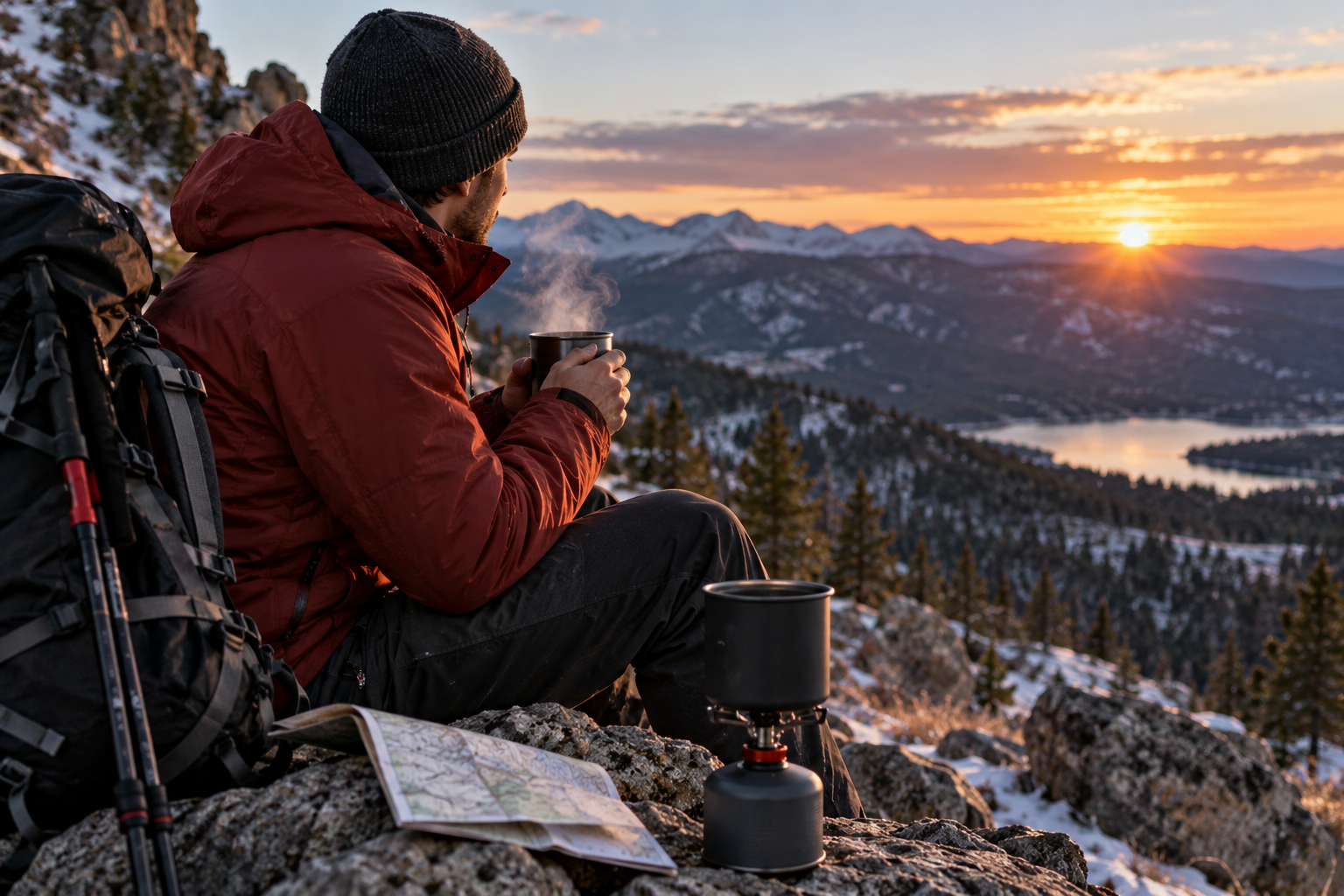
You spend the last hour climbing steadily uphill. Your breathing is heavy, your back is warm, and you are considering removing another layer because the trail feels much hotter than expected.
Then you stop.
Maybe it is only a short break for water. Perhaps you reach an exposed viewpoint and decide to eat lunch. Within minutes, the temperature seems completely different.
The shirt that felt warm while moving is now damp and cold against your skin. A light breeze suddenly feels sharp, and the jacket buried inside your backpack becomes much more important than it seemed during the climb.
Learning how to stay warm while hiking is not simply about wearing the thickest jacket you own. The real challenge is managing heat and moisture while your activity level and the environment keep changing.
Hiking Creates Heat Faster Than You Realize
Your muscles generate heat while working.
Climbing, carrying a backpack, moving over uneven terrain, and maintaining a steady pace can produce enough heat to make cool weather feel surprisingly comfortable.
That can create a misleading impression.
The surrounding air did not necessarily become warmer. Your body was simply generating enough heat to compensate for the conditions.
Once you stop moving, heat production drops quickly while the environment remains the same.
That is when clothing decisions made during the climb become noticeable.
Sweating Too Much Can Become a Problem Later
Sweating is a normal cooling mechanism.
The problem on a cold hike is allowing clothing to become unnecessarily saturated because you stayed overdressed while moving.
As activity decreases, damp clothing can contribute to rapid cooling, particularly when combined with wind and low temperatures.
This is why experienced hikers often adjust layers before they become extremely hot.
The goal is not to avoid sweating completely. During hard exercise, that may be unrealistic.
The goal is to avoid becoming much wetter than necessary.
Start Slightly Cool Rather Than Perfectly Warm
Standing at the trailhead can make hikers want to put on every available layer.
The first few minutes feel comfortable.
Then the climb begins.
Twenty minutes later, you are overheating.
In cool conditions, starting slightly cool can sometimes make more sense because your body will begin producing substantial heat once you move.
Of course, “slightly cool” is very different from shivering uncontrollably.
The correct clothing still depends on weather, terrain, personal tolerance, and the planned activity.
Adjust Layers Before You Are Soaked
Do not wait until your shirt is completely wet before deciding you are too warm.
If the trail becomes steep and you begin overheating, slow down or remove an appropriate layer while conditions still allow you to do so safely.
Open ventilation features.
Remove a hat if appropriate.
Unzip a jacket.
Small adjustments can release excess heat before moisture becomes a larger problem.
Layering works best when it is active rather than something you decide once at the trailhead.
The Base Layer Has a Different Job From the Insulating Layer
It helps to think about clothing according to function.
A base layer sits close to the skin and should help manage moisture while remaining comfortable during movement.
An insulating layer helps retain body heat.
An outer shell protects against environmental conditions such as wind or precipitation, depending on its design.
One garment can sometimes perform more than one function, but understanding the roles makes layering easier.
Instead of asking, “How many jackets do I need?” ask what conditions each layer needs to handle.
Cotton Can Become Uncomfortable When It Gets Wet
Cotton is comfortable for many everyday situations.
Cold, wet outdoor conditions are different.
Cotton can absorb significant moisture and may take time to dry. A sweat-soaked cotton shirt that felt harmless while climbing can become uncomfortable once movement slows.
For cold-weather hiking, many hikers prefer moisture-managing synthetic materials or wool-based options depending on conditions and personal preference.
That does not mean every outdoor trip requires specialized technical clothing.
It means material choice becomes more important as temperatures drop and consequences increase.
Your Insulation Should Be Easy to Reach
A warm layer buried beneath lunch, camera equipment, and everything else in your backpack is technically available.
But it is inconvenient exactly when you need it.
Pack frequently used layers near the top or in an accessible section.
When stopping in cold conditions, put insulation on before you become deeply chilled.
Do not wait until your teeth are chattering to decide the break has become cold.
Preventing heat loss is easier than trying to recover after becoming very cold.
Put a Layer On When You Stop
This is one of the simplest useful habits.
You arrive at the viewpoint feeling warm from the climb.
Instead of waiting ten minutes to see whether you become cold, consider adding insulation shortly after stopping when conditions warrant it.
Your body is about to produce less heat.
The extra layer helps preserve some of the warmth you already generated.
When you start moving again, remove or adjust it before overheating returns.
The cycle becomes:
move, regulate, stop, insulate, move again.
Wind Can Completely Change How a Break Feels
A forested trail may feel comfortable.
Then you reach an exposed ridge.
The measured air temperature may be similar, but moving air increases heat loss from exposed skin and can make conditions feel much harsher.
Wind also becomes especially noticeable when clothing is damp.
This is why a wind-resistant outer layer can be valuable even when you do not expect rain.
Protection from moving air can dramatically change comfort.
Choose Break Locations Intentionally
The best viewpoint is not always the best lunch spot.
If possible, take longer breaks somewhere protected from strong wind rather than sitting directly on an exposed ridge.
A small change in location can make a significant difference.
Trees, terrain features, and other natural wind protection may create a more comfortable microenvironment.
Avoid unsafe locations simply for shelter, of course.
The principle is to include exposure when deciding where to stop.
A Rain Shell Can Help Even When It Is Not Raining
Depending on its design, a shell can provide protection from wind as well as precipitation.
That can make it useful in rapidly changing mountain conditions.
However, shells also reduce ventilation to varying degrees.
Wearing one during a hard climb when it is not needed can increase heat and moisture buildup.
Again, the answer is adjustment.
A layer that is perfect while standing on a windy summit may be far too warm during the climb toward it.
Waterproof Does Not Mean You Cannot Get Wet
A waterproof outer layer can protect you from rain.
You can still become wet from the inside if you are generating more moisture than the clothing system can manage.
This is a common source of confusion.
A hiker sees dampness inside the jacket and assumes rain passed straight through.
Sometimes that may indicate a clothing issue, but perspiration and condensation can also contribute.
Ventilation, pace, temperature, and layering beneath the shell all matter.
Keeping rain out is only half of moisture management.
Pace Is Part of Your Clothing System
If you constantly hike at maximum effort, your body generates more heat.
That often means more sweat.
Slowing slightly on long climbs can help regulate temperature and may improve endurance at the same time.
There is no prize for reaching every switchback as quickly as possible.
In cold environments, a sustainable pace can make clothing management easier because you are not repeatedly cycling between overheating and freezing.
Sometimes the most effective layer adjustment is reducing intensity.
Your Backpack Creates Its Own Warm Zone
Anyone who hikes with a backpack knows what happens to the back of a shirt.
Even when the rest of the body feels relatively dry, the area underneath the pack can become soaked.
The backpack reduces airflow and traps heat.
This is difficult to eliminate completely.
Recognize it as part of the system.
When taking a long break, removing the backpack exposes that damp area to cooler air, which can make the temperature change feel especially sudden.
Have your insulating layer ready.
Hands Can Feel Cold Before the Rest of You Does
You may feel generally comfortable while your fingers become unpleasantly cold.
Hands are exposed, relatively small, and important for tasks such as adjusting equipment, opening food, navigating, or using trekking poles.
Pack appropriate gloves for expected conditions.
For variable weather, having a backup option can be useful if one pair becomes wet.
Do not judge your entire clothing system only by how your torso feels.
Extremities matter too.
A Hat Is an Easy Layer to Adjust
Headwear is convenient because it can be added or removed quickly.
A warm hat may feel excessive during a steep climb but become valuable during a windy break.
This makes it a useful temperature-management tool.
The same principle applies to gloves and neck protection.
Small accessories can provide meaningful flexibility without requiring you to completely change your clothing system every twenty minutes.
Easy adjustments are the ones hikers are most likely to actually make.
Wet Socks Can Ruin an Otherwise Comfortable Hike
Feet face a different moisture problem.
Sweat, rain, puddles, stream crossings, or snow can leave socks wet.
That creates discomfort, increases friction, and in cold conditions can contribute to cold feet.
Depending on the hike, carrying a dry spare pair can be useful.
Footwear choice also matters, but no shoe is ideal for every combination of temperature, water, terrain, and activity.
Plan around the actual route rather than buying equipment based on one feature alone.
Do Not Assume Waterproof Footwear Solves Everything
Waterproof footwear can be valuable in wet and cold conditions.
It can also retain moisture generated by your feet more than highly ventilated footwear, depending on construction and conditions.
If water enters over the top, drying can also become difficult.
The choice depends on the environment.
A dry summer trail and a cold wet mountain route create different priorities.
There is no universal hiking shoe that is optimal everywhere.
Weather at the Trailhead May Not Represent the Entire Route
A mountain hike can move through very different conditions.
Elevation increases.
Tree cover disappears.
Wind exposure changes.
Clouds develop.
The temperature may drop.
A comfortable trailhead morning can become a cold afternoon on exposed terrain.
Check the forecast for the relevant area and elevation when possible rather than relying only on conditions in the nearest town.
Pack for reasonable changes, not just what you feel beside the car.
Clouds Can Change the Temperature Experience Quickly
Sunlight provides noticeable warmth.
When the sun disappears behind thick cloud, a previously comfortable break can suddenly feel cold.
Combine that with wind and damp clothing, and the difference can be dramatic.
This is another reason not to bury all warm layers deep in your pack simply because the morning looks clear.
Outdoor conditions can change faster than your clothing can dry.
Accessibility matters.
Eat Before You Feel Completely Drained
Hiking requires energy.
Long periods of physical activity without adequate food can leave you feeling weak and make temperature management harder.
Carry food appropriate for the length and intensity of the trip.
Rather than waiting until you feel completely exhausted, many hikers prefer eating manageable amounts during longer outings.
Food is not a substitute for adequate clothing or shelter.
But your body still needs energy to keep working and producing heat.
Hydration Still Matters in Cold Weather
Cold weather can make thirst less obvious.
You may not feel the same urge to drink that appears during a hot summer hike.
But physical activity still requires hydration.
Carry enough water for the route and consider how low temperatures may affect your hydration system in genuinely cold conditions.
Being cold is not a reason to ignore drinking.
Good outdoor preparation treats food, water, clothing, route, and weather as connected rather than separate concerns.
Hot Drinks Can Be Comforting, but They Are Not Your Safety System
A warm drink during a cold break can feel excellent.
It can improve comfort and morale.
But a thermos should not replace appropriate insulation, weather protection, and judgment.
If your clothing is soaked and conditions are deteriorating, drinking something warm does not solve the underlying exposure.
Think of hot drinks as an enjoyable addition.
Your primary strategy should still be preventing excessive heat loss.
A Dry Backup Layer Can Be Extremely Valuable
For hikes where cold and wet conditions are realistic possibilities, protecting critical spare clothing from moisture is important.
A warm layer is much less useful if it has been soaked inside the backpack by rain.
Pack important dry items using a reliable method appropriate to the trip.
The exact system can range from pack liners to waterproof bags depending on conditions.
The objective is simple.
When you genuinely need dry insulation, it should still be dry.
Do Not Wear Every Emergency Layer During Normal Hiking
Extra clothing provides a safety margin.
If you wear all of it during the first hour and soak everything with sweat, that margin becomes smaller.
Keep some insulation protected for stops, worsening weather, or unexpected delays.
This becomes more important as trips move into colder, more remote, or more exposed environments.
Emergency equipment is useful partly because it remains available when normal plans fail.
Do not casually consume your entire reserve.
Longer Stops Require More Insulation
A two-minute water break and a 40-minute lunch are different situations.
During a very short stop, your body may retain much of the heat generated by hiking.
During a longer break, cooling becomes more noticeable.
Adjust layers based not only on temperature but also on how long you expect to remain stationary.
If you are stopping to cook, repair equipment, wait for another hiker, or handle an unexpected problem, prepare for the loss of activity-generated heat.
Time matters.
An Injury Can Turn a Comfortable Hike Into a Cold Situation
Imagine hiking comfortably in lightweight layers.
Then someone twists an ankle.
The group that expected to keep moving for the next three hours is now stationary or moving extremely slowly.
Suddenly, clothing that was perfect for active hiking may be insufficient.
This is one reason outdoor preparation should consider what happens if the trip takes longer than planned.
Extra insulation is not only for inaccurate forecasts.
It also provides options when movement stops unexpectedly.
Know the Difference Between Uncomfortable and Dangerous Cold
Feeling chilly during a break does not automatically mean a medical emergency.
But cold exposure can become serious.
Persistent or intense shivering, worsening coordination, confusion, unusual behavior, slurred speech, and declining ability to perform simple tasks can be warning signs that require immediate attention.
Do not rely on an article to diagnose hypothermia in the field.
If someone shows concerning signs of cold illness, take the situation seriously, reduce further exposure, and seek appropriate emergency assistance.
Outdoor safety becomes more important than finishing the planned route.
Turn Around Before Conditions Force the Decision
Hikers sometimes treat reaching the summit or destination as the definition of success.
It is not.
If weather deteriorates, clothing becomes soaked, temperatures fall, or the group is moving much slower than expected, turning around can be the correct decision.
The mountain will still exist another day.
A route plan should include decision points, not just a destination.
Good judgment often looks less dramatic than pushing forward.
That is exactly why it works.
Check Your Layers During Every Major Transition
A simple habit can prevent many comfort problems.
Whenever the environment or activity changes significantly, reassess clothing.
Starting a steep climb?
You may need less insulation.
Reaching an exposed ridge?
Wind protection may become important.
Stopping for lunch?
Add warmth.
Rain beginning?
Protect yourself before clothing underneath becomes saturated.
Descending after sunset?
Expect reduced activity-generated heat and lower temperatures.
Layering works because it can change with the situation.
Pack Based on Conditions, Not on Fashion Categories
You do not necessarily need a particular number of branded “hiking” garments.
Think in functions.
What manages moisture?
What provides insulation?
What blocks wind?
What handles precipitation?
What remains dry if the other clothing becomes wet?
This approach makes gear selection more flexible and helps prevent buying equipment simply because it is marketed for outdoor use.
Function comes first.
Test Your System Before the Serious Trip
A remote cold-weather hike is a bad place to discover that your layering strategy does not work.
Test clothing during shorter outings in conditions where retreat is easy.
Notice when you begin sweating.
See how quickly you cool when stopping.
Experiment with removing a layer earlier.
Learn which items are difficult to access from your backpack.
Small local hikes can teach you how your personal system behaves before the consequences become more serious.
Your Ideal Layering System Is Personal
Two people can hike side by side in different clothing and both be comfortable.
One person naturally runs warm.
Another becomes cold quickly.
Pack weight, pace, fitness, body size, acclimatization, and personal preference all influence temperature perception.
Use general outdoor principles as a starting point, then learn from experience.
The goal is not to copy exactly what another hiker wears.
It is to understand how your own body responds.
Conclusion
Learning how to stay warm while hiking is mostly about managing transitions. During a climb, your body can generate enough heat to make cold weather feel surprisingly mild. The moment you stop, that heat production falls while sweat, wind, and damp clothing continue influencing how quickly you cool.
Instead of wearing maximum insulation from the beginning, adjust layers as your effort changes. Avoid unnecessary overheating, keep warm layers accessible, add insulation when stopping, and protect critical backup clothing from rain and moisture. Pay particular attention to exposed ridges, long breaks, wet clothing, and unexpected delays.
Most importantly, remember that outdoor clothing is only one part of staying safe. Weather awareness, pacing, food, hydration, route decisions, and knowing when to turn around all matter.
The goal is not to remain perfectly warm every second of the hike.
It is to stay in control of your temperature before the environment starts making those decisions for you.