
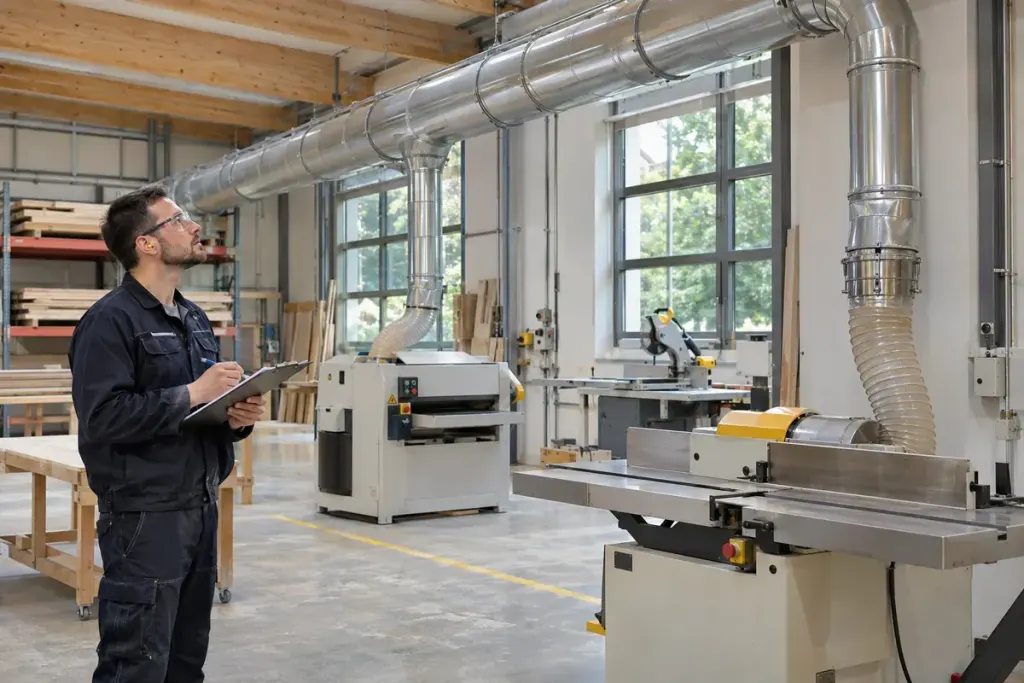
A workshop floor may look tidy while dust settles on beams, equipment and concealed ledges. If that dust is combustible, ordinary ideas about cleanliness are not enough to judge the fire risk.
OSHA’s combustible-dust guidance brings together capture, containment and cleaning. It also places responsibility on employers to determine whether workplace dust is explosible. A worker should not have to guess from its colour or texture.
Start with the source and the method
A housekeeping plan needs to identify where dust escapes and why. Repeatedly cleaning the same deposit without reporting the leak can leave the underlying problem untouched. The plan should specify who assesses it, which cleaning equipment is suitable and how work is made safe before cleaning.
Do not improvise with a domestic vacuum or blow settled material into the air. OSHA’s prevention guidance explains the importance of approved dust-collection equipment and cleaning methods that avoid hazardous dust clouds. The correct method depends on the material, process and assessed conditions.
A useful handover is specific
Compare “the area needs cleaning” with “material is collecting on the ledge above the packing machine again after the afternoon run.” The second observation gives the responsible person a location, recurrence and process to investigate.
A simple workplace record can capture:
- the location and material or process involved;
- who has been notified and whether the area has been made safe;
- the approved action and the person responsible;
- when the area will be checked again.
This record supports an established safety programme; it does not replace a competent dust-hazard assessment. Avoid adopting a generic allowable dust depth from a different industry as a universal safe limit.
If dust starts accumulating unusually quickly, or there is smoke, heat or another sign of an incident, follow the site’s emergency arrangements. Finishing a routine cleaning task is secondary to getting people out of danger and notifying the responsible team.