
A flame needs more than something that can burn. Fire-safety teaching often begins with fuel, heat and oxygen, then adds the chemical chain reaction that sustains flaming combustion. Together, these form the fire tetrahedron.
The U.S. Fire Administration’s teaching curriculum uses these four elements to explain how fire continues and how removing a necessary element can stop it. Its fire-investigation student manual distinguishes the familiar triangle from the additional reaction represented by the tetrahedron.
Use the model for prevention
Think about an ordinary room before thinking about extinguishers. Paper stacked against a heater brings a fuel close to a heat source. A decorative arrangement around a candle can do the same. The practical response is to maintain the clearances and operating conditions specified for the appliance, rather than trying to calculate how close is almost safe.
The model also explains why one firefighting method cannot be chosen simply because it worked somewhere else. Different fuels, equipment and conditions create different hazards. Understanding that cooling can remove heat does not make water an appropriate response to every fire. The tetrahedron is an explanation of combustion, not a household permission slip to improvise suppression.
A useful conversation without an experiment
For a family discussion, draw four connected spaces on paper and label the elements. Ask which everyday arrangements place combustible material near a heat source, then identify a practical change such as moving stored items. There is no need to light anything to make the lesson memorable.
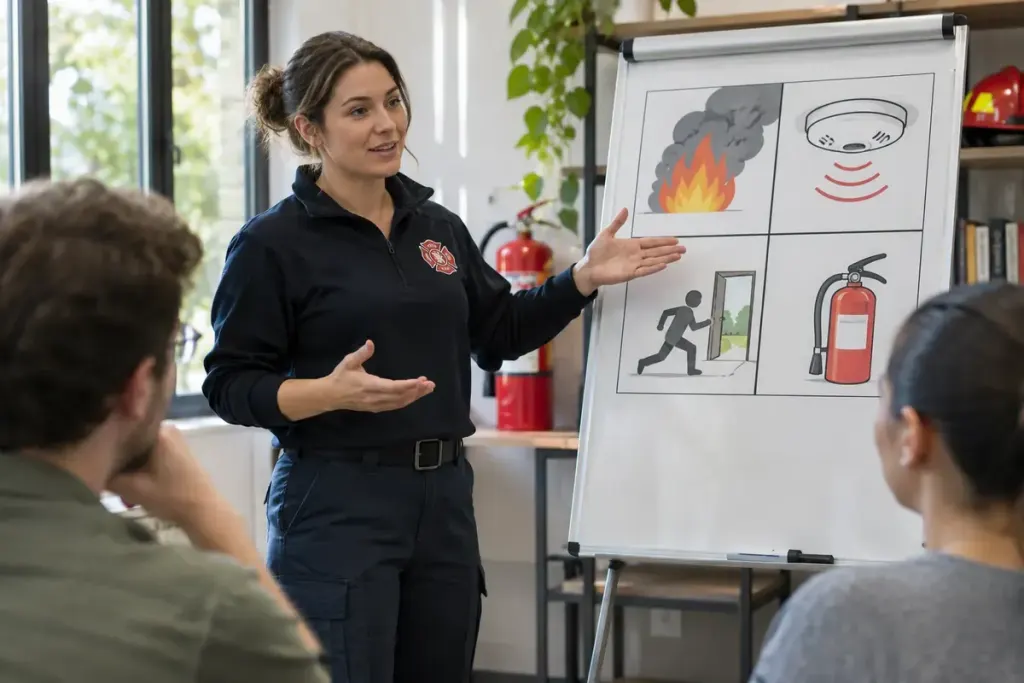
Keep the response plan separate from the science lesson. People should know the escape route, how to raise the alarm and where to meet. If there is a fire, follow the building’s emergency instructions and call the local emergency service from safety. A familiar diagram should help prevent a dangerous situation, not encourage anyone to stay and test how a growing fire behaves.