
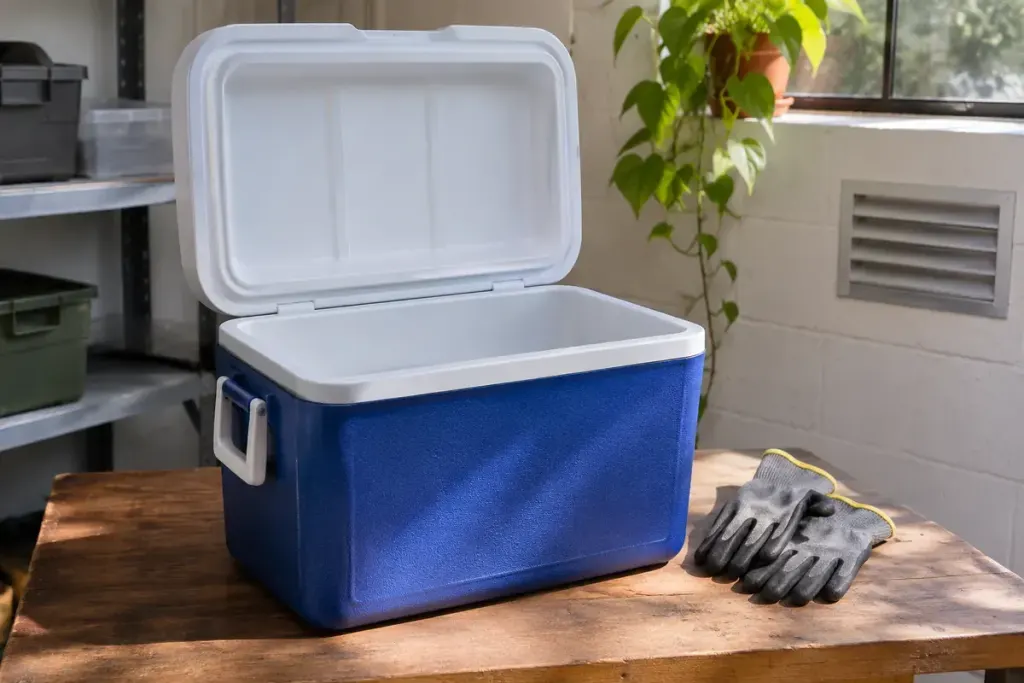
During a power outage, dry ice may look like a stronger version of the ice in a freezer tray. It behaves differently. Instead of melting into a puddle, it changes directly into carbon dioxide gas. The cooling plan therefore needs a ventilation plan too.
The CDC’s dry-ice safety sheet explains the main handling risks: very cold material can injure skin, and released gas must be able to escape. A tightly sealed container can become dangerously pressurised. An ordinary closed room is not automatically a suitable storage location.
Decide where it will go before collecting it
Follow the supplier’s transport, storage and handling instructions. Use a container designed to release gas, keep the area ventilated, and prevent children or pets from reaching the material. Do not improvise an airtight storage box because it seems better insulated.
Handling protection matters as much as location. Use gloves intended for very cold temperatures and suitable eye protection; bare hands and ordinary thin gloves are not a reliable substitute. Do not put dry ice in food or drinks for someone to swallow.
A carbon dioxide hazard can be invisible
The NIOSH carbon-dioxide reference identifies it as colourless and odourless and lists effects including headache, dizziness and breathing difficulty at hazardous exposures. You cannot use a lack of smell as evidence that a space is safe.
If someone becomes unwell around dry ice in an enclosed area, move away to fresh air if this can be done safely and contact emergency services. Do not enter a suspect confined space to attempt a rescue without the appropriate emergency response.
Plan the end of the job as well. The CDC advises against putting dry ice in a sink, toilet or ordinary rubbish. Follow the supplier’s disposal guidance in a secure, well-ventilated location where it can turn to gas without exposing other people.
Dry ice is an optional tool, not a requirement for every outage. If you cannot provide the specified storage and handling conditions, choose a different cooling arrangement rather than bringing an unfamiliar hazard into an already disrupted household.