
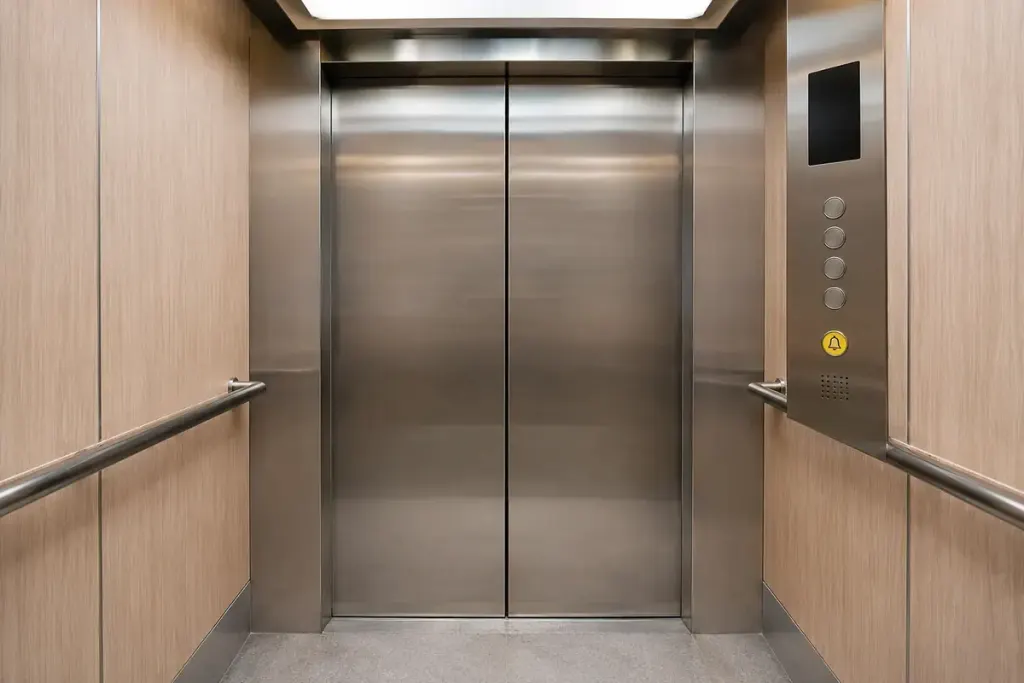
A lift stops, the floor indicator freezes, and someone suggests forcing the doors. The safer response is to use the lift’s emergency communication system and wait for trained help. The gap beyond a door is not a reliable exit, even when a landing seems close.
The New York City Department of Buildings’ elevator safety guidance advises passengers who are stuck to use the alarm or emergency call button and not try to pry open the doors. Stay inside the car and follow responders’ instructions. Do not climb through a ceiling hatch or attempt to move between the car and the landing.
Make the call useful
Give the building address and, if visible, the lift number or other identification. Explain how many people are inside and whether anyone has an urgent medical problem. If you do not know the lift number, describe the lobby or entrance you used rather than inventing a floor location.
Listen for the operator’s response. If the built-in communication does not connect and you have phone service, contact the building’s emergency contact or the appropriate local emergency service. Report smoke, injury or another immediate danger clearly; do not treat it as an ordinary delayed journey.
For example, “three people, lift beside the rear entrance, one person needs urgent medical help” gives a responder more to work with than repeatedly saying that the lift is broken. Keep the line available for instructions.
A useful preparation before anything goes wrong
In a building you regularly use, notice where the alarm and intercom are and how they are labelled. Raise missing instructions, broken communication equipment or accessibility barriers with building management while the lift is working normally. Do not press an emergency button merely to experiment with it.
Being able to see a landing through a partly opened door does not establish that crossing the gap is safe. Wait for the people responsible for the rescue to secure the equipment and direct the exit. The task for a passenger is to communicate the situation and remain safely inside, not to repair or override the lift.