
Volcanic ash can arrive far from the eruption that produced it. A thin grey layer may resemble ordinary dust, yet the household response needs to account for airborne particles, poor visibility and possible disruption to water and electricity. Start with current instructions from your local emergency authorities.
The US Geological Survey’s ash-protection guidance prioritises reducing exposure and keeping ash out of buildings. Staying indoors is relevant when authorities advise sheltering; it is not a reason to ignore an evacuation instruction.
Make the entrance part of the plan
Before ashfall, identify a practical entrance where shoes and outer clothing can be handled without spreading ash through the home. Put essential items within reach indoors, including prescribed medicines, a charged phone and the official information channels you will use. Bring pets inside when it is safe to do so.
Close windows and exterior doors. Follow guidance for ventilation equipment that draws outdoor air inside. Do not improvise by blocking a combustion appliance’s required ventilation, and never bring outdoor cooking equipment indoors. A closed house must still remain safe to occupy.
Plan for necessary exposure, not a routine outdoor day
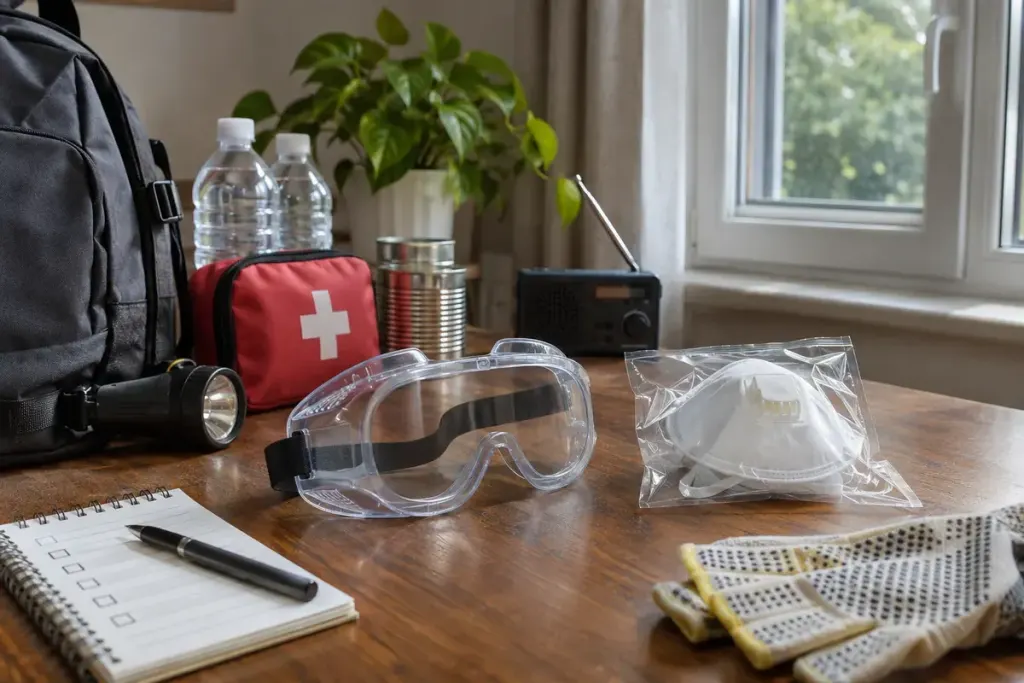
The CDC advises eye protection and an appropriate NIOSH-approved N95 respirator for exposure during outdoor activity or ash cleanup. Fit matters, and people with health conditions or concerns about respirator use should seek suitable professional advice. Cloth over the face should not be assumed to provide equivalent protection.
For an illustrative household arrangement, one adult follows official updates while another prepares the indoor entry area. That division prevents everyone leaving the shelter to inspect the same ash-covered car. Avoid unnecessary driving; road visibility and traction can be affected.
Wait for local cleanup instructions before sweeping or washing ash into drains. Dry sweeping can put particles back into the air, while accumulated wet ash can be heavy. Roof work belongs with appropriately equipped professionals. If breathing becomes difficult or someone develops serious symptoms, seek urgent medical help rather than treating the situation as a cleaning inconvenience.