
If clothing catches fire, stop moving, drop to the ground, cover your face with your hands and roll back and forth until the flames are out. Running can feed the flames. This is the situation for which “stop, drop and roll” is intended; it is not the response to every fire alarm or a substitute for leaving a burning building.
The US Fire Administration’s teaching guidance sets out this sequence and stresses the condition that triggers it: fire on clothing. That short phrase belongs with the action whenever it is taught. Otherwise, someone may remember the movement but use it in the wrong emergency.
Practise the decision as well as the movement
A calm practice session can begin with two examples. If a smoke alarm sounds, follow the escape plan. If your clothes are burning, stop, drop and roll. Keeping those examples separate helps people attach the instruction to the right event.
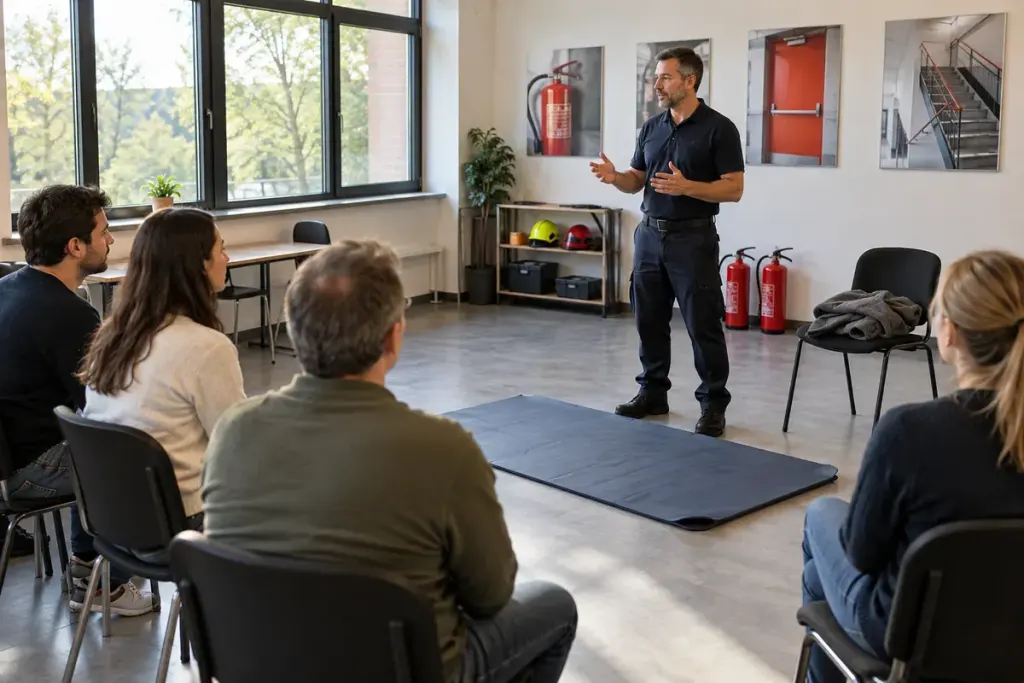
Use clear floor space and a suitable mat for a supervised demonstration. There should be no flame, hot equipment or imitation burning clothing. Let a participant explain the sequence in their own words before practising. A person with limited mobility may need an individual fire-safety plan developed with local fire or care professionals; a standard floor exercise will not suit everyone.
Once the flames are out, the injury still needs care
Get emergency help for serious burns or breathing difficulty. The NHS advises cooling a burn under cool running water for 20 minutes and leaving clothing that is stuck to the skin in place. Do not apply butter or oils. Large or deep burns need urgent hospital assessment; use the emergency service where you are.
Keep the rest of the person warm while cooling the affected area, and follow the emergency operator’s instructions. The end of visible flames does not establish that the burn is minor.
For a household or classroom, the best reminder is a brief, repeated association between situation and action. A safe rehearsal makes the phrase usable without turning the lesson into a frightening spectacle.