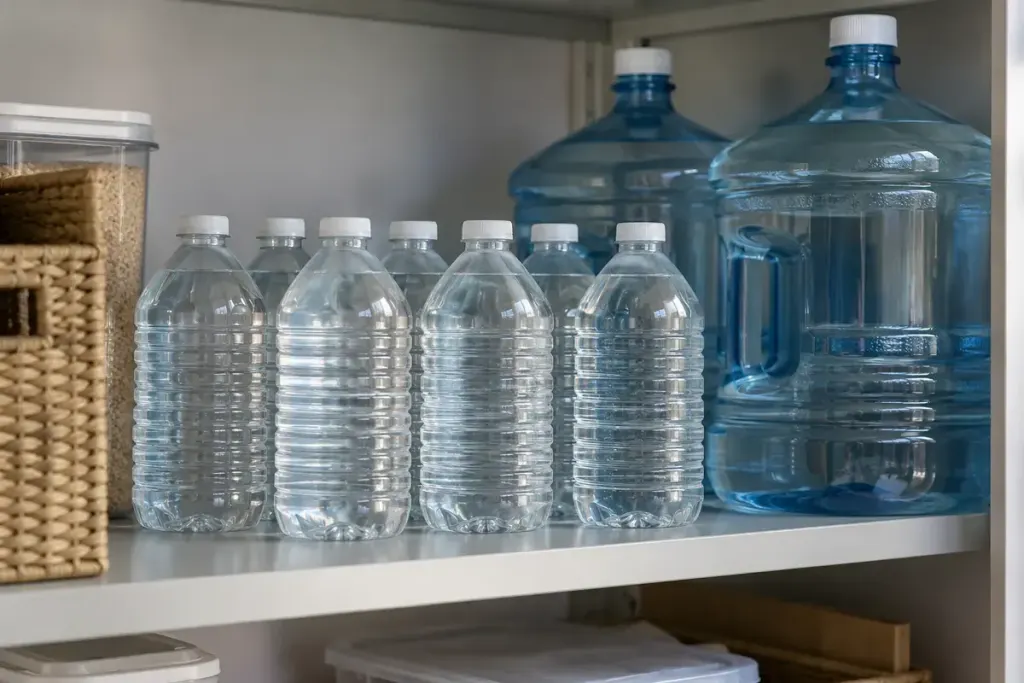
An empty container is not automatically a drinking-water container. Its previous contents, closure and material matter more than whether it looks clean. Before filling a row of bottles for an emergency, decide which ones are appropriate to keep water in.
The CDC’s emergency water guidance identifies unopened commercially bottled water as the most reliable option and recommends food-grade containers when preparing your own stored supply. Containers that held toxic chemicals, including bleach or pesticides, should not be repurposed for drinking water.
A usable container has to be usable when full
Check the manufacturer’s intended use, a sound tight-fitting closure and a way to pour without putting hands into the water. Then consider handling. A large container may be difficult for someone in the household to lift or control when pouring. Several manageable containers can make a supply easier to use than one heavy vessel.
Try the storage arrangement before an emergency. Can the person who needs it reach a container? Is the shelf strong enough? Can a clean cup be filled without balancing the container at an awkward angle? These are practical checks, not reasons to compromise on food-safe materials.
Give the supply a date and a place
For water you bottle yourself, follow the CDC’s cleaning and sanitising instructions, label it with the storage date and replace it every six months. Keep it cool, away from direct sunlight and separate from fuels or other toxic substances. Follow the dates and storage instructions on commercially bottled water.
The CDC’s starting quantity is at least one gallon per person per day for three days, with additional needs to consider for illness, pregnancy, pets and hot conditions. Check your local emergency advice as well; the container plan needs to fit the people and circumstances it serves.
Write a simple review reminder beside the supply record. When replacing stored water, inspect the closures and container condition at the same time. A cupboard full of undated containers may look prepared, but a smaller, clearly identified and maintained supply is easier to trust and use.