
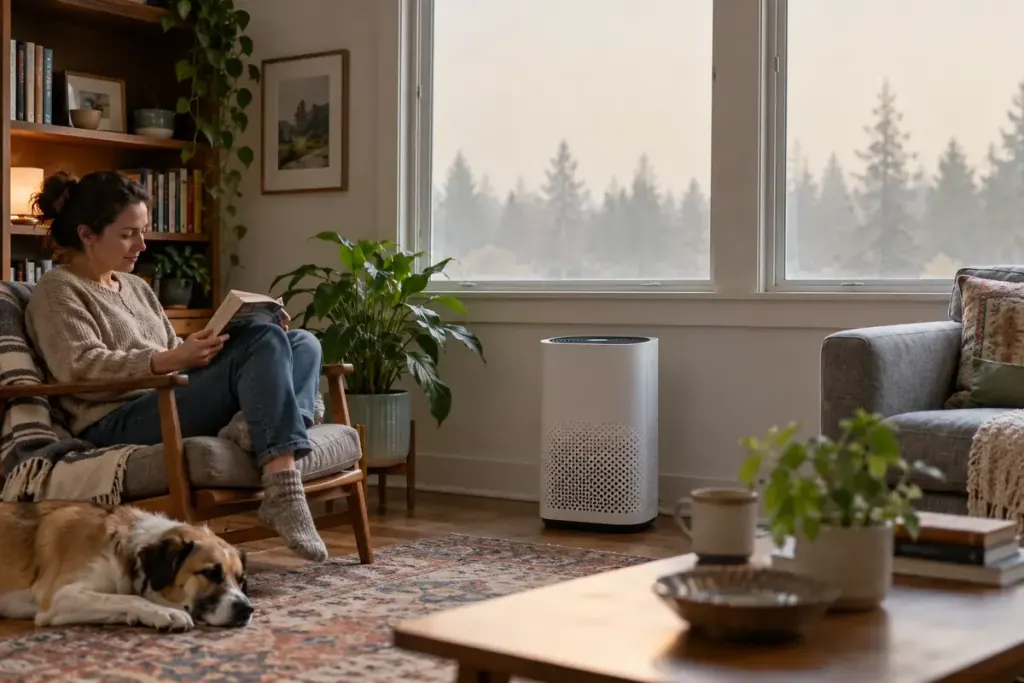
Closing a window can reduce smoke entering a room, but the room may still contain particles from outside and from activities indoors. A cleaner-air room is a planned space for reducing exposure, not a promise of completely smoke-free air.
The US EPA’s clean-room guidance combines closed doors and windows, suitable filtration, avoiding indoor particle sources and staying cool. It applies when remaining at home is safe. An evacuation instruction takes priority over a plan to shelter in one room.
Prepare the space before smoke arrives
Choose somewhere everyone who needs it can use comfortably. Check that the door can close without blocking an exit, the air cleaner can stand with the clearance its instructions require, and essential supplies are easy to reach. A room that works for one seated adult may not work for a household spending several hours there.
Select an air cleaner intended for the room size and avoid equipment that produces ozone. If you want to change a central-system filter, check compatibility rather than assuming that the most restrictive filter will suit every system.
Keep the room’s purpose simple
For an illustrative household checklist, assign one person to follow official alerts and another to check that the room remains comfortably cool. Keep charging leads tidy, drinking water available and necessary medicines accessible. These are practical arrangements, not a substitute for an individual medical plan.
Avoid adding smoke or particles through candles, smoking, frying or similar activities. Follow the equipment instructions when selecting recirculation or closing an outside-air intake. Do not improvise changes that interfere with combustion appliances or safe ventilation requirements.
If the room becomes too hot, electricity fails or smoke remains heavy indoors, seek advice about a safer place to stay. People with heart or lung conditions should discuss smoke-event plans with their healthcare professional in advance.
Keep an exit plan alongside the air-quality plan. Reducing exposure inside a room is useful only while the building and the decision to stay remain safe.