
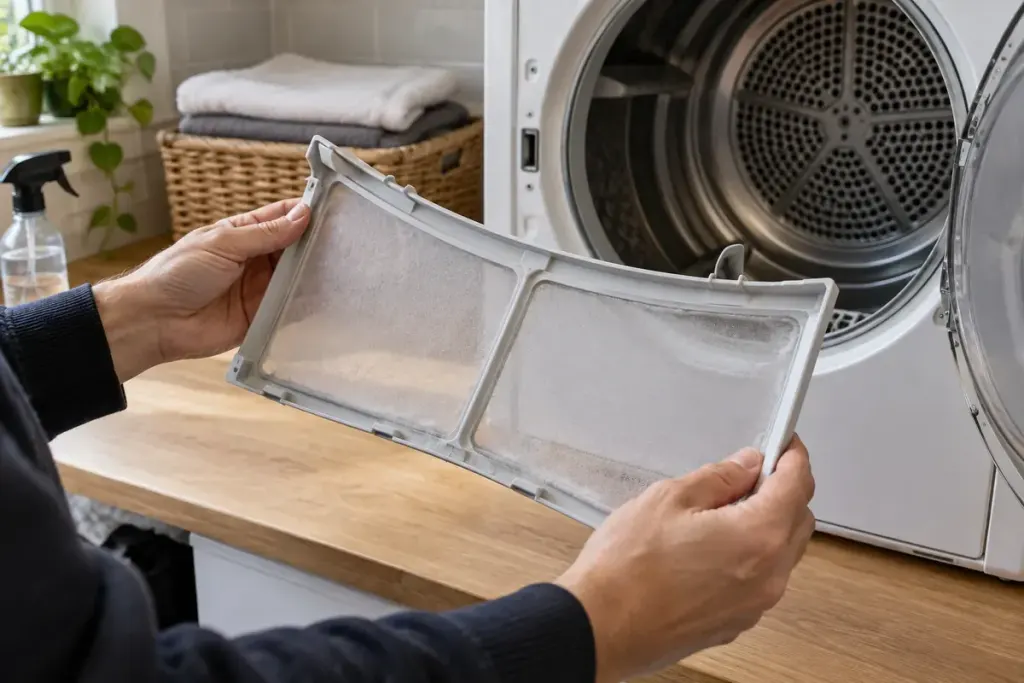
Emptying the lint screen is a good habit, but the screen is not the whole route that air follows through a vented tumble dryer. Lint, a crushed duct or a blocked outside opening can create a problem beyond the part you remove after a load.
The US Fire Administration’s dryer safety guidance calls for lint-filter cleaning, attention to the venting system and professional installation and servicing. Use it alongside the instructions for your model; condenser and heat-pump dryers have different maintenance arrangements.
A routine you can actually repeat
Before a load, check that the filter is correctly fitted and clean as instructed. Keep laundry, packaging and other clutter away from the machine. After the cycle, remove the collected lint and leave the area ready for the next person.
For a vented model, include the accessible exhaust route in periodic checks. Look for visible crushing or restriction and arrange proper cleaning when required. Do not pull a heavy appliance out or disturb a gas connection merely to get a better view.
Notice changes rather than normalising them
If drying starts taking much longer, the appliance becomes unusually hot or you notice a burning smell, stop using it and follow the manufacturer’s fault guidance. Repeating the cycle at a hotter setting is not a diagnosis. Arrange qualified service where needed.
Keep the model number and maintenance record somewhere easy to find. A service request is more useful when you can explain when the change began, whether every load is affected and what routine cleaning has already been done.
Do not run a dryer with a missing filter or improvise a replacement duct from material at hand. The correct installation and parts matter. Make laundry a task someone is present to supervise, and turn the dryer off before leaving home or going to bed, as advised by Fairfax County Fire and Rescue.