
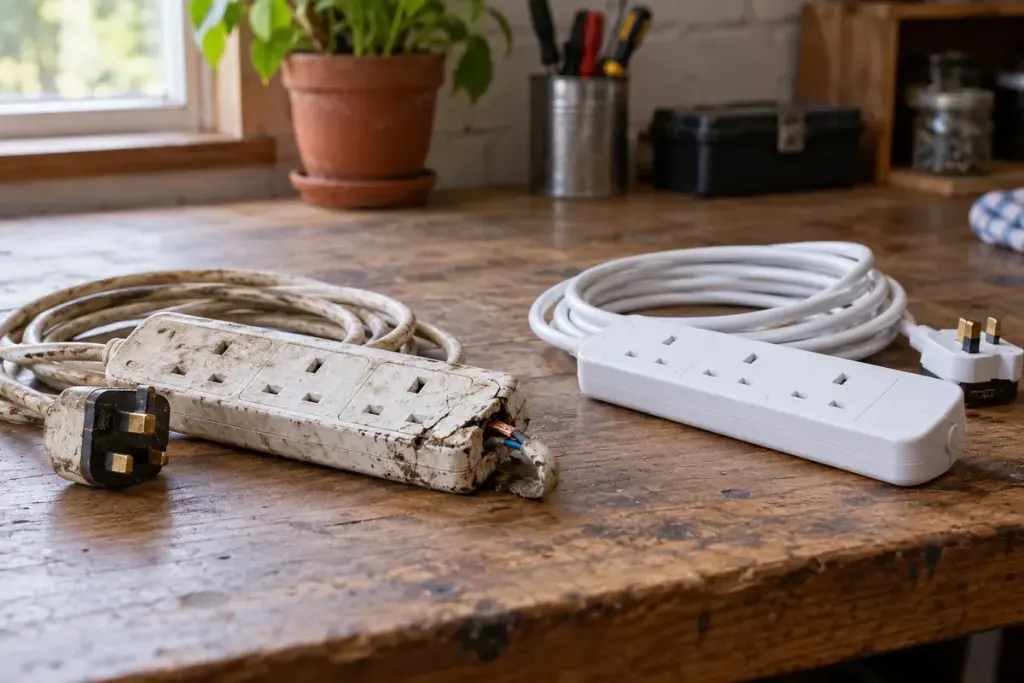
A strip of tape can make a split cable less visible. It does not establish that the lead is safe. The moment you notice damage is the moment to stop treating the extension lead as ordinary equipment.
The UK’s Health and Safety Executive lists damaged plugs, taped cable repairs, exposed internal wires and signs of overheating among reasons to remove electrical equipment from use. Repairs belong with a competent person. A successful power-on test is not a substitute for that assessment.
Make the fault difficult to overlook
If it is safe to isolate the supply, do so without touching exposed or damaged parts. Do not handle a smoking, sparking or otherwise dangerous item to retrieve it; keep people away and seek appropriate emergency help. Once safely disconnected, keep the faulty lead separate from usable equipment.
In a shared home or workplace, tell other people which item has been removed and why. A note such as “split insulation near the socket end—do not use” communicates more than “old cable.” Do not put it back in the common drawer while waiting for a decision.
Replacement is also a selection task
A replacement should suit the intended appliance, environment and manufacturer’s instructions. The useful question is not merely whether it has enough sockets. If the original arrangement required cables across a doorway, outdoors without suitable protection or under furniture where they were pinched, replacing the same lead in the same place leaves a practical problem unresolved.
For example, a shared workbench can have a designated storage hook for sound leads and a separate location for equipment awaiting assessment. The arrangement only works if everyone knows that the second location is not a source of spares.
Record the outcome when the item is repaired by a competent person, replaced or taken through an appropriate electrical-waste route. The safety improvement is complete when the damaged lead can no longer find its way back into everyday use.