
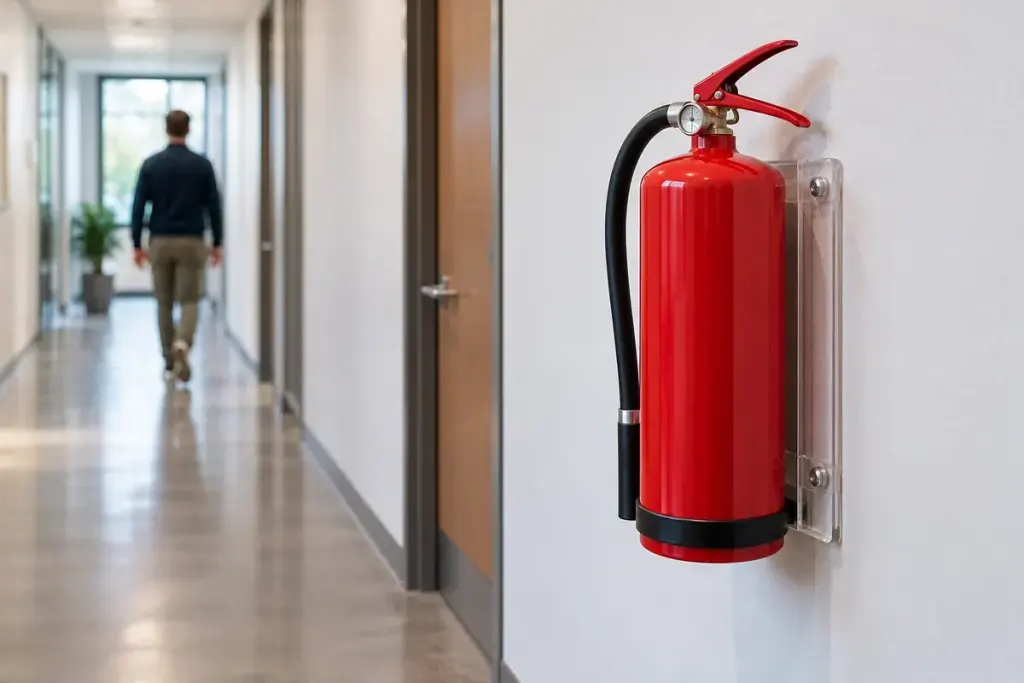
A fire extinguisher can disappear without moving. A coat gets hung over it, a box lands in front of it, or the household forgets why it was placed there. A routine check should begin with whether the equipment can be found and reached.
This is a readiness check, not an instruction to fight a fire. Raising the alarm, leaving safely and calling the emergency services take priority when conditions are unsafe. The US Fire Administration’s extinguisher guidance explains both the limits of appropriate use and the need for maintenance.
Read this extinguisher’s instructions
Locate the manufacturer’s label and identify the model. Check the stated maintenance requirements and service history. Where a pressure indicator is provided, compare it with the manufacturer’s acceptable range. A gauge reading alone cannot establish that every part is sound, and not every extinguisher uses the same indicator.
Without operating or dismantling the unit, look for visible damage, corrosion, a missing safety component or an obstructed discharge opening. A concern is a reason to contact the supplier or a competent service provider. Do not test it by giving it a quick squirt; even partial use can change what must happen before it is ready again.
Give the next check a clear starting point
Record the location, model, date checked and any action requested. “Service provider contacted about damaged hose” is useful. “Looks fine” is less useful if the label could not be read or the equipment’s history was unknown.
Follow the applicable local requirements and manufacturer’s service or replacement schedule. Some units are rechargeable and others are not; do not assume a neighbour’s servicing advice applies to yours.
Finally, clear the approach and make sure household members know the location and escape arrangements. The purpose of the check is to remove uncertainty before an emergency, including uncertainty about when to leave equipment alone and get outside.