
After shaking stops, the urge to retrieve a phone, documents or a pet can be strong. A familiar doorway can make a damaged building feel safer than it is. Household familiarity is not a structural assessment.
CDC’s post-earthquake guidance advises staying out of damaged buildings until local authorities say it is safe, expecting aftershocks, and keeping clear of fallen power lines. Local emergency instructions should guide decisions about evacuation, shelter and re-entry.
Make the waiting period part of the plan
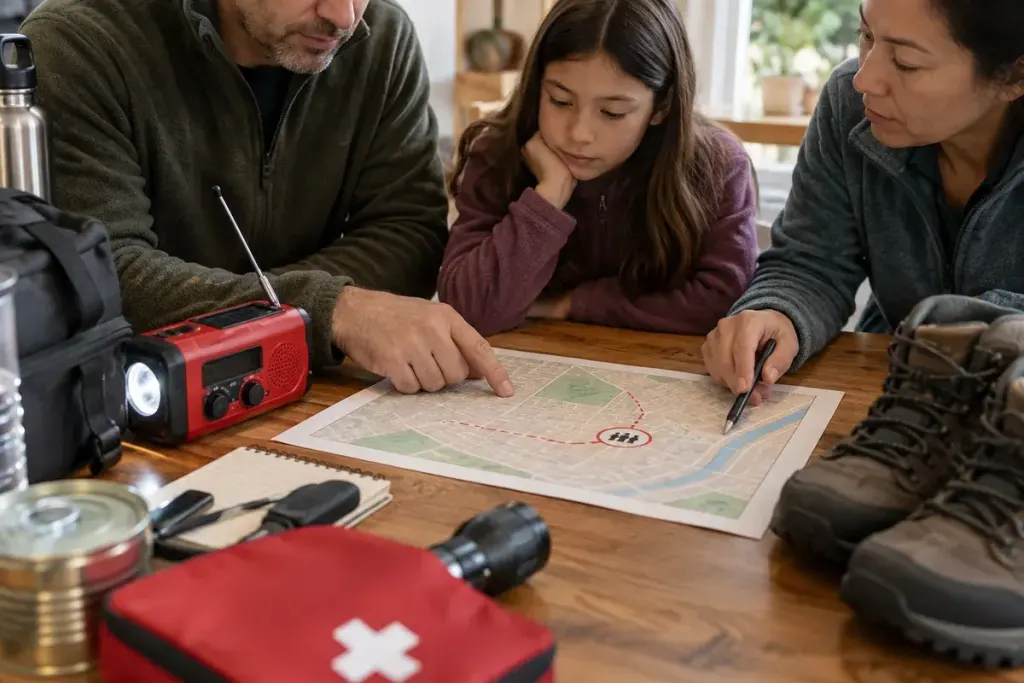
Before an earthquake, agree where household members will meet if home is inaccessible and how you will exchange a short status message. Keep essential contact details available offline. A plan that assumes everyone can immediately return indoors leaves a gap at exactly the wrong moment.
Think through a fictional example: one person is outside with a bag while another is returning from work. The useful message is a location and a clear instruction to follow official guidance, not “the front looks fine.” Avoid asking a neighbour to enter on your behalf or treating their photograph as proof of safety.
Observe from a safe place; do not investigate
If you notice damage or hazards from where you are safely located, report them through the appropriate local channel. Do not approach unstable walls, fallen cables or suspected utility leaks to obtain a better picture. Leave inspections and utility work to the responsible professionals.
Keep alerts available through a charged phone or battery radio. Use the emergency contact method recommended locally, and reserve emergency channels for urgent needs. Conditions may change with aftershocks, so an earlier observation should not become a lasting assurance.
A preparedness folder can include the building manager’s contact, a meeting place and a list of essential items already kept accessible. Its purpose is to reduce the pressure to improvise a return into danger. Re-entry is a safety decision made with competent authorities, not a quick errand justified by how short it will be.