
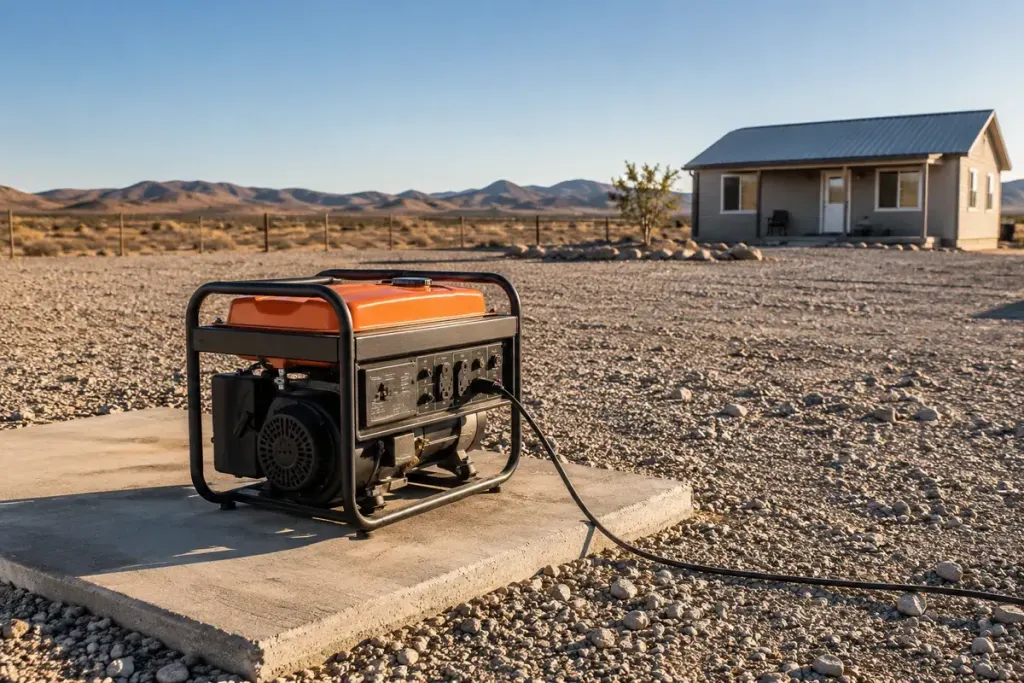
Rain begins during a power cut, and the garage looks like a convenient place to keep a portable generator dry. Opening the garage door does not make that arrangement safe. Generator exhaust can create a deadly carbon monoxide hazard in enclosed or partly enclosed spaces.
The CDC’s generator safety guidance says never to operate one inside a home or garage, even with doors and windows open, and to keep it outside more than 20 feet from the home, doors and windows. It also recommends battery-operated or battery-backup CO alarms near sleeping areas. Follow the manufacturer’s instructions and applicable local requirements as well.
Choose the location in daylight
Walk the proposed area before an outage. Identify nearby windows, doors and air intakes, including those belonging to neighbours. A spot that is far from your front door can still be close to someone else’s opening. Keep exhaust directed away from buildings and do not assume wind will always carry it in a convenient direction.
Discuss weather protection with the manufacturer or a qualified supplier. Do not improvise an enclosure, run the unit on a balcony, or bring it indoors because the outdoor location becomes inconvenient. If there is no suitable location, that generator is not an appropriate solution for the property.
Separate operation from electrical connection
A safe outdoor position does not answer how the equipment connects to the loads. Have a qualified electrician explain the lawful connection arrangement. Never feed a home by plugging a generator into a wall socket. Use only equipment and connections specified for the intended arrangement.
Before use, locate the manual, check the maintenance requirements and make sure household members understand the shutdown procedure. Refuelling and storage need their own manufacturer-approved routine; do not try to solve them beside a hot running engine.
An alarm means leave
If a CO alarm sounds or poisoning is suspected, move everyone to fresh air and contact local emergency services from a safe place. Do not stay inside trying to identify the source. The useful preparation is a location and operating plan that works before the lights go out, rather than an improvised compromise afterwards.