
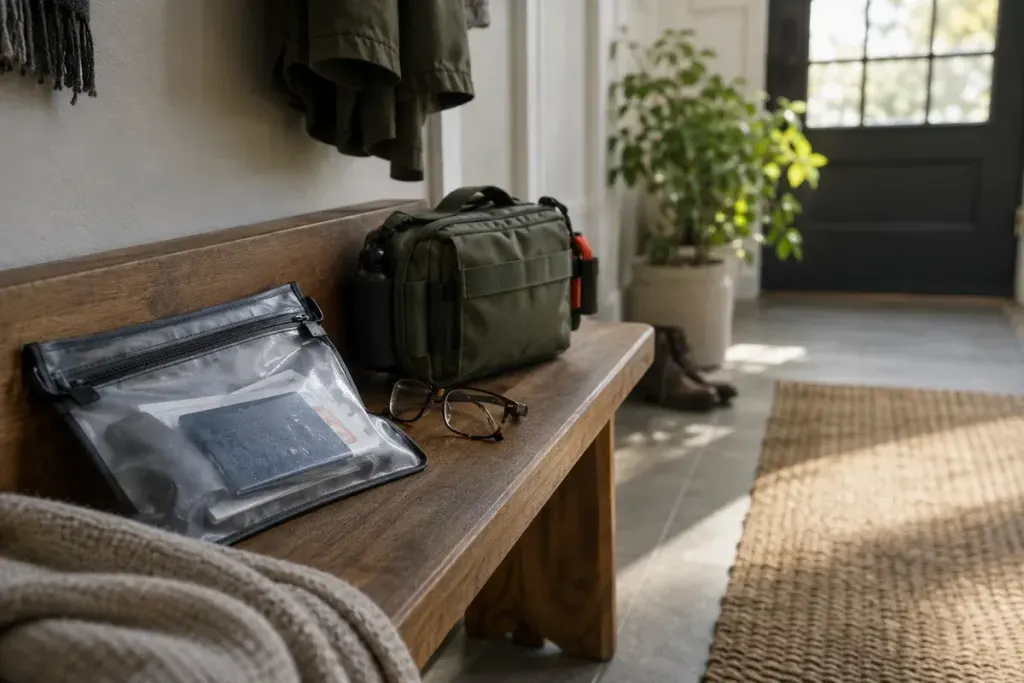
Water and a torch are easy to picture in an evacuation bag. The less visible problem arrives later: proving your identity, finding an insurance reference, or telling a clinician which medicines you use when you cannot get home.
Ready.gov’s financial preparedness guidance recommends organising important records before an emergency. Adapt the list to your household and location rather than copying another family’s paperwork into your bag.
Choose what must travel
Make three groups: essential copies for immediate use, originals stored securely, and information accessible through a protected digital route. Useful portable records may include identification copies, insurance contact details, essential medical information and a short list of trusted contacts. Check local requirements for documents that must be originals.
A waterproof pouch helps protect paper from rain, but it does not protect against theft. Avoid leaving a bundle of account passwords with identification documents. Use an appropriate secure method for recovery information, and make sure an authorised household member knows how to access it.
Test the plan without an emergency
Imagine arriving at temporary accommodation with a flat phone. Can you find a contact number and policy reference? Are the copies legible? Does the medication list still match what is actually prescribed? These questions reveal gaps a neatly packed bag can hide.
Put a review reminder beside a household event you already remember, such as checking other emergency supplies. Replace records after a move, medication change or policy renewal, and securely dispose of obsolete copies. Keep the kit accessible to the people who need it while protecting sensitive contents.
During an actual evacuation, follow official instructions and leave when required. No document is worth delaying escape or returning to an unsafe building. The preparation is meant to remove that choice, not create another reason to stay.