
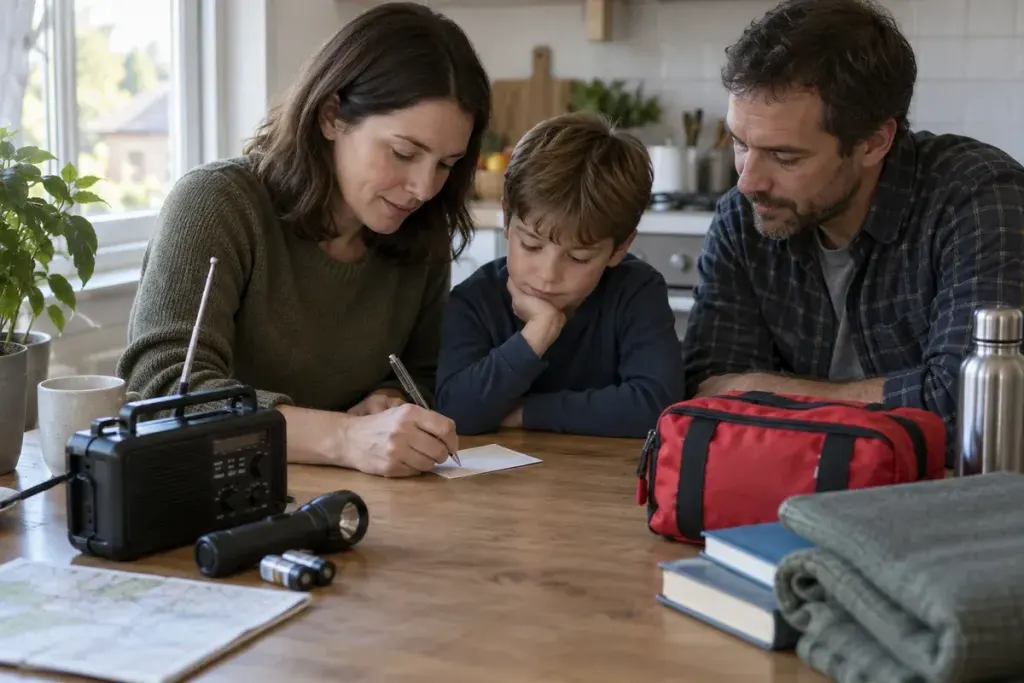
Your phone knows the number of almost everyone you would call in a difficult moment. That is convenient until the battery dies, the device is lost or a family member needs the information while you are elsewhere.
An offline contact card is a small project with a clear test: can the person holding it work out whom to contact and where to meet without unlocking your phone? Keep the answer short enough to use under stress.
Choose information with a job to do
Include the household’s agreed contacts, an out-of-area contact if appropriate, and meeting arrangements suited to local emergency guidance. Write names as well as relationships; “Mum” is less helpful to someone outside the family. Check every number with its owner rather than copying an old address book.
Ready.gov’s family communication guide explains how paper copies and wallet-sized contact details can support an emergency plan. Adapt the fields to your circumstances and local emergency services instead of assuming one country’s numbers or instructions apply everywhere.
Keep the portable version deliberately small
A wallet card is not the place for passwords, bank details or a complete medical history. Add only information needed for the intended situation, with the person’s agreement. Keep more detailed household documents securely and decide who should have access.
For a child, an older relative or someone who uses a different communication format, make the record usable for them. Large print, a pictorial cue or a familiar support person’s name may matter more than fitting another ten contacts onto the page.
Rehearse a realistic inconvenience
Try a simple scenario at home: “We are separated and one phone is unavailable.” Ask each person where their card is, which contact they would try and what the meeting instruction means. Do not place test calls to emergency numbers.
If two people interpret a location differently, make it more precise. “Outside the station” might mean several entrances. Include an alternative when the usual place is inaccessible, and follow official instructions during a real incident rather than travelling towards danger to satisfy a plan.
Date the card and revisit it when a number, school, workplace or care arrangement changes. Replace worn copies. Preparedness is less about producing an impressive document than making a few useful decisions available when the usual tools are missing.