
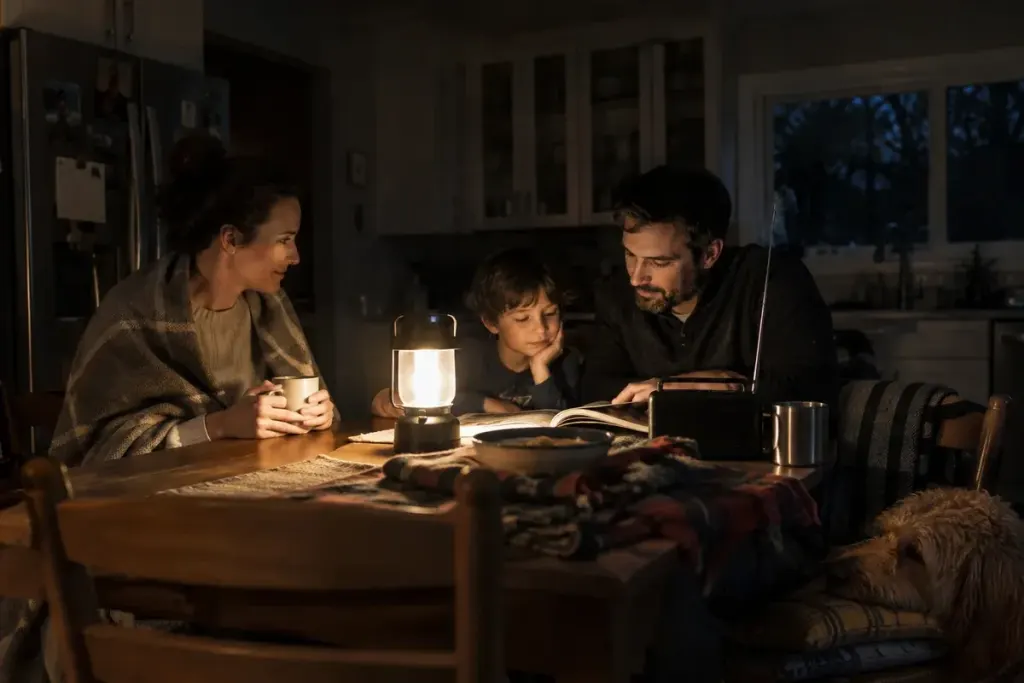
When a room suddenly goes dark, the immediate problem is finding a light. A few hours later, the questions may involve warmth, refrigerated supplies, a medical device or contacting somebody who needs help. These are different problems, and one improvised solution rarely handles them all safely.
Build a short household plan while the electricity is working. Keep it somewhere accessible without an internet connection, and base it on the people, equipment and local hazards that actually apply to your home.
Choose lighting that does not add a flame
Put battery-powered torches or lanterns where people can find them without crossing a dark room full of obstacles. Check the batteries and keep the relevant spares together. A phone torch helps briefly, but using it continuously competes with the battery needed for messages and information.
Walk the route from bedrooms to exits and essential supplies. Move everyday trip hazards now. Include an accessible light for anyone who cannot comfortably use the usual storage location.
Warmth is not a reason to improvise combustion
Ready.gov’s power-outage guidance warns about carbon monoxide and safe generator use. Never use a generator, charcoal grill or outdoor fuel-burning device indoors or in an attached garage. Follow manufacturer and local safety instructions for placement; opening a window does not make indoor generator use safe.
Use clothing and blankets appropriate to the conditions, and identify somewhere suitable to go if the home cannot remain safe. Keep smoke and carbon monoxide alarms maintained according to their instructions. Do not connect a generator to household wiring through an improvised arrangement; any connection needs the proper equipment and qualified installation.
Plan around essential equipment before an outage
If somebody relies on powered medical equipment or temperature-sensitive medicines, discuss a specific outage plan with their care team and equipment or medicine provider. Record the relevant contacts and arrangements. A general household checklist cannot establish how long a particular device or medicine remains usable.
For ordinary communications, keep a charged power bank and a way to receive local updates. Save the utility’s official outage contact route beforehand, so you do not have to trust an unfamiliar message or search result under pressure.
Agree on a decision point
Decide what information would make you change plans: an official instruction, unsafe indoor conditions, an essential device approaching its limit or a household member needing support. Know whom you will contact and how you will travel if leaving becomes necessary.
After power returns, review what was difficult to find and which assumption failed. Replace used supplies and update the note. The most useful preparation is often a small practical correction: a working lantern beside the stairs, a printed phone number or a confirmed place to go.