
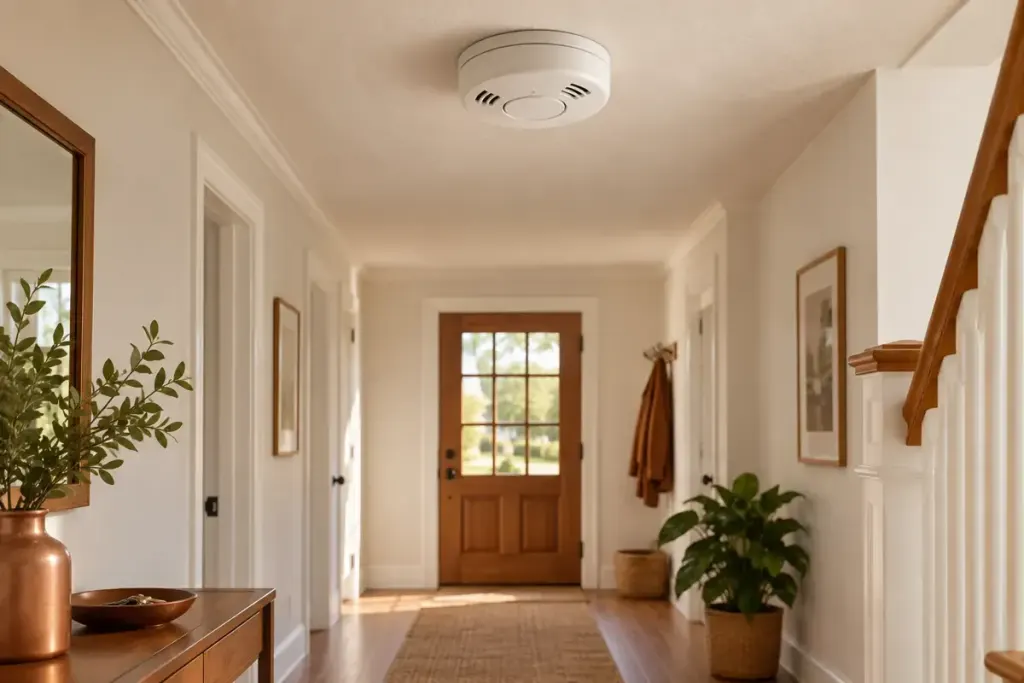
A tick beside “alarms checked” can conceal an unresolved problem. One unit sounded weak, another has an unknown replacement date, and nobody remembers which room needed attention. A useful record names the alarm and the next action.
The US Fire Administration’s smoke-alarm guidance advises monthly testing and following manufacturer instructions. It distinguishes battery types and replacement arrangements. Do not assume that a sealed-battery alarm should be opened or that every model uses the same maintenance procedure.
Give each alarm a clear name
“Upstairs landing” is more useful than “alarm two.” Record its location, manufacturer, model, manufacture date if available and the replacement guidance in its manual. Use a photograph of the label only when it can be obtained safely; do not climb on furniture to collect it.
If you cannot safely reach or identify an alarm, arrange appropriate help. Installation and electrical work should be handled by a suitably qualified person where required. Renters should also establish the relevant responsibilities with the landlord under local rules.
Use a record that preserves an open task
| Field | Useful entry |
|---|---|
| Location and model | Specific room; model recorded from label or manual |
| Test date and result | Date; whether the prescribed test completed as expected |
| Issue | Exact observation, without guessing its cause |
| Next action | Who will arrange help and when completion will be checked |
These are example fields, not proof that a home meets local fire regulations. A working test result does not by itself establish correct coverage, placement or suitability for every occupant.
Keep the instructions within reach
Save the official manual’s link or a printed copy with the record. Follow the prescribed test method; do not test with a flame. If an alarm fails its test, follow the manufacturer’s action instructions promptly rather than marking the check as complete.
Never remove or disable an alarm simply to stop an unwanted sound. Consult the manual about the signal and the safe response. An emergency alarm needs an emergency response, while a maintenance indication requires the action specified for that model.
Make the reminder specific
Set a reminder that says where the record is kept and who is responsible. After a replacement, update the details immediately. Otherwise, an old model’s maintenance notes can remain attached to a new device for years.
Finally, review the household escape plan. Warning equipment and an understood response belong in the same conversation. Ask the local fire service about accessible warning arrangements if a household member may not hear or recognise the alarm.